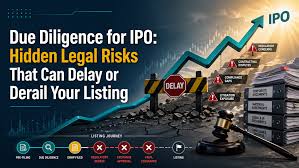
Going public is often seen as a milestone, a signal of growth, credibility, and market readiness. But behind every successful IPO lies a process that’s far less visible… and far more demanding.
Legal scrutiny.
For companies preparing to list, due diligence for an IPO isn’t just a regulatory checkbox. It’s a deep, often complex evaluation of risks that could impact valuation, investor confidence, or even the timeline of the listing itself.
And here’s the challenge, many of these risks aren’t obvious.
They sit buried in past litigation, unresolved disputes, compliance gaps, or overlooked legal exposures. Left unchecked, they don’t just slow things down… they can derail the entire process.
So, what exactly does due diligence for an IPO involve, and why are hidden legal risks such a critical concern today?
What Is Due Diligence for IPO, and Why It Matters
At its core, due diligence for an IPO is the process of thoroughly reviewing a company’s legal, financial, and operational standing before it enters the public market.
From a legal perspective, this includes:
- Reviewing ongoing and past litigation
- Assessing regulatory compliance
- Verifying disclosures and corporate governance practices
- Identifying potential liabilities that could affect investor decisions
But beyond these elements, the real objective is clarity.
Investors, regulators, and underwriters all rely on accurate, transparent information. Any gap, no matter how small, can raise questions about credibility and risk.
That’s why due diligence for an IPO isn’t just about gathering information. It’s about ensuring that nothing material is missed… especially when it comes to legal exposure.
Where Hidden Legal Risks Typically Emerge
Not all risks are immediately visible. In fact, some of the most significant issues tend to surface only during deeper investigation.
Here are a few areas where hidden legal risks often arise:
1. Undisclosed or Underestimated Litigation
Companies may be aware of ongoing cases but underestimate their potential impact. Even seemingly minor disputes can escalate or attract regulatory attention during the IPO process.
2. Historical Legal Exposure
Past cases, especially those involving financial irregularities, contractual disputes, or compliance violations, can resurface and influence investor perception.
3. Regulatory Non-Compliance
Gaps in filings, licenses, or statutory obligations may not appear critical internally, but can become serious concerns under regulatory review.
4. Director and Promoter Background Risks
The legal history of key individuals is closely examined. Any criminal or litigation-related exposure can raise red flags.
5. Contractual Liabilities and Commitments
Long-term agreements, unresolved obligations, or ambiguous contract terms can create uncertainty around future liabilities.
These risks don’t always show up in surface-level reviews. They require structured, in-depth analysis, often across multiple data sources and jurisdictions.
Why Traditional Due Diligence Falls Short
Despite its importance, due diligence for an IPO has traditionally been a fragmented process.
Legal teams often face challenges such as:
- Manual searches across different court systems
- Disconnected data sources with limited standardization
- Time constraints that limit the depth of investigation
- Difficulty tracking litigation across jurisdictions
- Heavy reliance on self-disclosures from stakeholders
The result? Incomplete visibility.
And in an IPO context, incomplete visibility isn’t just inefficient, it’s risky.
Because once the process reaches regulators or investors, any overlooked issue can lead to delays, additional scrutiny, or even withdrawal of the offering.
Strengthening Due Diligence for IPO with Better Legal Insight
As IPO expectations evolve, so does the approach to due diligence.
Organizations are increasingly relying on structured legal intelligence and more streamlined workflows to improve how they assess risk.
Instead of fragmented searches, modern approaches focus on:
- Access to organized legal and litigation data
- Centralized workflows for tracking and analysis
- More consistent methods for reviewing legal exposure
- Integration of legal checks into broader due diligence processes
This shift allows teams to move beyond reactive investigation and towards more proactive risk identification.
Where Due Diligence for IPO Creates Real Impact
The importance of strong due diligence becomes clearer when you look at how it influences real outcomes.
Pre-IPO Risk Identification
Early detection of legal issues allows companies to address them before they become obstacles during regulatory review.
Investor Confidence and Transparency
Clear, well-documented disclosures build trust with investors and reduce uncertainty during the listing process.
Regulatory Alignment
Comprehensive legal checks ensure that companies are better prepared for scrutiny from regulatory bodies.
Valuation Protection
Unresolved legal risks can impact valuation. Addressing them early helps maintain credibility and stability.
In each of these scenarios, the goal is the same: reduce surprises and improve preparedness.
Making Due Diligence More Effective in Practice
Improving due diligence for an IPO isn’t just about tools, it’s about approach.
Here are a few practical ways organizations can strengthen their process:
- Start early
Waiting until the IPO process begins can limit the ability to address risks effectively. - Look beyond disclosures
Independent verification of legal records is essential to ensure completeness. - Focus on material risks
Not all issues carry the same weight. Prioritize those that could impact valuation or compliance. - Ensure cross-functional collaboration
Legal, compliance, and finance teams should work together for a more holistic view. - Maintain clear documentation
Well-organized records support smoother regulatory interactions.
These steps help transform due diligence from a reactive requirement into a strategic advantage.
The Role of Legal Intelligence in IPO Due Diligence
As companies prepare for IPOs, the need for structured legal data becomes more pronounced.
This is where platforms like LegitQuest’s LIBIL play a meaningful role.
Rather than relying solely on manual searches, LIBIL supports litigation intelligence and legal history analysis, enabling teams to explore case-related information in a more organized and efficient way.
In the context of due diligence for IPO, this can help:
- Identify litigation exposure across stakeholders
- Support deeper analysis of legal histories and ongoing cases
- Reduce reliance on fragmented or time-consuming research
- Align legal insights with broader due diligence workflows
The advantage isn’t just operational efficiency, it’s better clarity.
When legal teams have access to structured, reliable information, they can assess risks more confidently and ensure that nothing critical is overlooked.
Why Legal Due Diligence Can Make or Break an IPO
IPO success isn’t just about financial performance, it’s about trust.
And trust is built on transparency.
Hidden legal risks, when discovered late, can lead to:
- Delays in regulatory approvals
- Increased scrutiny from investors
- Revisions in disclosures
- Loss of market confidence
In some cases, they can even force companies to postpone or reconsider their listing plans.
That’s why due diligence for an IPO isn’t just a preparatory step, it’s a safeguard.
It ensures that organizations enter the public market with a clear understanding of their legal standing, rather than reacting to issues under pressure.
Stronger IPO Outcomes Begin with Better Due Diligence
At its core, due diligence for an IPO is about visibility.
The more clearly a company understands its legal risks, the better it can manage them, and the smoother its path to listing becomes.
Hidden risks don’t disappear on their own. They need to be identified, assessed, and addressed with the right level of depth and accuracy.
With more structured approaches and access to legal intelligence through platforms like LIBIL, organizations are better equipped to navigate this complexity.
Because in the end, a successful IPO isn’t just about going public…
It’s about going public prepared.


