





































































Why law firms choose Legitquest for AI LegalTech Solutions
Litigation check, Case management Tool and Legal Research Tool that accelerate case preparation and keep your matters court ready

Make Legal Research 33% Faster
No more hours wasted searching through outdated databases. With LegitQuest’s AI legal research engine, you can:
-
 Get context-aware judgments instantly
-
Discover cited cases and arguments rapidly
-
Filter by judge, court, bench, or date with precision
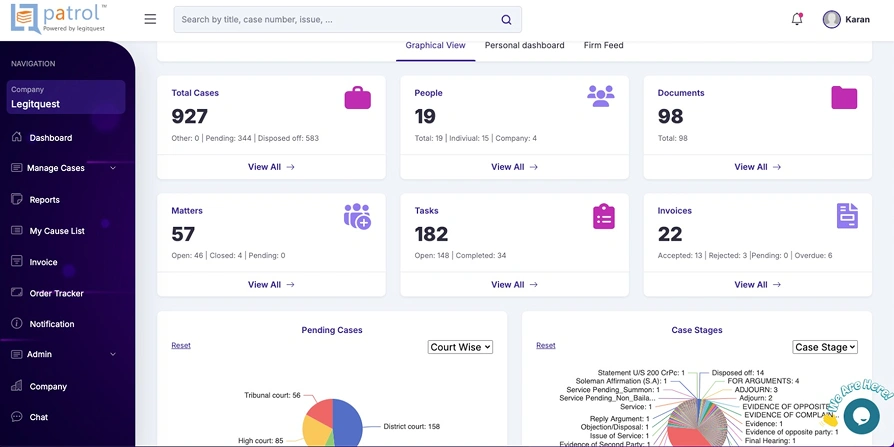
Streamline your Legal Operations with Case Management Tool
Managing multiple clients, cases, and court dates can be overwhelming. With AI case management tools integrated into LIBIL, legal professionals can:
-
Track and Manage cases effortlessly
-
Get automated reminders and status updates
-
Enhance team collaboration at scale
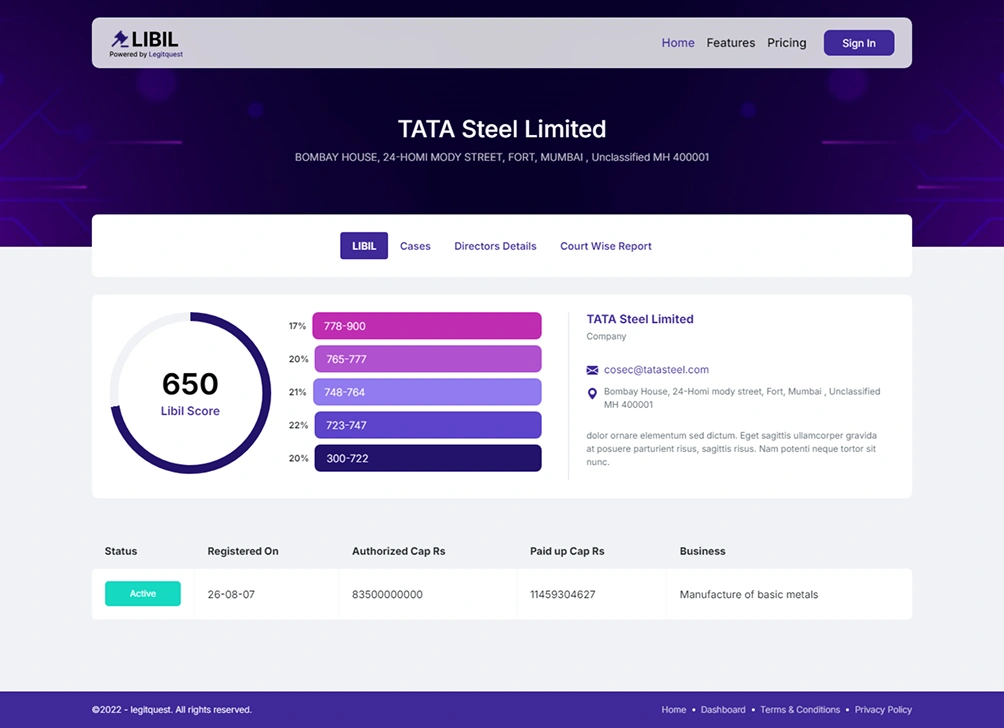
AI Legal Due Diligence Faster, Smarter Risk Assessment
Legal due diligence often involves reviewing vast amounts of case history, compliance documents, and regulatory data. LIBIL automates this with AI-powered intelligence, delivering comprehensive risk reports in minutes — not days.
-
Instant access to relevant case law
-
Automated red-flag identification
-
Accurate and consistent reporting
Trusted by the top names in the industry
Press & Recognitions
-
Forbes india
Legitquest: On a quest to building a legal technology framework in India
Jun 10, 2022 Read More
-
financialexpress
LegitQuest: Now, millions of law case records at your fingertips
April 27, 2020 Read More
Ready to modernize your firm with litigation checks, a Case management Tool and the Legal Research Tool?
FAQs
Law firms today are navigating a landscape where client expectations are constantly evolving. Clients no longer look at legal services as purely advisory, they expect speed, clarity, and well informed insights that align closely with their business realities. In this environment, empowering law firms with scalable legal technology is not just a matter of convenience, it becomes a necessity for staying competitive and delivering consistent value. As the complexity of legal research continues to grow, firms need solutions that simplify this process without compromising on depth or accuracy.
One of the biggest challenges legal teams face is managing the sheer volume of information involved in modern legal work. From case laws and regulatory updates to client specific data, the effort required to gather and interpret this information can be significant. This is where structured workflows begin to make a meaningful difference. By organizing tasks, standardizing processes, and ensuring that information flows seamlessly across teams, law firms can reduce inefficiencies and create a more predictable and reliable way of working. Instead of spending hours navigating scattered resources, lawyers are able to focus their time and energy on developing strategies that truly impact case outcomes.
Collaboration is another area where scalable legal technology plays a crucial role. Legal matters today often involve multiple stakeholders, including internal teams, external counsel, and clients themselves. Without the right systems in place, maintaining alignment across these stakeholders can become challenging. Technology driven workflows help bridge this gap by creating a shared environment where information is easily accessible, updates are transparent, and communication is more structured. This not only improves coordination but also enhances the overall quality of legal services delivered.
For firms that work closely with corporate clients, the ability to understand and integrate business risk into legal advice is increasingly important. Legal strategies are no longer developed in isolation, they need to reflect broader organizational priorities and risk considerations. This is where a clear understanding of enterprise legal due diligence platforms becomes valuable. By leveraging structured insights into legal risks, historical data, and compliance requirements, law firms can provide advice that is not only legally sound but also aligned with the strategic objectives of their clients. This deeper alignment strengthens client relationships and positions firms as trusted advisors rather than just service providers.
At the same time, the legal ecosystem as a whole is undergoing a gradual digital transformation. Courts, which are central to this ecosystem, are also adopting technology to improve efficiency and reduce delays. The use of AI legal research tools for judiciary is a reflection of this shift. These tools enable faster access to relevant case laws, help identify precedents with greater accuracy, and support more consistent decision making. For law firms, this means that preparation needs to be equally robust and data driven. When both courts and legal practitioners operate with enhanced access to structured information, the entire process becomes more streamlined and effective.
In the long run, firms that invest in scalable and structured legal technology position themselves to handle growth more effectively while maintaining high standards of service. They become better equipped to respond to changing client needs, adapt to evolving legal landscapes, and contribute meaningfully to a more efficient and connected legal ecosystem.


