





































































LIBIL - Litigation Check Reports
Instant Check
-
 Best for: bulk onboarding, vendor screening, high throughput background checks.
 -
Quick results in 1 to 2 minutes.
-
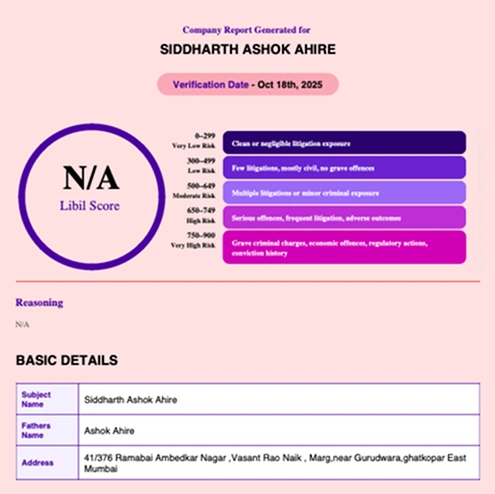
Basic case summaries and match indicators for immediate triage.
Detailed Report
-
Best for: compliance-critical hires, vendor risk escalation, investigative due diligence.
-
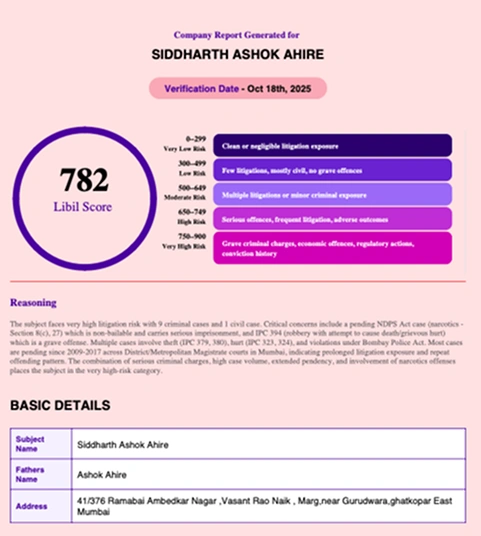
Includes LIBIL Score, case match scoring, narrative reasoning and detailed case summaries.
-
Typical turnaround is approximately 2 hours.
Manual Verification
-
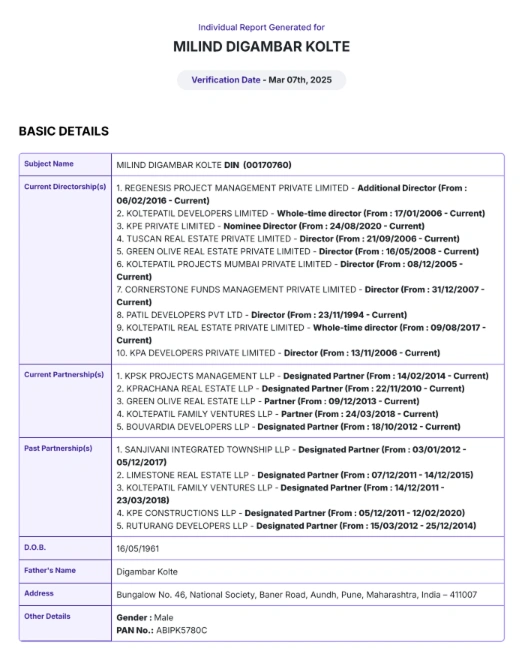
Bespoke analyst-prepared reports for regulatory filings, IPO disclosure or deep investigations. Contact sales for scope and timelines.
Enterprise use cases

Mergers and acquisitions
run portfolio level risk assessment and convert findings into matter level remediation items.

Vendor and third party risk
automate supplier screening and escalate material exposure into case workflows.

Compliance and regulator programs
produce auditable narratives and attach evidence for regulator reporting.
HR and background programs
run scaled checks for senior hires and remediation for flagged subjects.
Credit and treasury
include litigation exposure in counterparty and portfolio risk models.
Trusted by the top names in the industry
Press & Recognitions
-
Forbes india
Legitquest: On a quest to building a legal technology framework in India
Jun 10, 2022 Read More
-
financialexpress
LegitQuest: Now, millions of law case records at your fingertips
April 27, 2020 Read More
Ready to run a litigation check with LIBIL for enterprise risk assessment?
FAQs
Strong due diligence in corporate law plays a central role in helping in house legal teams navigate complex business decisions with confidence. As organizations engage in transactions, partnerships, and strategic initiatives, the need to evaluate counterparties, assess regulatory exposure, and understand potential risks becomes increasingly important. Without a structured approach, these evaluations can become fragmented, making it difficult to form a clear and reliable view. By organizing reviews and consolidating insights into a unified framework, legal teams are better equipped to support business decisions while maintaining consistency and compliance across departments.
A well structured due diligence in corporate law process allows teams to go beyond surface level checks and develop a deeper understanding of legal and regulatory implications. It enables them to analyze historical data, identify patterns of risk, and assess how different factors may impact the organization in the long term. This clarity is especially valuable when advising leadership on high value transactions or strategic moves, where even small oversights can lead to significant consequences. By embedding due diligence into regular workflows, legal teams can ensure that risk evaluation becomes a continuous and proactive function rather than a one time activity.
As organizations scale, legal departments often find themselves managing a large volume of matters alongside ongoing diligence reviews. Balancing these responsibilities can be challenging without the right systems in place. This is where a case management tool for enterprises becomes essential. By centralizing legal workstreams, it allows teams to track matters, manage documentation, and monitor progress within a single environment. This improved visibility helps ensure that both litigation and due diligence activities are handled efficiently without compromising on quality or timelines.
A case management tool for enterprises also enhances coordination across teams by providing a shared platform where updates, responsibilities, and key milestones are clearly defined. This reduces the risk of miscommunication and ensures that all stakeholders are aligned. Over time, this structured approach improves productivity and allows legal teams to allocate resources more effectively, focusing their efforts on areas that require the most attention.
In addition to managing workflows, enterprise legal teams often need to provide strategic recommendations based on detailed legal analysis. This requires access to accurate and comprehensive research that can support their conclusions. Leveraging legal research tools for lawyers enables teams to explore relevant case laws, understand precedents, and interpret how similar situations have been handled in the past. This depth of insight strengthens internal advisory work and ensures that recommendations are grounded in well researched and reliable information.
Integrating legal research tools for lawyers into the broader legal operations framework also improves efficiency. When research capabilities are connected with case management and due diligence processes, teams can access relevant information more quickly and apply it directly to ongoing matters. This seamless flow of information reduces duplication of effort and allows legal professionals to focus on analysis and strategy rather than time consuming data collection.
When these capabilities are brought together, due diligence in corporate law, a case management tool for enterprises, and legal research tools for lawyers create a cohesive and well aligned legal function. Each component supports a different aspect of the process, from evaluating risk and managing workflows to providing in depth analysis and strategic guidance. Together, they enable enterprise legal teams to operate with greater clarity, efficiency, and control.
Ultimately, this integrated approach allows organizations to move away from fragmented assessments and adopt a more coordinated and proactive legal strategy. Legal teams are better positioned to anticipate risks, support business objectives, and deliver consistent value across the organization. By leveraging structured processes and the right technology, enterprises can strengthen their legal function and navigate complexity with greater confidence.


