





































































Why fintech lenders choose our legal due diligence
-
 Credit-focused signals
surface litigation, judgments and enforcement actions that materially affect recoverability and provision models. -
Fast triage plus audit grade depth
use instant checks for high volume origination and Detailed Reports with scoring and narrative for borderline or high ticket cases. -
Continuous monitoring
automated rechecks for portfolio borrowers to detect new filings, judgments or enforcement steps that change credit risk. -
Integrates with credit workflows
APIs, webhooks and batch uploads let you embed checks into your loan origination and servicing systems. -
Evidence you can trust
timestamped reports, case extracts and audit logs for credit memos, provisioning and regulator responses.

How legal due diligence for credit lending works
-
Submit borrower identifiers such as name, PAN, company registration number, DIN or address to improve match confidence.
-
Choose Instant for quick screening or Detailed for underwriting grade due diligence
-
The system searches courts, FIRs and regulator lists, applies multi identifier matching and returns ranked results with confidence scores and extracts.
-
Export the report to the credit file, attach the narrative to the approval memo, and trigger monitoring for approved borrowers.
LIBIL - Litigation Check Reports
Instant Check
-
Turnaround: 1 to 2 minutes
-
Best for: high volume screening
-
Output: top litigation and FIR signals with basic summaries

Detailed Report
-
Turnaround: about 2 hours
-
Best for: escalations, senior hires and client audits
-
Output: LIBIL Score, match confidence, case summaries and source links

Manual Verification
-
Analyst reviewed
-
Used for leadership roles, regulated industries and sensitive access
-
Disclosure grade reporting
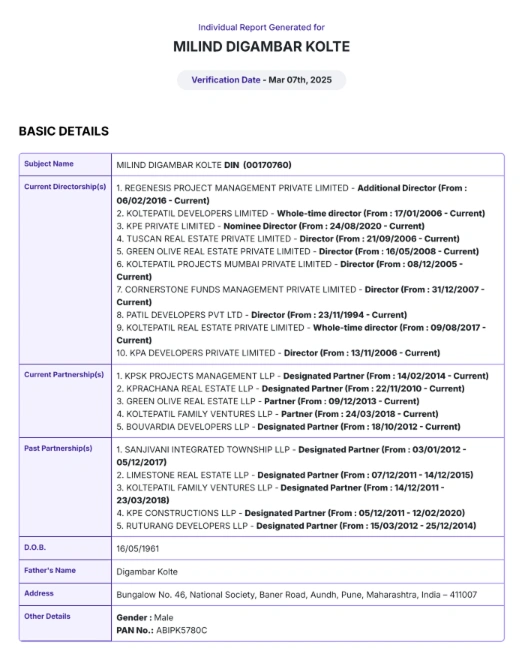
Litigation Checks to reduce NPAs

Pre sanction underwriting
include legal due diligence findings in credit memos to avoid onboarding legally encumbered borrowers.

Provisioning and reserve planning
feed litigation exposure and judgment likelihood into provisioning models and expected credit loss calculations.

Early warning and monitoring
auto alert on new filings, attachment orders or judgments and trigger underwriting or collection action.

Recovery playbooks
generate investigator grade extracts and timelines to support asset tracing, attachment and enforcement.
Portfolio remediation
run batch scans to identify concentration of litigation exposure and prioritize collection workloads.
Trusted by the top names in the industry
Press & Recognitions
-
Forbes india
Legitquest: On a quest to building a legal technology framework in India
Jun 10, 2022 Read More
-
financialexpress
LegitQuest: Now, millions of law case records at your fingertips
April 27, 2020 Read More
Ready to reduce NPAs with credit-focused legal due diligence?
Qualified attorneys and legal experts employed by companies in India can request access to demonstrations and trials. Limited free trial spots are available. Provide your professional email address to receive priority access.
FAQs
For Fintech: LIBIL + PATROL by LegitQuest
Fintech companies operate at the intersection of innovation and regulation, where speed of execution must be balanced with strict compliance requirements. As new financial products and services are introduced, regulatory expectations continue to evolve, often requiring organizations to adapt quickly while maintaining accuracy and transparency. In such a dynamic environment, relying on manual processes or fragmented systems can create significant challenges. This is where legal tech for fintech becomes essential, helping teams manage compliance workflows in a structured and efficient manner while keeping pace with rapid innovation cycles.
A strong legal tech for fintech framework enables organizations to bring clarity to complex regulatory requirements. By organizing compliance tasks, tracking obligations, and maintaining proper documentation, teams are better equipped to ensure that every process aligns with applicable standards. This structured approach not only reduces the risk of non compliance but also improves overall operational efficiency. When workflows are clearly defined and supported by technology, teams can respond more quickly to regulatory changes and maintain consistency across different functions.
Monitoring exposure is another critical aspect for fintech companies, especially given the scale and speed at which transactions take place. Without proper visibility, it becomes difficult to identify potential risks or respond proactively. By leveraging legal tech for fintech, organizations can create systems that continuously track activities, flag anomalies, and provide insights into areas that may require attention. This ongoing visibility helps businesses move from reactive responses to more proactive risk management, ensuring that issues are addressed before they escalate.
Maintaining audit readiness is equally important in a sector where regulatory scrutiny is high. Fintech companies are often required to demonstrate that they have followed proper procedures and maintained accurate records. A well implemented legal tech for fintech solution supports this by creating clear audit trails and ensuring that all relevant information is documented and easily accessible. This not only simplifies the audit process but also builds confidence with regulators and stakeholders.
When it comes to onboarding customers or partners, identity verification plays a crucial role in preventing fraud and ensuring compliance with regulatory requirements. Incorporating a criminal record check online into onboarding workflows adds an additional layer of security. It allows organizations to quickly assess potential risks and ensure that individuals or entities meet the necessary standards before engagement. This integration helps create a more secure onboarding process without slowing down the overall workflow.
As fintech organizations scale, managing legal operations across multiple areas such as disputes, compliance, and regulatory reporting becomes increasingly complex. To maintain control and visibility, many enterprises integrate corporate legal matter management software into their systems. This allows teams to track legal matters, monitor progress, and ensure that all activities are aligned with broader organizational goals. By centralizing this information, companies can avoid fragmentation and maintain a clear overview of their legal landscape.
Another key advantage of combining corporate legal matter management software with broader fintech legal tech solutions is the ability to create a more connected ecosystem. Compliance workflows, dispute management, and risk assessments can all be aligned within a single framework, enabling better coordination and more informed decision making. This integrated approach reduces inefficiencies and ensures that all aspects of legal operations are working together seamlessly.
Ultimately, the combination of legal tech for fintech, secure onboarding through criminal record check online, and structured oversight using corporate legal matter management software provides a strong foundation for managing complexity in a fast evolving sector. It allows fintech companies to innovate with confidence, maintain compliance, and respond effectively to changing regulatory demands.
By adopting a connected and technology driven approach, organizations are better positioned to handle growth, manage risk, and deliver reliable services in an increasingly competitive landscape. This not only strengthens internal operations but also builds trust with customers, partners, and regulators, which is essential for long term success in the fintech industry.


