





































































Why enterprise teams choose case management tool and LIBIL for legal due diligence
-
 Single source legal truth
combine court records, FIRs, regulator lists and contract risk into a unified platform so legal teams work from the same evidence set. -
Purpose built Case Management
manage matters, tasks, approvals and evidence with role based access, configurable workflows. -
Audit ready due diligence
produce exportable, timestamped reports and narratives that satisfy auditors and regulators. -
Scale and automation
batch scans, continuous monitoring and API orchestration support high volume checks.

LIBIL - Litigation Check Reports
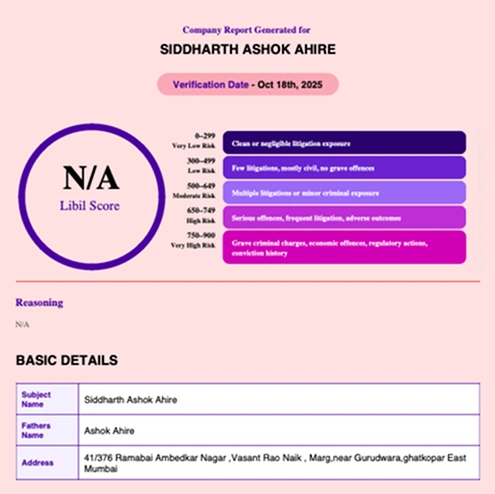
Instant Check
-
Best for: bulk onboarding, vendor screening, high throughput background checks.
-
Quick results in 1 to 2 minutes.
-
Basic case summaries and match indicators for immediate triage.
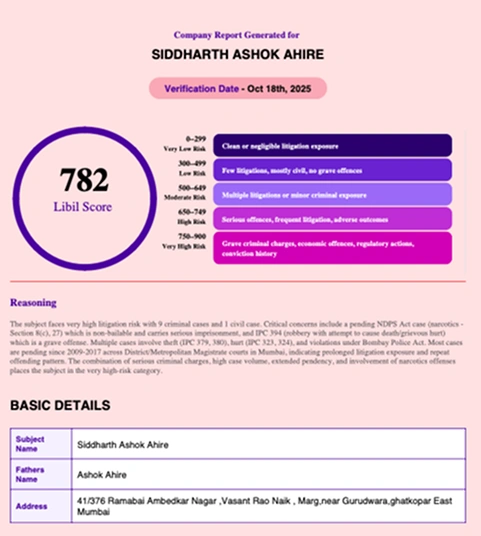
Detailed Report
-
Best for: compliance-critical hires, vendor risk escalation, investigative due diligence.
-
Includes LIBIL Score, case match scoring, narrative reasoning and detailed case summaries.
-
Typical turnaround is approximately 2 hours.
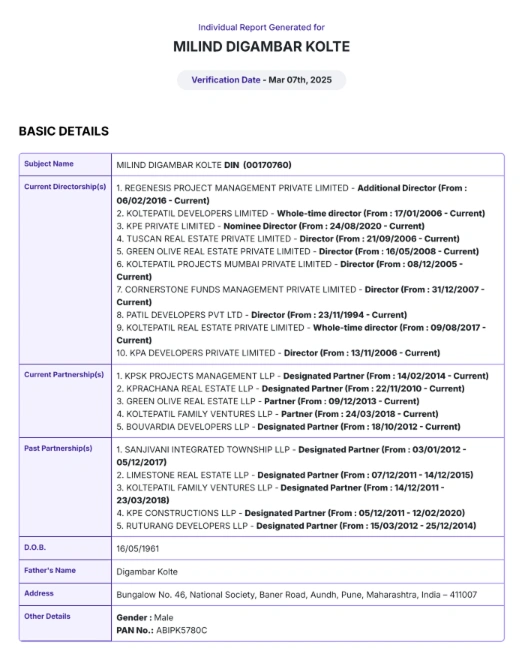
Manual Verification
-
Bespoke analyst-prepared reports for regulatory filings, IPO disclosure or deep investigations. Contact sales for scope and timelines.
Trusted by the top names in the industry
Press & Recognitions
-
Forbes india
Legitquest: On a quest to building a legal technology framework in India
Jun 10, 2022 Read More
-
financialexpress
LegitQuest: Now, millions of law case records at your fingertips
April 27, 2020 Read More
Ready to centralize legal due diligence and Case Management across your enterprise?
FAQs
Modern enterprises today operate in an increasingly complex environment where legal, regulatory, and operational boundaries often overlap. With business activities spread across multiple jurisdictions, each with its own compliance requirements and legal nuances, the need for a connected and structured approach to legal intelligence becomes more important than ever. Building a connected legal intelligence ecosystem for enterprises is not simply about adopting new tools, it is about creating a unified layer of information that brings together research, litigation tracking, and risk visibility into a single, coherent framework.
In many organizations, legal data tends to exist in silos. Different teams may rely on separate systems or processes to manage case information, regulatory updates, or historical records. Over time, this fragmented approach can lead to inefficiencies, inconsistencies, and missed insights. A centralized legal intelligence ecosystem addresses this challenge by ensuring that all relevant information is accessible, organized, and aligned. When data flows seamlessly across functions, legal teams are better equipped to respond quickly, collaborate effectively, and maintain consistency in their approach to risk management.
One of the key advantages of a connected ecosystem is the ability to identify patterns and trends that might otherwise go unnoticed. Leadership teams are not just looking for isolated data points, they need a broader view of how legal exposure evolves over time. By bringing together information from litigation, compliance checks, and research activities, organizations can gain deeper visibility into recurring risks, emerging challenges, and potential vulnerabilities. This level of insight allows decision makers to move from a reactive stance to a more proactive strategy, aligning legal priorities closely with overall business objectives.
At the same time, collaboration remains a critical component of enterprise legal operations. Many organizations work closely with external counsel to manage complex matters, and ensuring smooth coordination between internal and external teams can often be a challenge. This is where AI legal software for law firms becomes particularly relevant. By creating a more structured and transparent workflow, it enables better alignment across stakeholders, improves communication, and ensures that all parties have access to the same set of information. The result is a more efficient handling of legal matters, with fewer delays and greater clarity in execution.
Enterprises that frequently interact with courts also benefit from having structured access to legal precedents and research insights. The ability to quickly reference relevant case law and understand how similar matters have been addressed in the past can significantly strengthen legal strategies. Leveraging an AI legal research tool for judiciary supports this need by providing organized and easily accessible precedent data. This not only enhances the quality of preparation but also contributes to more consistent and well informed outcomes during legal proceedings.
Beyond individual use cases, the real value of a connected legal intelligence ecosystem lies in how it brings everything together. Research, litigation tracking, due diligence, and collaboration are no longer treated as separate functions but as interconnected elements of a larger system. This integrated approach allows enterprises to maintain better control over their legal landscape, reduce duplication of effort, and ensure that decisions are based on accurate and up to date information.
Over time, this shift towards a unified and intelligence driven framework helps organizations build a stronger governance structure. Instead of reacting to risks as they arise, enterprises are able to anticipate challenges, prepare more effectively, and align their legal strategies with long term business goals. In doing so, they create a more resilient and responsive legal function that supports growth while managing complexity with greater confidence.


