





































































Why insurers choose LIBIL for legal due diligence
-
 Underwriting grade signals
surface litigation, injunctions, attachment orders and judgments that affect risk pricing and acceptability. -
Claims defense and fraud detection
link FIRs, enforcement actions and repeated filings to help validate claims and identify suspicious patterns. -
Reinsurance and counterparty checks
run subject and entity level checks on brokers, reinsurers and large counterparties to reduce transfer risk. -
Scalable with auditability
Instant Reports for bulk screening and Detailed Reports with scored matches, extracts and narratives for regulatory and audit needs. -
Seamless integrations
APIs, batch upload and a client portal so checks fit into underwriting, claims and fraud workflows.

How legal due diligence works
-
Provide identifiers such as name, company name, PAN, DIN, GST or address to improve match accuracy.
-
Choose Instant for speedy triage or Detailed for transaction and claims grade reports.
-
Our system searches courts, tribunals, FIRs and institutional lists, applies multi identifier matching and returns ranked matches with extracts, links and confidence scores.
-
Export the report, attach it to the policy file or claim folder, and escalate material hits to legal or investigation teams.
LIBIL - Litigation Check Reports
Instant Check
-
Turnaround: 1 to 2 minutes
-
Best for: high volume screening
-
Output: top litigation and FIR signals with basic summaries
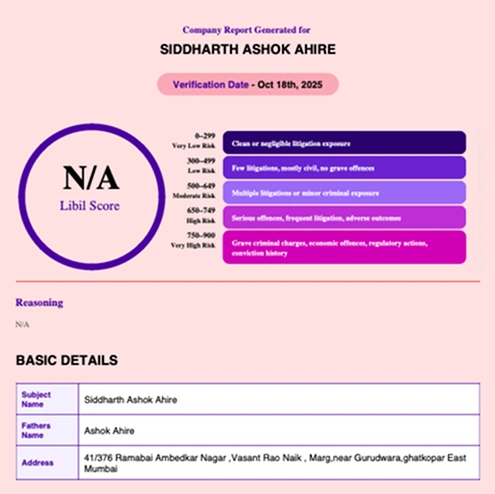
Detailed Report
-
Turnaround: about 2 hours
-
Best for: escalations, senior hires and client audits
-
Output: LIBIL Score, match confidence, case summaries and source links
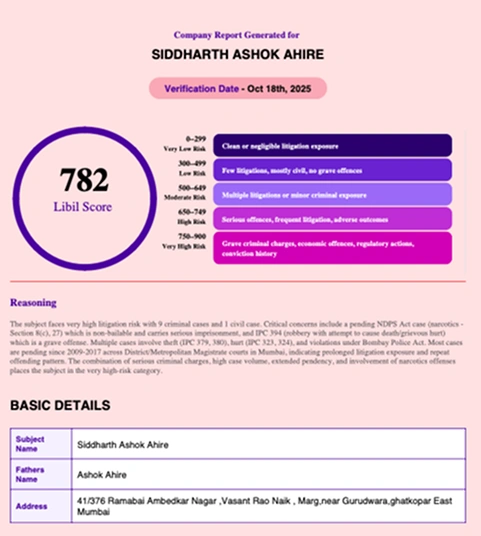
Manual Verification
-
Analyst reviewed
-
Used for leadership roles, regulated industries and sensitive access
-
Disclosure grade reporting
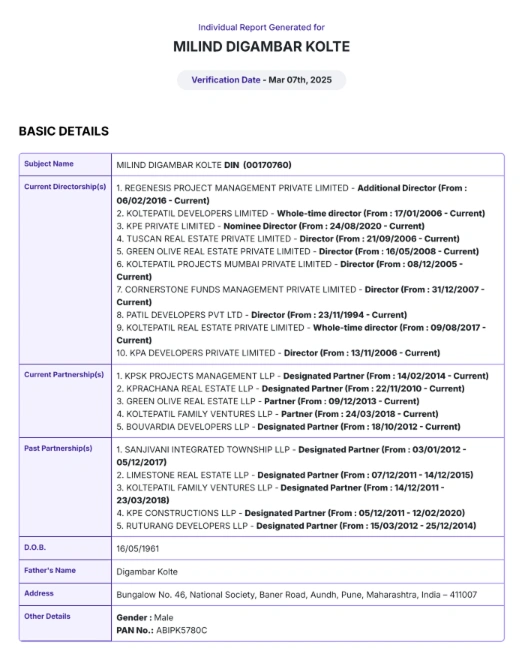
Litigation Checks for insurance teams

Underwriting and risk pricing
include litigation exposure in risk assessments and premium decisions for complex products.

Claims validation and disputes
surface prior litigation or criminal filings that inform liability, subrogation or repudiation decisions.

Fraud detection and investigations
map patterns across claims, repeated addresses and aliases to spot fraud rings.

Reinsurance and counterparty assessment
run due diligence on brokers, reinsurers, TPAs and vendors before contracting.
Regulatory and audit readiness
attach timestamped reports and narratives to files for insurer audits and regulator inquiries.
Trusted by the top names in the industry
Press & Recognitions
-
Forbes india
Legitquest: On a quest to building a legal technology framework in India
Jun 10, 2022 Read More
-
financialexpress
LegitQuest: Now, millions of law case records at your fingertips
April 27, 2020 Read More
Ready to add legal due diligence to your underwriting and claims workflows?
FAQs
For Insurance Companies: LIBIL, PATROL & Legal Research Tool by LegitQuest
Insurance providers operate in a highly regulated environment where the volume of claims, documentation, and compliance requirements continues to grow. Managing these responsibilities efficiently requires more than manual processes or disconnected systems. Delays in handling claims, inconsistencies in documentation, or gaps in compliance can lead to significant operational and reputational challenges. This is why adopting legal tech for insurance company environments has become essential for creating structured and reliable workflows that support both accuracy and efficiency.
A well designed legal tech for insurance company framework helps streamline how information is captured, processed, and shared across teams. Claims data, policy documents, and legal records can be organized within a unified system, making it easier for teams to access and update information in real time. This level of visibility improves coordination between departments, reduces duplication of effort, and ensures that every step in the claims lifecycle is properly documented. Over time, this structured approach enhances reporting accuracy and enables organizations to maintain better control over compliance requirements.
Collaboration is another area where technology plays a crucial role. Insurance providers often work with multiple stakeholders, including legal teams, claims assessors, and external partners. Without a centralized system, maintaining alignment across these stakeholders can become challenging. By leveraging legal tech for insurance company solutions, organizations can create a shared environment where updates are transparent and communication flows more effectively. This not only improves efficiency but also helps ensure that decisions are based on the most current and complete information available.
For firms that manage property related portfolios or deal with real estate linked claims, integrating workflows with real estate law firm software can add another layer of operational strength. Property transactions and disputes often involve complex documentation and multiple parties, making it important to maintain clarity at every stage. By aligning legal processes with specialized software, organizations can better manage contracts, track obligations, and ensure that all relevant information is easily accessible when needed. This integration supports smoother handling of property related matters and reduces the risk of oversight.
Risk evaluation remains a critical component of insurance operations, particularly when assessing claims, onboarding clients, or working with external entities. While structured workflows and documentation improve efficiency, deeper screening is often required to ensure that potential risks are identified early. Incorporating criminal background verification into the process strengthens this layer of due diligence. It provides valuable insights into potential red flags, helping organizations make more informed decisions and maintain a higher level of trust in their operations.
Another advantage of integrating criminal background verification into insurance workflows is the ability to standardize risk assessment across different scenarios. Whether evaluating policyholders, partners, or third party service providers, having a consistent approach ensures that all relevant factors are considered. This consistency not only improves the quality of decision making but also supports compliance with regulatory expectations.
As the insurance sector continues to evolve, the need for efficient, transparent, and reliable legal processes will only increase. Combining the capabilities of legal tech for insurance company solutions with specialized tools like real estate law firm software and robust screening through criminal background verification creates a comprehensive framework for managing both operations and risk. Each component contributes to a more connected system where information is structured, accessible, and actionable.
Ultimately, this integrated approach enables insurance providers to move beyond reactive processes and adopt a more proactive stance. They can handle claims more efficiently, maintain stronger compliance, and make decisions with greater confidence. By leveraging the right mix of technology and structured workflows, organizations are better positioned to navigate complexity while delivering consistent and reliable outcomes.


