





































































Why real estate teams use our litigation check
-
 Property and party coverage
search court records, FIRs and institutional lists for owners, developers, contractors and related entities to surface disputes that affect transfers and titles. -
Title and encumbrance focus
surface cases that mention property identifiers, suit numbers, plaints for possession, injunctions and attachments that matter to closings and escrow reviews. -
Fast triage and deep evidence
use minute level instant checks for pipeline screening and detailed reports with extracts and narratives for title opinions and closing memos. -
Network and link analysis
map related parties, repeated advocates and shared addresses to reveal hidden counterparty networks and conflict lines. -
Audit ready outputs
timestamped reports, source links and downloadable PDFs suitable for transaction files and lender packs.

How a litigation check for real estate works
-
Provide identifiers such as owner name, developer name, property identifier, survey number, address or company registration number to improve precision.
-
Choose Instant for high volume screening or Detailed for transaction grade diligence.
-
Our system searches court datasets, FIRs and institutional sources, applies match logic and returns ranked matches with case extracts, linked enforcement actions and confidence scores.
-
Export the report, attach it to the title file or due diligence pack and escalate critical hits for legal review.
LIBIL - Litigation Check Reports
Instant Report
-
Best for: bulk onboarding, vendor screening, high throughput background checks.
-
Quick results in 1 to 2 minutes.
-
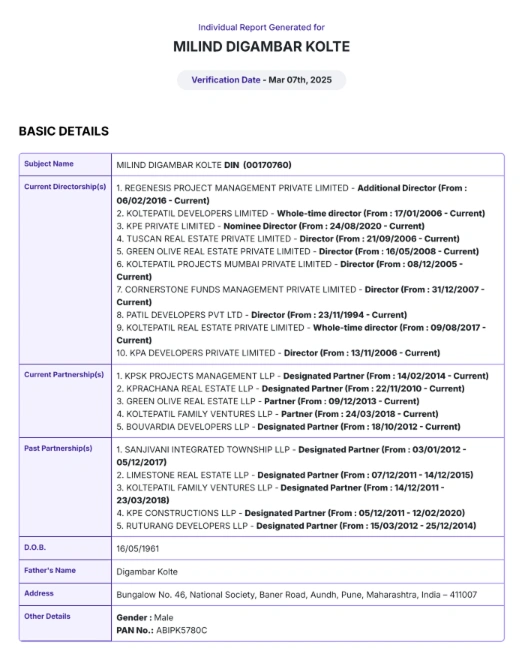
Basic case summaries and match indicators for immediate triage.
Detailed Report
-
Best for: compliance-critical hires, vendor risk escalation, investigative due diligence.
-
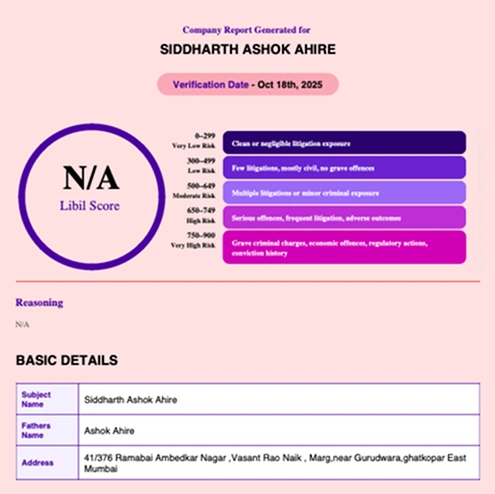
Includes LIBIL Score, case match scoring, narrative reasoning and detailed case summaries.
-
Typical turnaround is approximately 2 hours.

Manual Verification
-
Bespoke analyst-prepared reports for regulatory filings, IPO disclosure or deep investigations. Contact sales for scope and timelines.
Use cases for real estate teams

Title and closing due diligence
validate absence of pending suits, injunctions or attachment orders before signing sale agreements

Seller and developer vetting
screen promoters, vendors and contractors for litigation exposure before LOIs and term sheets.

Portfolio acquisition and investment
run batch litigation checks across large asset pools as part of valuation and risk overlays.

Lender underwriting for mortgages and construction loans
include litigation checks in credit memos and security reviews to reduce collateral risk.
Dispute readiness and mitigation
identify potential litigation
Trusted by the top names in the industry
Press & Recognitions
-
Forbes india
Legitquest: On a quest to building a legal technology framework in India
Jun 10, 2022 Read More
-
financialexpress
LegitQuest: Now, millions of law case records at your fingertips
April 27, 2020 Read More
Ready to run a litigation check for a property or transaction?
FAQs
For Real Estate: LIBIL & PATROL by LegitQuest
Managing supplier relationships has become increasingly complex as organizations expand their networks and rely on a wide range of vendors, partners, and third party service providers. Each relationship introduces its own set of compliance requirements, financial considerations, and potential legal exposure. Without a structured approach, it can be difficult to maintain visibility across these areas or ensure that risks are being evaluated consistently. This is where supplier due diligence software plays a crucial role, enabling organizations to bring structure and clarity to how supplier evaluations are conducted and monitored over time.
A well implemented supplier due diligence software solution allows teams to assess vendors through a standardized framework, ensuring that every evaluation follows the same criteria. This includes reviewing compliance records, understanding financial stability, and identifying any past legal issues that may impact the relationship. By centralizing this information, organizations can reduce reliance on fragmented processes and create a more reliable system for decision making. It also ensures that risk assessments are not limited to the onboarding stage but continue throughout the lifecycle of the supplier relationship.
Ongoing monitoring is an important aspect that often gets overlooked in traditional approaches. Supplier risks can evolve over time due to changes in regulations, financial conditions, or operational practices. With supplier due diligence software, organizations can maintain continuous oversight, track updates, and respond proactively to any emerging concerns. This helps reduce operational risk and ensures that businesses are not caught off guard by developments that could have been identified earlier.
As organizations increasingly operate within digital ecosystems, the need to align supplier management with broader regulatory frameworks becomes even more important. This is where leveraging legal tech for fintech can extend risk controls and support regulatory alignment. By integrating supplier due diligence processes with fintech focused legal technology, businesses can ensure that their compliance efforts remain consistent across both financial and operational activities. This alignment is particularly valuable in industries where regulatory scrutiny is high and the margin for error is minimal.
In addition to supplier evaluations, organizations also need to maintain consistent standards when onboarding partners or customers. Risk management cannot be effective if different processes are applied across different types of relationships. Incorporating customer due diligence into onboarding workflows ensures that the same level of scrutiny is applied across the board. Whether assessing a vendor, a partner, or a client, having a unified approach helps maintain consistency and reduces the chances of gaps in evaluation.
Another advantage of integrating customer due diligence with supplier management processes is improved efficiency. When workflows are aligned and supported by technology, teams can avoid duplication of effort and streamline how information is collected and analyzed. This not only saves time but also improves the accuracy of evaluations by ensuring that all relevant data is considered within a single framework.
Over time, the combination of supplier due diligence software, extended regulatory alignment through legal tech for fintech, and consistent onboarding practices using customer due diligence creates a more resilient risk management system. Organizations gain better visibility into their supplier ecosystem, strengthen compliance efforts, and ensure that decisions are supported by accurate and comprehensive insights.
Ultimately, effective supplier management is about more than just initial evaluation. It requires continuous monitoring, structured processes, and alignment across all areas of the business. By adopting the right tools and integrating them into a cohesive framework, organizations can manage supplier relationships with greater confidence, reduce exposure to risk, and support long term operational stability.


