





































































Why choose our litigation check
-
 Investigation grade evidence
reports are structured for investigative workflows so you can attach timestamped case extracts, links and narrative to files. -
Broad legal coverage
searches Supreme Court, High Courts, District Courts and major tribunals plus curated institutional lists to reveal linked litigation and enforcement records. -
FIR and enforcement linkage
surface FIRs, defaulter lists and regulator actions alongside court matters to reveal enforcement exposure and potential predicate offences. -
AI assisted matching
multi identifier matching with confidence scores reduces false positives and helps map networks across aliases, addresses and related entities. -
Audit ready outputs
downloadable PDFs, exportable case timelines and full audit logs for chain of custody and regulatory disclosure.

How a litigation check works
-
Submit subject identifiers such as name, aliases, company, PAN, DIN or addresses to increase precision.
-
Choose Instant for quick screening or Detailed for a scoped, investigator grade report.
-
The system searches court datasets and institutional sources, applies match logic and returns ranked case matches with extracts, FIR links and confidence scores.
-
Export the report, add it to your investigation folder and escalate relevant hits for analyst follow up.
LIBIL - Litigation Check Reports
Instant Check
-
Best for: bulk onboarding, vendor screening, high throughput background checks.
-
Quick results in 1 to 2 minutes.
-
Basic case summaries and match indicators for immediate triage.

Detailed Report
-
Best for: compliance-critical hires, vendor risk escalation, investigative due diligence.
-
Includes LIBIL Score, case match scoring, narrative reasoning and detailed case summaries.
-
Typical turnaround is approximately 2 hours.

Manual Verification
-
Bespoke analyst-prepared reports for regulatory filings, IPO disclosure or deep investigations. Contact sales for scope and timelines.
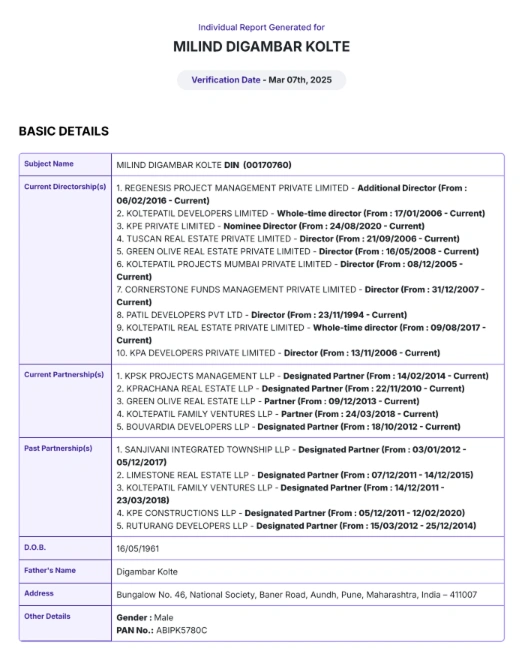
Use case: Financial crime investigation

Predicate offence discovery
find FIRs and linked court cases that establish potential predicate crimes for money laundering enquiries.

Asset tracing and recovery
locate litigation tied to assets, judgments or enforcement actions that can inform restraint, attachment and recovery strategies.

Subject network mapping
build entity and person networks from repeated filings, shared addresses and counsel to expose hidden relationships.

Prosecution and filing support
produce investigator friendly narratives and extracts that can be included in charge sheets or disclosure bundles.
Sanctions and compliance checks
validate litigation exposure against internal watchlists and regulator blacklists during investigations.
Trusted by the top names in the industry
Press & Recognitions
-
Forbes india
Legitquest: On a quest to building a legal technology framework in India
Jun 10, 2022 Read More
-
financialexpress
LegitQuest: Now, millions of law case records at your fingertips
April 27, 2020 Read More
Ready to run a litigation check for your investigation?
FAQs
Here are suggested FAQs you can use on the page and also implement using FAQ Schema Markup for rich snippets:
Financial organizations operate in an environment where regulatory expectations are constantly shifting, often requiring rapid adaptation without compromising accuracy or compliance. As the volume of transactions and the complexity of financial products increase, so does the need for continuous awareness of legal exposure. In this context, adopting legal tech for financial risk becomes essential for building a structured and responsive framework that supports compliance driven workflows and informed decision making.
A strong legal tech for financial risk approach enables teams to identify potential vulnerabilities at an early stage rather than reacting after issues have already surfaced. By organizing data, tracking regulatory obligations, and monitoring activities in real time, organizations can gain better visibility into areas that require attention. This shift from reactive to proactive risk control allows financial institutions to anticipate challenges, implement corrective measures in advance, and maintain greater stability in their operations.
Visibility plays a crucial role in effective risk management. When legal and compliance teams have access to clear, centralized information, they are better equipped to assess exposure and align their actions with regulatory requirements. Legal tech for financial risk helps create this transparency by bringing together different aspects of legal operations into a unified system. This not only improves coordination across teams but also ensures that decisions are based on accurate and up to date insights, reducing the chances of oversight.
At the same time, financial risk management is not a one size fits all process. Different sectors within the financial ecosystem have unique regulatory frameworks and operational challenges. This is where sector specific solutions such as legal tech for banks become particularly valuable. By addressing the specific compliance requirements and workflows relevant to banking institutions, these solutions help ensure that legal operations remain aligned with industry standards. This targeted approach allows banks to manage regulatory obligations more effectively while maintaining efficiency in their day to day activities.
Another important aspect of managing financial risk is understanding legal exposure before making strategic decisions. Whether it involves entering new markets, forming partnerships, or executing high value transactions, having a clear view of potential risks is essential. This is where due diligence in corporate law provides critical insights. By evaluating legal, regulatory, and historical factors, organizations can gain a deeper understanding of the risks involved and make decisions that are both informed and aligned with long term objectives.
Integrating due diligence in corporate law into the broder risk management framework also ensures that evaluations are consistent and thorough. Instead of relying on fragmented checks, organizations can adopt a structured approach that captures all relevant information and presents it in a meaningful way. This not only improves the quality of decision making but also supports compliance by maintaining a clear record of how risks were assessed and addressed.
When these elements are combined, legal tech for financial risk, legal tech for banks, and due diligence in corporate law create a comprehensive and well aligned system for managing legal exposure. Each component contributes to a different aspect of the process, from identifying vulnerabilities and ensuring compliance to evaluating strategic risks and supporting long term planning.
Ultimately, financial organizations that invest in structured legal technology and integrated due diligence frameworks are better positioned to navigate regulatory complexity with confidence. By improving visibility, strengthening oversight, and adopting a proactive approach to risk management, they can not only meet compliance requirements but also support sustainable growth in an increasingly demanding landscape.Financial organizations operate in an environment where regulatory expectations are constantly shifting, often requiring rapid adaptation without compromising accuracy or compliance. As the volume of transactions and the complexity of financial products increase, so does the need for continuous awareness of legal exposure. In this context, adopting legal tech for financial risk becomes essential for building a structured and responsive framework that supports compliance driven workflows and informed decision making.


