





































































Smarter Litigation Checks & Case Tracking for Banks
In the banking industry, missing legal red flags can lead to fraud, loan defaults, or compliance penalties. Legitquest helps banks stay ahead with two advanced legal tech tools
Case Management Tool for Banks
-
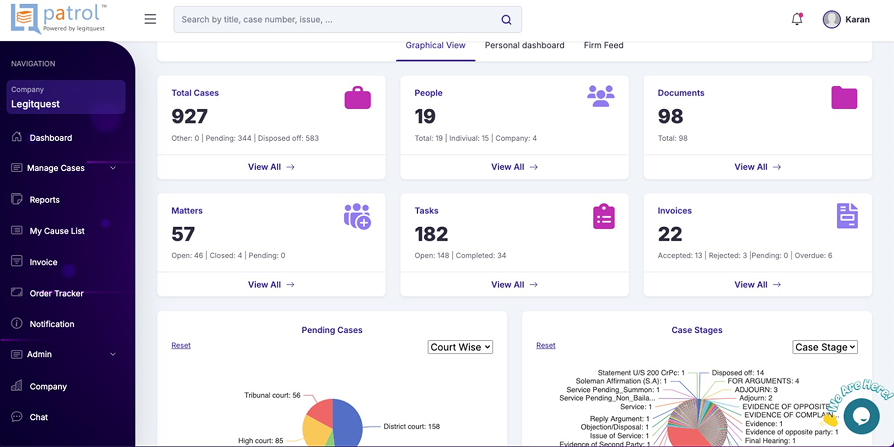
 Legal case overload is a real problem for banks. With cases ranging from loan defaults to fraud disputes, manual handling wastes time and increases risk.
 -
PATROL is an intelligent case management system designed for BFSI legal teams. It provides a centralized dashboard to track cases, access documents, receive updates, and manage court deadlines efficiently.
AI-Powered Litigation Check for Confident Banking Decisions
-
LIBIL is a legal due diligence tool that pulls real-time litigation data from 10,000+ courts and tribunals across India. It enables banks to make faster, safer lending and compliance decisions by identifying legal and compliance risks instantly.
-
Whether you’re processing loans, evaluating startups, or conducting customer due diligence, LIBIL delivers full-spectrum legal reports in minutes flagging ongoing cases, criminal records, and other red flags
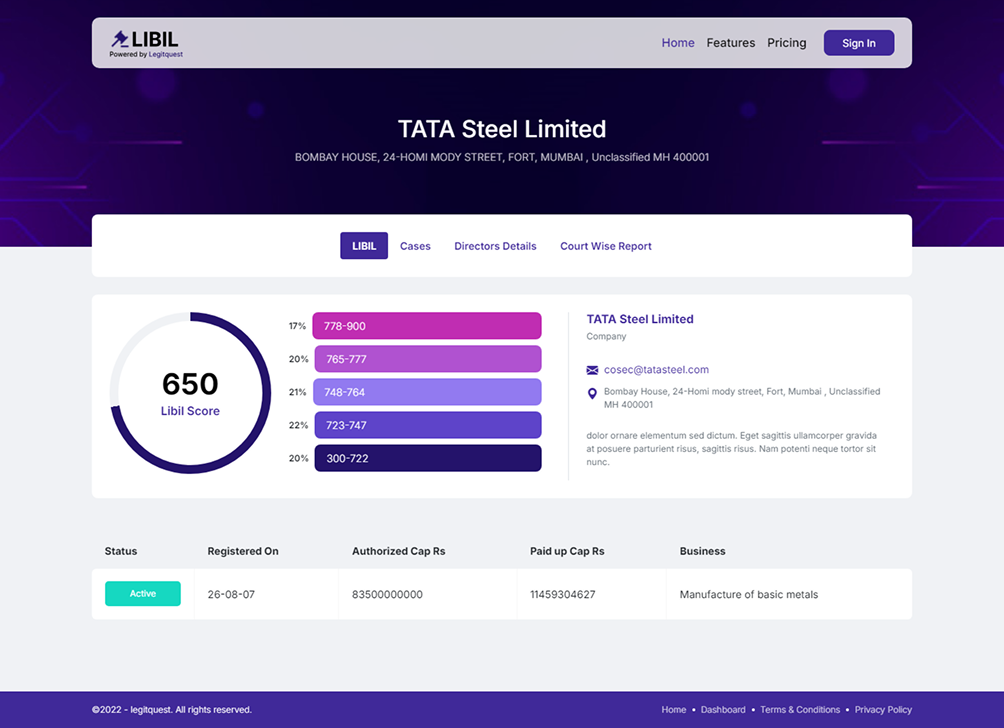
LIBIL - Litigation Check Reports
Instant Check
-
Best for: bulk onboarding, vendor screening, high throughput background checks.
-
Quick results in 1 to 2 minutes.
-
Basic case summaries and match indicators for immediate triage.
Detailed Report
-
Best for: compliance-critical hires, vendor risk escalation, investigative due diligence.
-
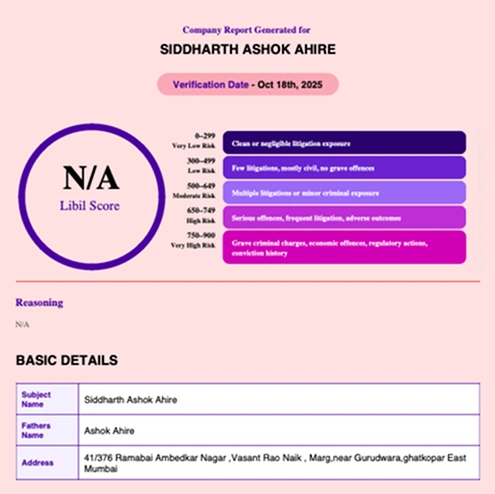
Includes LIBIL Score, case match scoring, narrative reasoning and detailed case summaries.
-
Typical turnaround is approximately 2 hours.

Manual Verification
-
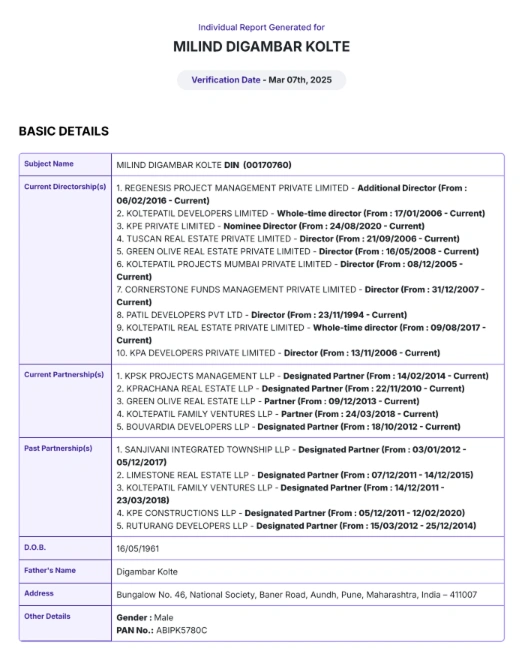
Bespoke analyst-prepared reports for regulatory filings, IPO disclosure or deep investigations. Contact sales for scope and timelines.
Use cases in credit lending

Pre sanction underwriting
include litigation check outputs in credit memos and risk templates to avoid missed liabilities.

Ongoing portfolio monitoring
continuous surveillance for new filings, judgments or enforcement actions that change borrower risk.

Covenant breach and exception handling
create cases automatically on breach triggers, route tasks and record remediation steps.

Recovery and enforcement management
manage the lifecycle of recovery matters from notice to attachment and judgment execution.
Credit committee and audit packs
produce audit ready narratives, evidence extracts and timelines for regulatory and governance reviews.
Trusted by the top names in the industry
Press & Recognitions
-
 Forbes india
Legitquest: On a quest to building a legal technology framework in India
Jun 10, 2022 Read More -
 financialexpress
LegitQuest: Now, millions of law case records at your fingertips
April 27, 2020 Read More -
.webp) Economic Times
Economic TimesLegitquest raises $660,000 in ongoing round from existing investors InfoEdge, WaterBridge Ventures
Dec 11, 2024 Read More -
 Business Standard
Startup Investments (Holding) to invest Rs 4 cr in Legitquest
Nov 11, 2024 Read More -
 Vise Stories
Legitquest Raises $660K in Ongoing Round from Existing Investors
Dec 12, 2024 Read More




Ready to add litigation checks and a case management tool to your credit workflows
FAQs
For Bank: LIBIL + PATROL by LegitQuest
Banks operate in an environment where regulatory expectations are not only strict but also constantly evolving. Legal teams are expected to manage large volumes of compliance documentation, monitor regulatory changes, and ensure that every process aligns with established standards. Handling this manually or through disconnected systems can quickly lead to inefficiencies and increased risk. This is why adopting legal tech for banks has become essential for creating structured workflows that support both accuracy and speed in legal operations.
A well implemented legal tech for banks framework helps organize compliance activities into clear, trackable processes. Documentation, approvals, and reporting can be managed within a centralized system, giving teams better visibility into ongoing tasks and obligations. This structured approach reduces reliance on manual tracking and minimizes the chances of errors or missed deadlines. It also allows legal teams to respond more quickly to regulatory requirements, ensuring that updates are implemented efficiently without disrupting daily operations.
Visibility is a key advantage in this context. When legal and compliance teams have access to real time insights, they are better equipped to identify gaps, monitor progress, and maintain control over complex workflows. Legal tech for banks enables this level of transparency by bringing together data from multiple sources into a unified environment. As a result, decision making becomes more informed, and institutions can maintain a consistent approach to compliance across different departments and functions.
At the same time, banking compliance does not exist in isolation. It often overlaps with broader financial risk management and even hiring or vendor related evaluations. This is where integrating legal tech for financial risk becomes valuable. By extending visibility beyond compliance tasks to include exposure monitoring and analysis, organizations can take a more proactive approach to managing risk. Instead of reacting to issues after they arise, teams can identify potential vulnerabilities early and implement measures to address them effectively.
Another important area where banks need strong oversight is onboarding, whether it involves hiring employees or engaging with third party vendors. Ensuring that individuals and entities meet compliance standards is critical for maintaining trust and avoiding reputational or regulatory issues. Incorporating legal due diligence for BGV into these processes adds an essential layer of verification. It allows institutions to assess background information, identify potential risks, and ensure that onboarding decisions are supported by accurate and comprehensive data.
Integrating legal due diligence for BGV into existing workflows also helps maintain consistency across different types of evaluations. Whether the focus is on employees, partners, or vendors, having a standardized approach ensures that all relevant checks are conducted and documented properly. This not only improves the quality of decision making but also supports audit readiness by creating a clear record of due diligence activities.
When these elements are brought together, legal tech for banks, legal tech for financial risk, and legal due diligence for BGV create a more connected and efficient legal and compliance ecosystem. Each component addresses a specific need, from managing regulatory workflows and monitoring exposure to verifying individuals and entities during onboarding. Together, they enable banks to operate with greater clarity, control, and confidence.
Ultimately, in a sector where compliance is critical and the cost of error is high, having the right systems in place makes a significant difference. By leveraging structured legal technology and integrating it with broader risk and due diligence processes, banks can improve efficiency, reduce manual effort, and maintain a proactive approach to managing regulatory and operational challenges.


