Your Weekly dose of Legal, Technology and Risk Insights
The Trust Equation: How Law Firms can build Brand Credibility in a Skeptical Market
In today’s legal market, trust isn’t just something that builds over time, it is a key strategy. With most clients researching firms online before reaching out, how a firm presents itself matters more than ever. Trust now depends on three things: credibility, consistency, and connection.
Credibility means showing expertise in a clear and relatable way. Consistency is about aligning your message with how your firm actually works online and offline and connection comes from being human: listening, being transparent, and showing empathy.
Even small or new firms can build strong trust by being clear about their values and staying true to them. In the end, trust grows not from ads or campaigns, but from how a firm communicates, behaves, and treats people every day.
Justice Yashwant Varma Moves Supreme Court Against Removal Recommendation
Justice Yashwant Varma has moved the Supreme Court, challenging the findings of a three-judge in-house panel that recommended his removal after unaccounted cash was allegedly found at his residence. In his plea, he argues that the in-house inquiry process is unconstitutional, sidesteps Parliament's authority, and denies basic principles of natural justice.
He claims he wasn’t given a fair chance to defend himself, wasn’t shown key evidence, and wasn’t given enough time to respond. He has also raised concern over media leaks, saying they breached confidentiality and unfairly tarnished his reputation.
Delhi Court Asks Accused To Stand With Hands In Air As Punishment For Wasting Its Time
In a 2018 criminal trespass case, a Delhi court found four individuals guilty of contempt for not submitting their bail bonds despite repeated chances. Judicial Magistrate Saurabh Goyal directed them to stand in the courtroom with their hands raised until the court rose for the day.
The court cited their conduct as a waste of judicial time and convicted them under Section 228 of the IPC. One of the accused was initially sent to judicial custody for 14 days but was later released after furnishing surety.
Legal Education Highlights – July 2025
Former CJI Sanjiv Khanna Appointed Distinguished Professor at HPNLU
The Himachal Pradesh National Law University, Shimla, has welcomed former Chief Justice of India, Sanjiv Khanna, as a Distinguished Professor. Justice Khanna, who retired in May this year as the 51st Chief Justice of India, will be associated with the university in a flexible academic role without a fixed tenure. The announcement comes shortly after NLU Delhi appointed former CJI Dr. DY Chandrachud to a similar honorary position, signalling a growing trend of involving eminent jurists in legal academia.
Justice AS Oka Urges Law Students to Consider Litigation
During an interaction with students at the National Law School of India University (NLSIU), retired Supreme Court judge Justice Abhay S. Oka encouraged young law graduates to take up litigation. Calling it a form of “five-star social work,” Justice Oka highlighted that litigation allows lawyers to meaningfully contribute to society while building a rewarding professional life.
BCI Moves Against Unauthorised Online LL.M. Degrees
The Bar Council of India (BCI) has taken a strong stand against institutions offering LL.M. degrees through online, hybrid, or distance learning modes without its prior approval. Institutions like NLIU Bhopal, IIT Kharagpur, Jindal Global University, and NLU Delhi are reportedly under scrutiny. The BCI stated that such degrees would be treated as invalid for jobs, teaching roles, research positions, and judicial appointments. Raising concerns about misleading course advertisements and the dilution of legal education standards, the BCI warned that these programmes do not meet the requirements of interactive learning, legal reasoning, and analytical skills vital to the legal profession. A national advisory is expected soon to alert students, institutions, and public bodies to disregard unapproved LL.M. degrees.
"You need a dictionary!" Supreme Court objects to SIT expanding probe in case on FB post by Ali Khan MahmudabadCase
The Supreme Court has directed the SIT to limit its investigation against Ashoka University professor Ali Khan Mahmudabad strictly to the two FIRs filed over his Facebook posts on Operation Sindoor
The Court criticised the SIT for expanding the probe unnecessarily and ordered it to complete the investigation within four weeks. Noting that Mahmudabad had already cooperated, the Court said he need not be summoned again.
His interim protection from arrest will continue, and he remains free to write on any issue except matters pending before the Court.
Supreme Court Acquits Death Row Convict, Issues Nationwide Guidelines on DNA Evidence
In a significant ruling, the Supreme Court acquitted a man sentenced to death for rape and double murder in Tamil Nadu, citing serious lapses in the handling of DNA evidence. The Court found that improper collection, storage, and delays in processing biological samples rendered the forensic evidence unreliable.
Emphasising that a "faulty investigation" led to potential miscarriage of justice, the Court laid down binding guidelines for all states regarding the collection and preservation of DNA evidence. Key directives include:
- Proper documentation of DNA collection with details of FIR, I.O., and medical personnel.
- Timely submission to forensic labs within 48 hours.
- Restrictions on tampering, resealing, or opening of DNA packages without court approval.
- Maintenance of a Chain of Custody Register throughout investigation and trial.
The Court has directed all High Courts and Directors General of Police to ensure strict compliance, and urged State Police Academies to initiate training for Investigating Officers.
CitationKattavellai @ Devakar v. State of Tamil Nadu, 2025 LiveLaw (SC) 703
Bench: Justices Vikram Nath, Sanjay Karol, and Sandeep Mehta
Supreme Court: Order VII Rule 11 CPC plaint rejection cannot rest upon Res Judicata
Pandurangan. v. T. Jayarama Chettiar and Anr. In [2025 LiveLaw (SC) 698], the Supreme Court ruled regarding res judicata. The order mentioned this plea cannot be a reason to reject a plaint per CPC Order VII Rule 11. The Court held the view that such objections do involve mixed questions of law and fact since they require a full trial.
The bench of Justices P.S. Narasimha and Joymalya Bagchi set aside the Madras High Court’s order upholding plaint rejection on res judicata grounds. The Court cited Keshav Sood v. Kirti Pradeep Sood (2023) and V. Rajeshwari v. T.C. Saravanabava (2004) and stated that people must examine similarity in prior decrees and causes of action during trial, not initially.
The Court clarified that it expressed absolutely no opinion as to the res judicata plea's merits. However, it firmly held up that the issue cannot be summarily decided under Order VII Rule 11 CPC.
HALSA Organises 2nd National Lok Adalat, Disposes Off 6.44 Lakh Cases
On 12 July, 2025, the 2nd National Lok Adalat was held throughout Haryana by HALSA under the guidance of Justice Lisa Gill, and was conducted at all 22 districts and 34 sub-divisions of Haryana. In all, 6,44,246 cases were resolved by 170 benches, which include the civil, criminal and MACT cases.
Noteworthy cases 11-year-old criminal appeal resolved in Karnal, ahead of trial Accidental death case resolved in Faridabad with Rs 6.5 lakh post a speedy disability assessment In total over 8 lakh cases were referred proving the dedication of HALSA to the cause of affordable and expeditious justice.
BREAKING | SC: Secretly Recorded Spouse Conversations Can be Relied on in Matrimonial Matters
On July 14, 2025, in a historic judgement, the Supreme Court declared that the telephonic conversation of a spouse recorded in secrecy could be admissible as evidence in marital litigation.
A Division Bench of Justice BV Nagarathna and Justice Satish Chandra Sharma set aside an order of the Punjab & Haryana High Court that held such recordings to be in breach of the right to privacy.
Referring to Section 122 of the Indian Evidence Act, the Court explained :The protection given to communications between spouses is not complete and is subject to exceptions, and particularly when the spouses are at odds.
It does not provide for any right to privacy or override the right to fair trial under Article 21 of the Constitution.
Vaibhav Parikh on AI, M&A & Legal Reforms [ETLegalWorld Event]
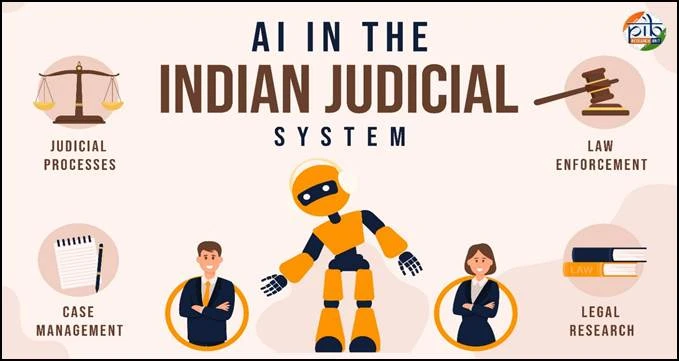
Limited technology adoption in the legal practice till now has been incremental, but AI is likely to revolutionize the way in which law is practiced, said Vaibhav Parikh, partner, Nishith Desai Associates at one of ETLegalWorld’s events, titled ‘AI-Powered Legal Solutions: The Next Frontier’, and co-hosted with Microsoft.
AI will soon “outpace” drafting and even play a significant role in negotiation, which can potentially disrupt the traditional law firm model where the delivery of complex legal advice can become “faster” and the manual part of lawyers are less likely to be utilized, Parikh said.
But on M&A, he forecast that 2025 could be a flying year, for both distress sales and growth, partly underpinned by geopolitical change and the development of the tech sector.