

































































Why Credit Scores Alone May Not Tell the Full Story
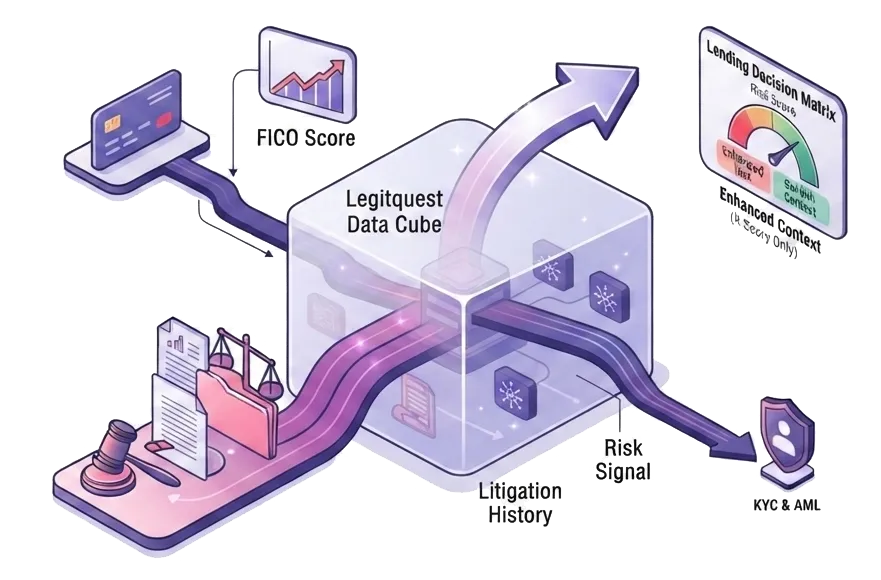
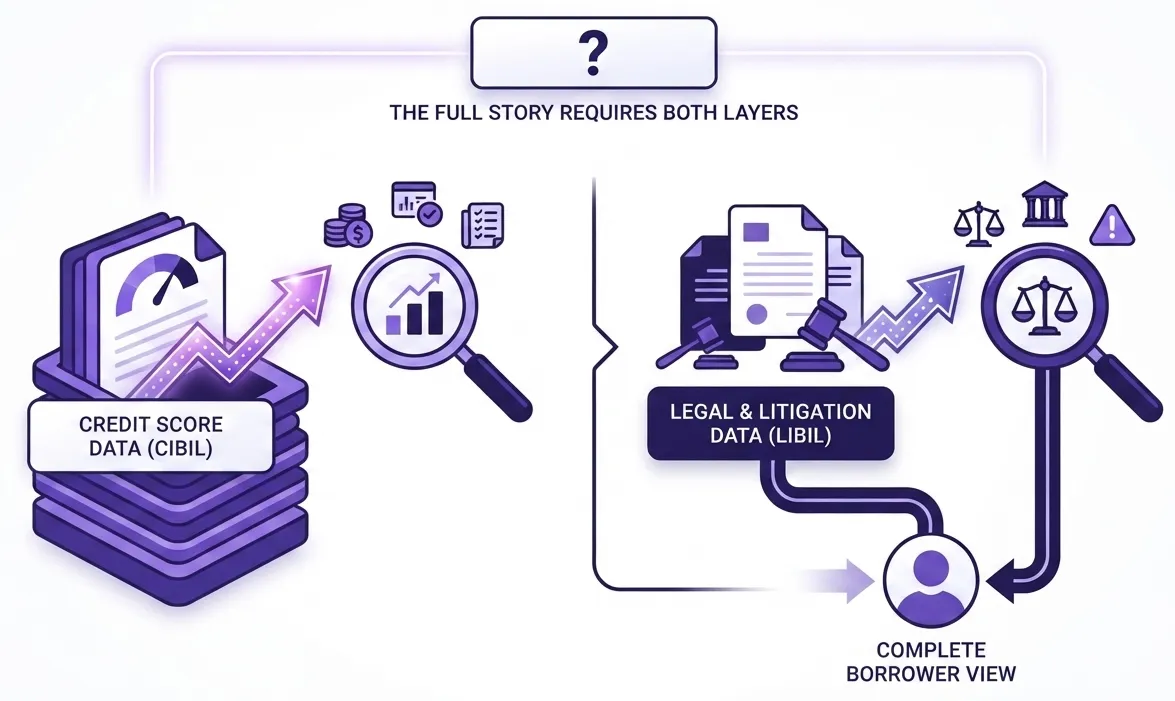
Credit scores and credit bureau reports are built to answer a specific question well: how has this borrower behaved financially? They give lenders visibility into repayment behaviour, existing credit exposure, utilisation, delinquencies, defaults, enquiries, and history.
What they're not designed to capture is legal and dispute-related exposure to civil disputes, criminal proceedings, regulatory actions, or litigation involving a business, its promoters, or its directors. That's a different data source entirely, sitting in court and public legal records rather than credit bureau infrastructure.
Credit information helps understand financial behaviour. Litigation checks help surface legal and dispute-related context. Neither replaces the other, LIBIL is built to sit alongside CIBIL and other credit bureau data as a complementary layer, not a competing one.
The Lending Risk Blind Spot
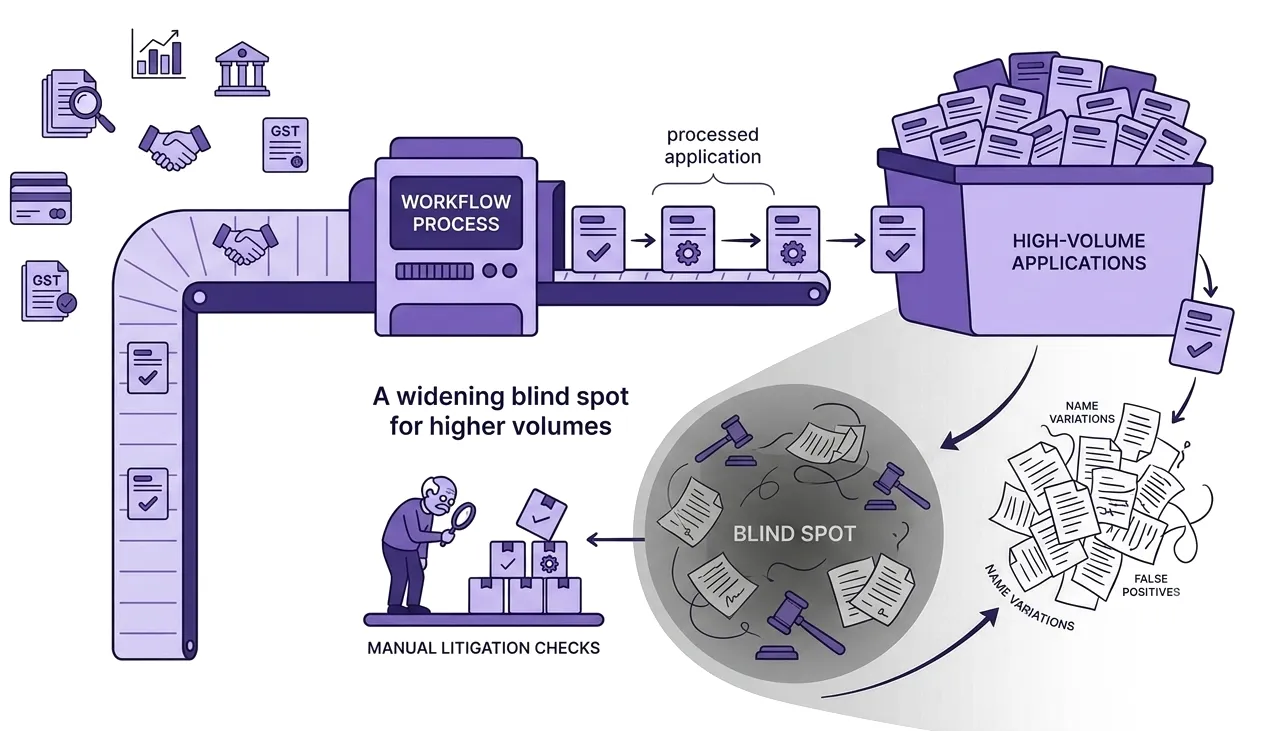
A typical lending workflow already runs through KYC verification, credit bureau checks, income verification, bank statement analysis, financial statement review, GST verification, business verification, fraud checks, document verification, and manual underwriting.
Litigation checks, where they happen at all, tend to be manual, reserved for higher-value exposures, triggered by specific risk events, and difficult to standardise or scale across large application volumes. Searching multiple court portals by hand runs into the same friction seen elsewhere in legal data name variations, incomplete identifiers, false positives, duplicate records, and no consistent categorisation. The result is a litigation-related blind spot that widens as application volume grows.
Where Litigation check Fits Into Lending
A structured lending workflow with litigation check added looks like:
Loan Application
Initial borrower intake and submission of application data.
KYC
Identity and address verification of the borrower.
Credit Bureau
Pull credit history and bureau score signals.
Financial Assessment
Income, statements, and repayment capacity review.
Fraud Checks
Application fraud and early-warning signal screening.
Litigation Check
LIBIL-powered litigation intelligence layer across courts, parties, and case status.
Risk Review
Holistic risk review combining all prior signals.
Credit Decision
Final approve / refer / decline by the lender.
Litigation check is relevant at initial screening, during underwriting, for promoter-led businesses, in MSME lending, during exception handling, for enhanced due diligence, and in periodic portfolio review where appropriate.
It's a decision-support layer at each of these points; it doesn't automatically approve or reject a borrower.
How LIBIL Complements Lending Risk Assessment
Comprehensive Litigation Search
Searches supported courts, tribunals, FIR-linked sources, and other public legal records.
AI Identity Resolution
Matches individuals and entities using available identifiers: name, father's name, address, aliases, and other identifiers.
Case Categorisation
Organises findings into civil, criminal, regulatory, pending, and disposed categories.
Filed-By vs. Filed-Against Context
Helps analysts understand whether a case was initiated by or against the subject.
Match Confidence
Available match signals help analysts distinguish stronger matches from weaker ones.
Source-Linked Case Metadata
Court name and type, case number, status, acts, sections, and source links where available.
Risk and Severity Indicators
Where supported by the applicable report type, help teams prioritise matters requiring deeper review.
Structured Reporting
Different report formats support different stages of the lending workflow, from rapid screening to deeper review.
Instant Personal Loan and High-Volume Digital Lending
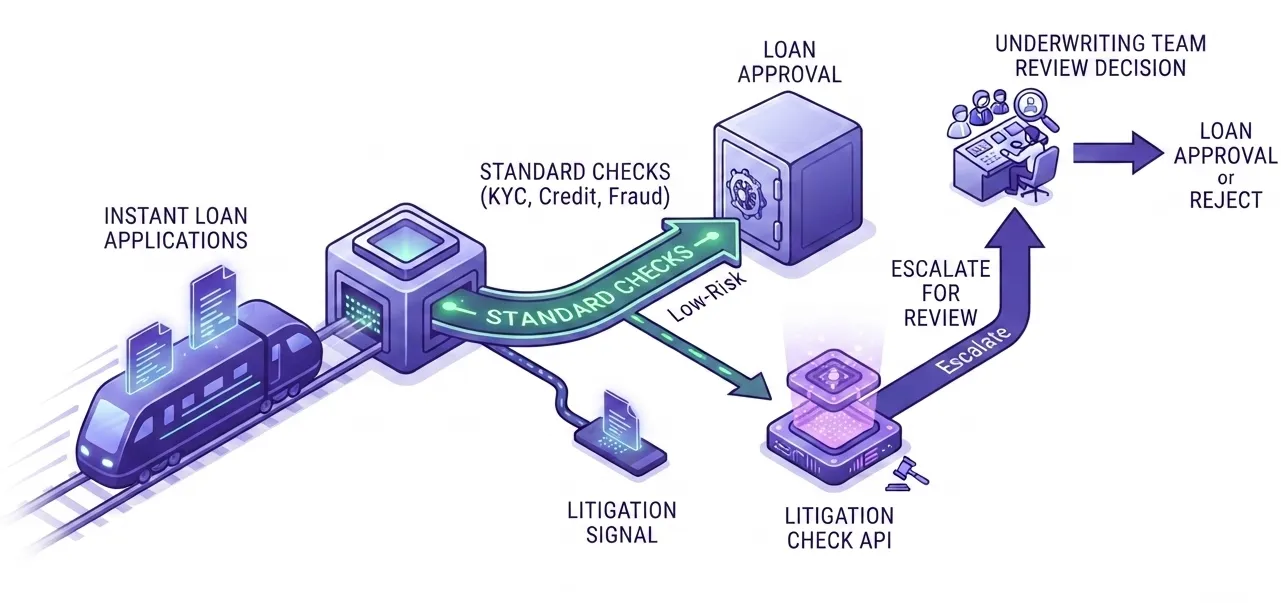
Instant personal loan and other digital-first lending models are built for speed, automation, scale, and low-friction onboarding which creates real pressure when a lender also needs to assess large application volumes without loosening risk controls.
Litigation checks APIs complements the credit bureau checks, KYC, identity verification, and fraud checks already running in an instant personal loan workflow, functioning as a mechanism for identifying cases that may warrant escalation or further investigation rather than an automatic gate. A litigation signal on an instant personal loan application should route to review, not to automatic rejection the underwriting team still makes that call.
Home Loan and Secured Lending
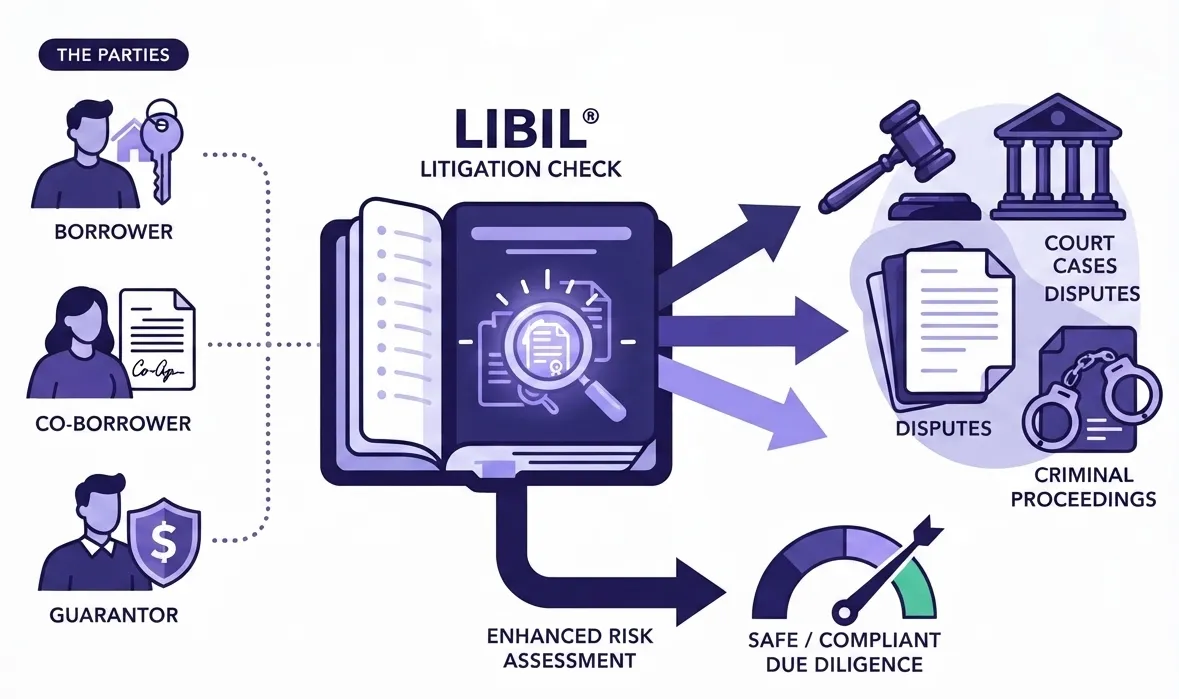
For home loan and other secured lending, litigation check can complement borrower and guarantor risk assessment extending to co-borrowers, and guarantors where relevant to the transaction.
LIBIL® adds litigation intelligence to property and home loan due diligence by helping lenders identify court cases, disputes, criminal proceedings, and other legal records involving borrowers, co-borrowers, guarantors, and relevant parties.
Business Loans and Commercial Lending
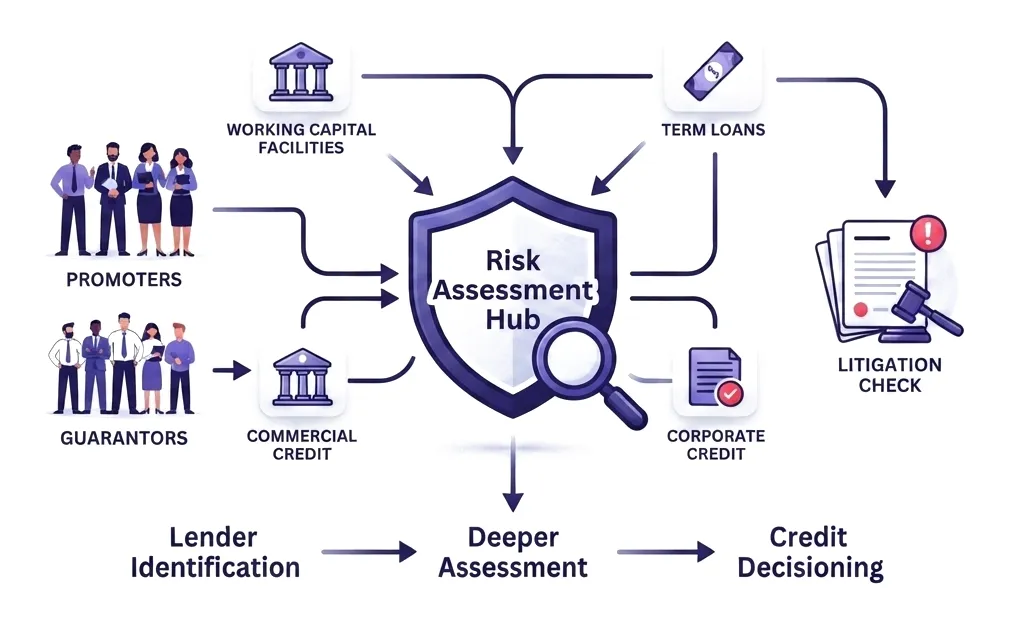
Business loans often require broader diligence than consumer lending, since risk can sit with the business itself as well as its promoters, directors, guarantors, and group entities.
Litigation check can help lenders identify matters across these parties that may warrant deeper assessment relevant across working capital facilities, term loans, commercial credit, SME lending, and corporate credit more broadly.
MSME Loan Risk Assessment
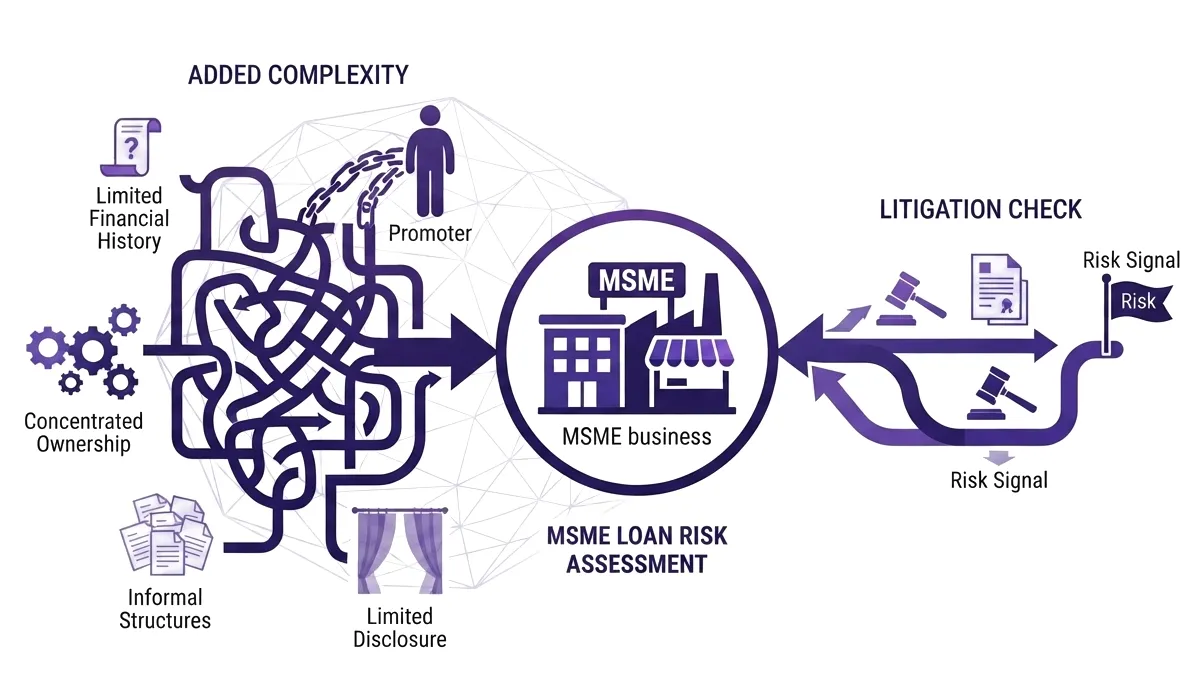
MSME loan underwriting often carries added complexity: promoter dependency, limited financial history, concentrated ownership, informal structures, and limited public disclosure compared to larger corporations.
Litigation check can complement financial and credit data here by adding context around the business itself as well as its promoters, directors, and guarantors, one risk signal among several, not an independent determinant of MSME creditworthiness.
Online Loans and Digital Lending
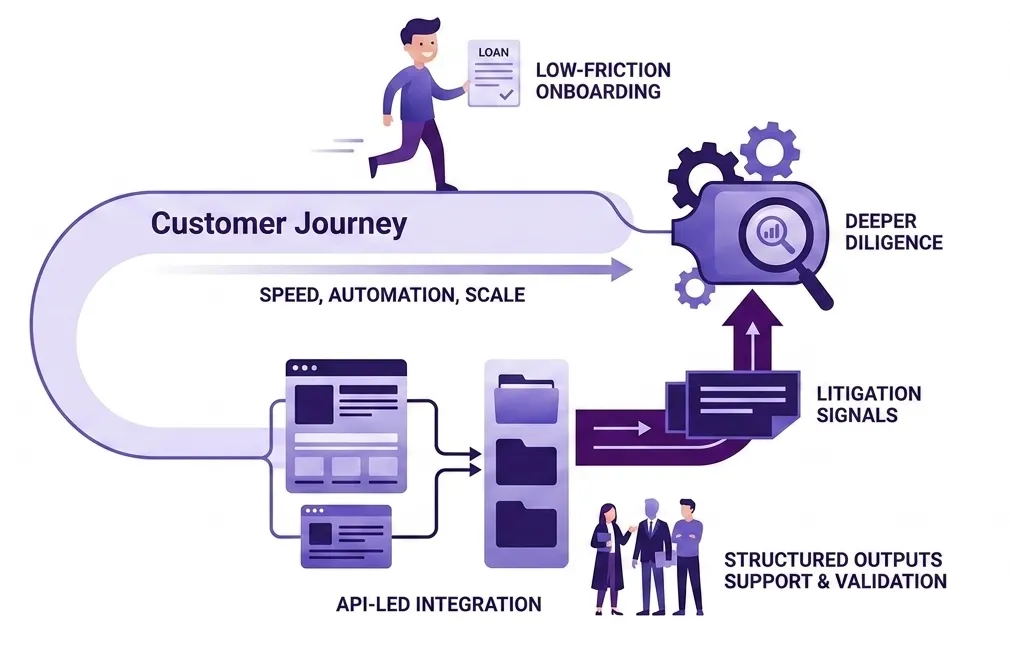
Online loans workflows prioritise speed, automation, scale, and low-friction onboarding the challenge is introducing deeper diligence without disrupting that customer journey.
Structured outputs or API-led integration, where technically supported and validated with the lender's platform, can help bring litigation signals into digital lending workflows without adding manual steps to every application.
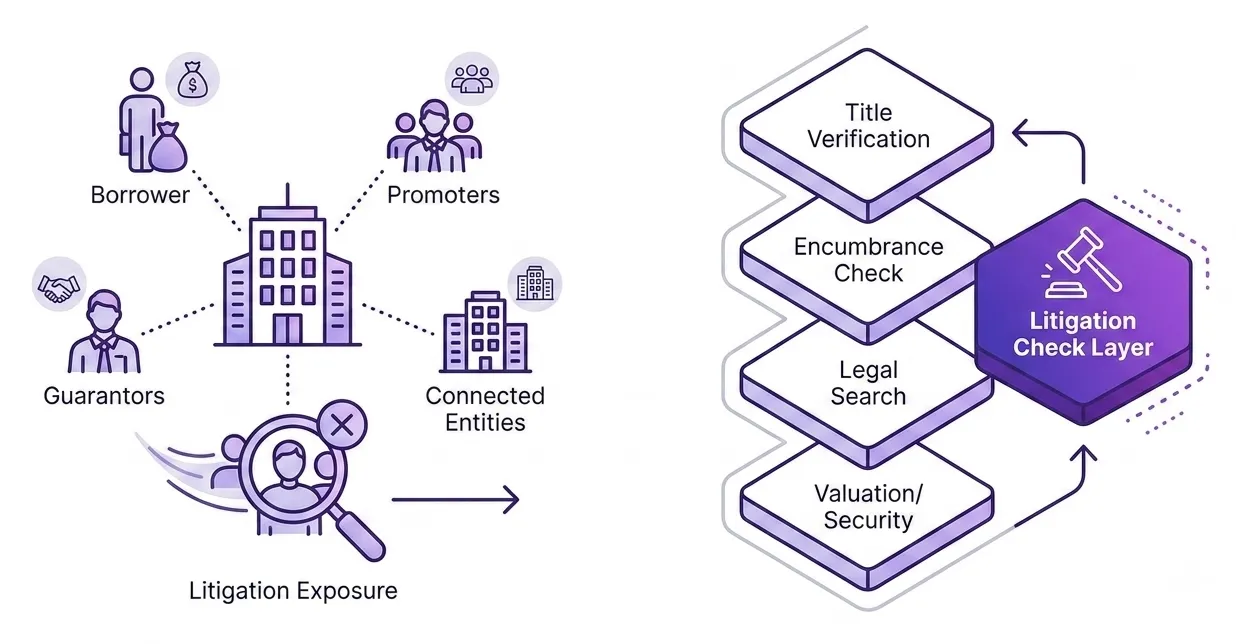
Loan Against Property
For a loan against property, lenders may want to consider litigation exposure involving the borrower, promoters, guarantors, and business entities connected to the facility.
As with home loans, this litigation check layer does not replace property title verification, encumbrance checks, legal search, valuation, or security documentation. It sits alongside those property-specific steps as an additional layer of borrower and entity risk context.
Credit Risk v/s Litigation check
Repayment behaviour
Legal disputes
Credit exposure
Court proceedings
Defaults
Criminal proceedings
Credit utilisation
Regulatory matters
Credit history
Promoter and director litigation
Credit risk asks: how has the borrower behaved financially? Litigation check asks: what legal or dispute-related exposure may require additional context? Combining both perspectives gives lenders a more contextual basis for decisions than either source alone.
Press & Recognitions
-
 Forbes india
Legitquest: On a quest to building a legal technology framework in India
-
 financialexpress
LegitQuest: Now, millions of law case records at your fingertips
-
 yourstory
Google picks 16 Indian startups for its 5th accelerator programme
-
 entrackr
Funding in Indian startups this week (05 Apr-10 Apr)
-
.webp) Economic Times
Economic TimesLegitquest raises $660,000 in ongoing round from existing investors InfoEdge, WaterBridge Ventures
-
 Inc42
Inc42Info Edge To Invest INR 4 Cr In Legal Tech Startup LegitQuest
-
 Business Standard
Startup Investments (Holding) to invest Rs 4 cr in Legitquest
-
 Capital Market
Startup Investments (Holding) to invest Rs 4 cr in Legitquest
-
 Vise Stories
Legitquest Raises $660K in Ongoing Round from Existing Investors
Trusted by the top names in the industry
Bring Litigation Check Into Your Lending Workflow
Modern lending decisions draw on multiple sources of risk context credit data, KYC, financial analysis, fraud signals, and now, litigation check. LIBIL helps banks, NBFCs, and digital lenders add structured legal exposure data to existing credit risk management workflows, as a complementary layer to the checks already in place.


