
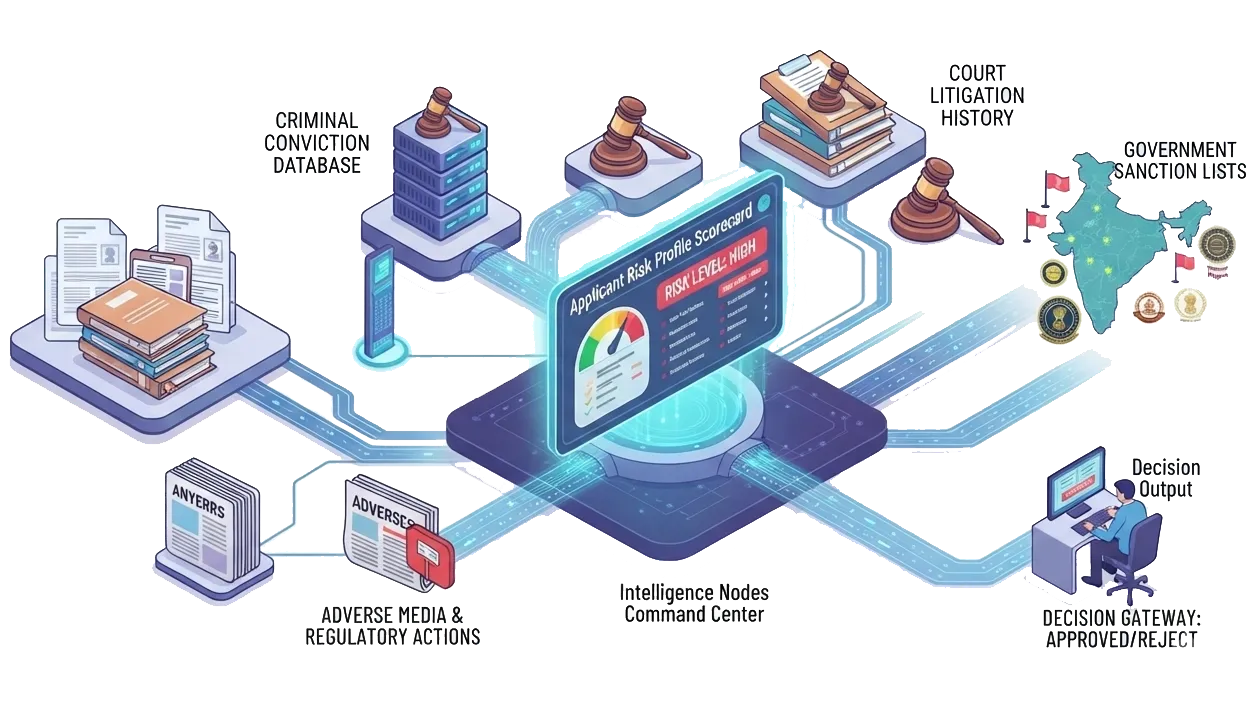

































































Why Case Lists Alone Aren't Enough for High-Risk Reviews
No Standardized Severity Scoring
A list of matched cases still leaves the hardest question unanswered: how serious is this? Without standardized scoring, one reviewer may treat a minor civil filing and a pending criminal matter with equal weight, while another escalates inconsistently.
Slow, Indefensible Manual Workflows
Manual reviews and spreadsheet-based scoring slow approvals and make decisions hard to defend later, a real problem in lending, vendor onboarding, background verification, credit committee reviews, and regulatory filings.
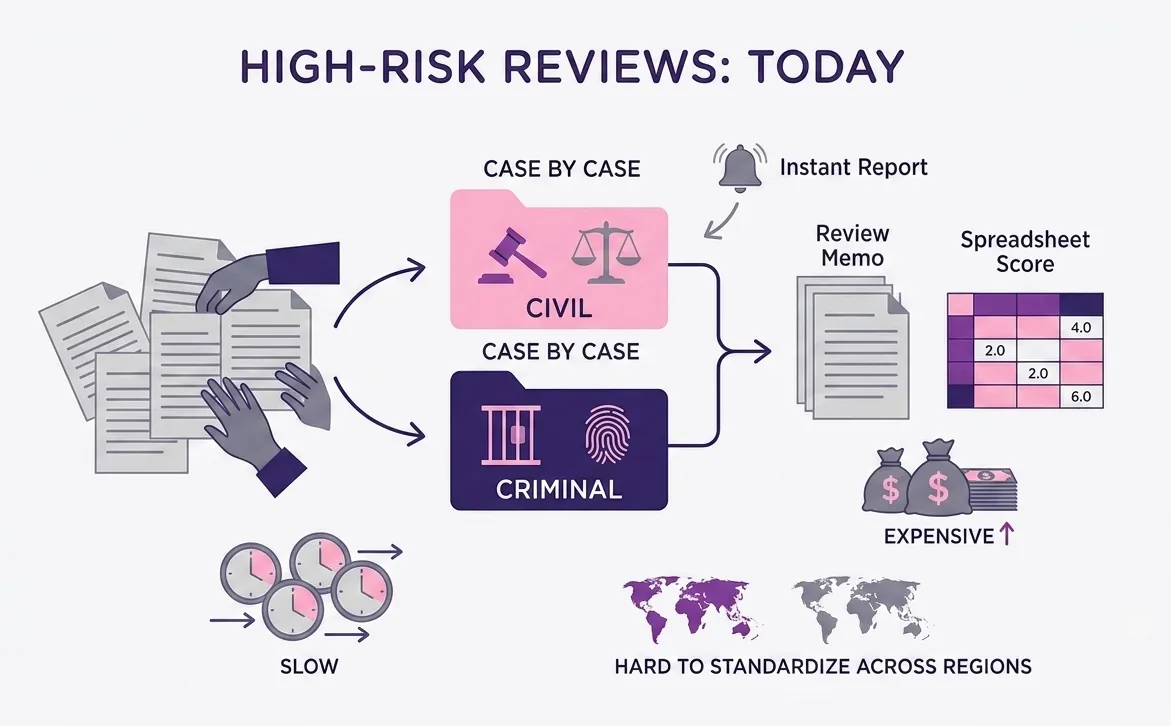
How High-Risk Reviews Are Conducted Today
Most organizations still read judgments manually, categorize civil and criminal matters case by case, and compile findings into review memos or spreadsheet scores, often after an Instant Report has already flagged a profile. This is slow, expensive to run at scale, and hard to standardize across reviewers and regions.
How LIBIL® Interprets Criminal Conviction Records and Litigation Risk
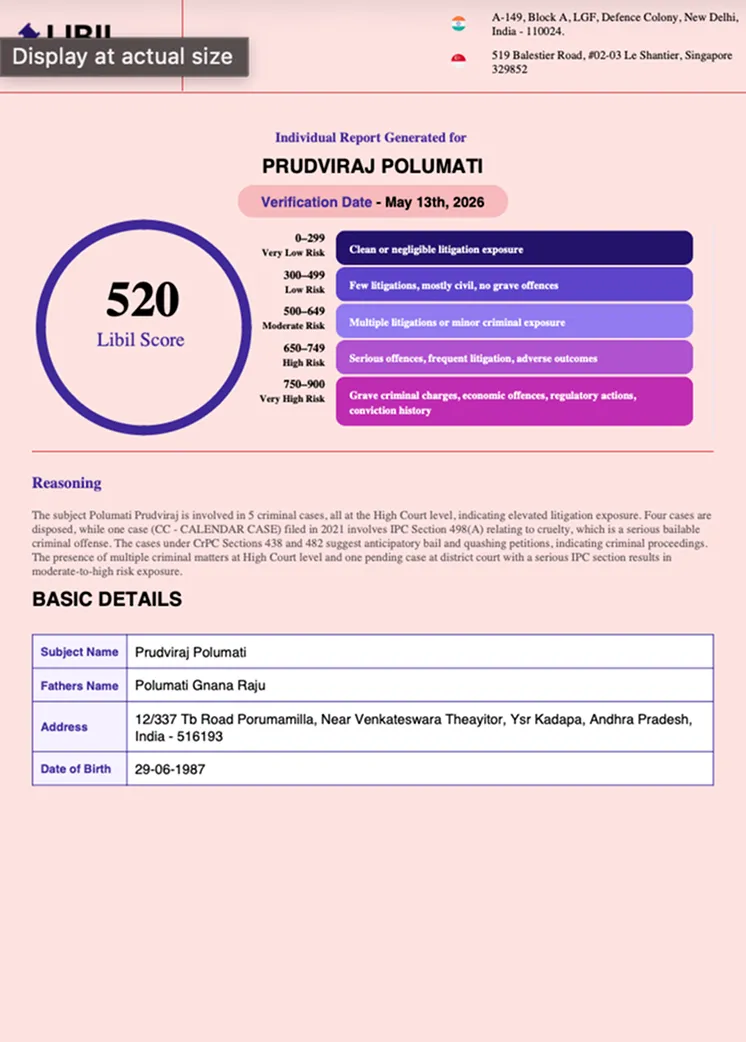
The LIBIL® Score and Risk Band
The Detailed Report assigns a standardized LIBIL® Score and risk band to each subject, translating raw case data, including criminal conviction records where they exist, into a consistent measure of litigation severity teams can act on without reinterpreting the underlying filings.
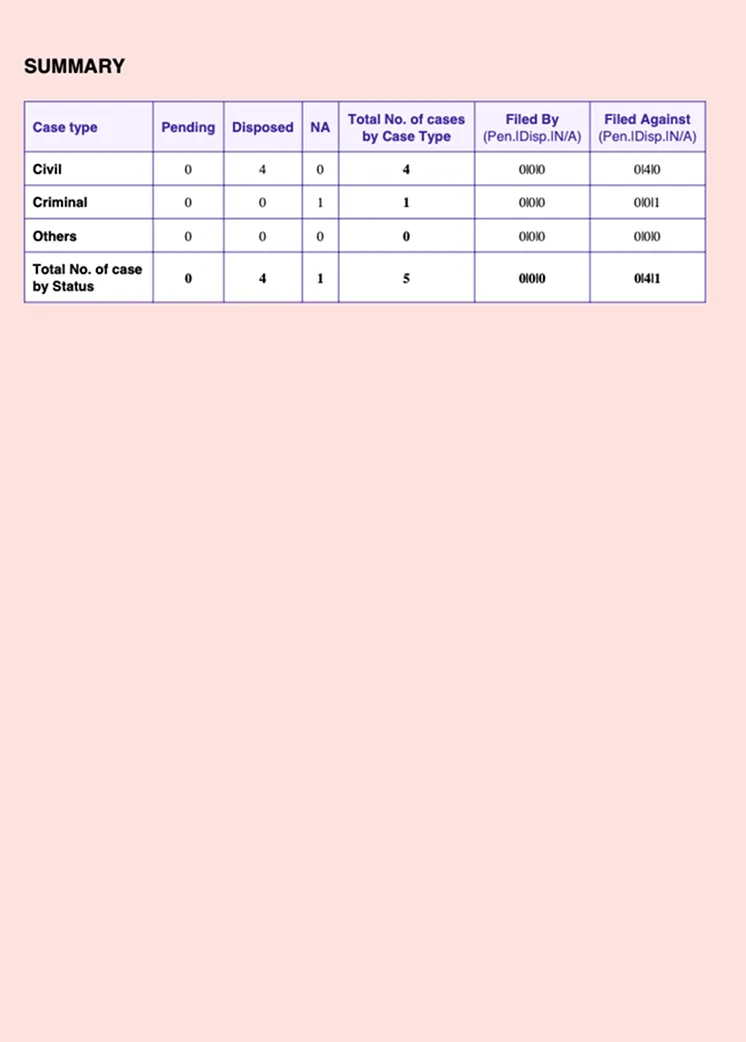
Reasoning Narrative and Case-Type Summary
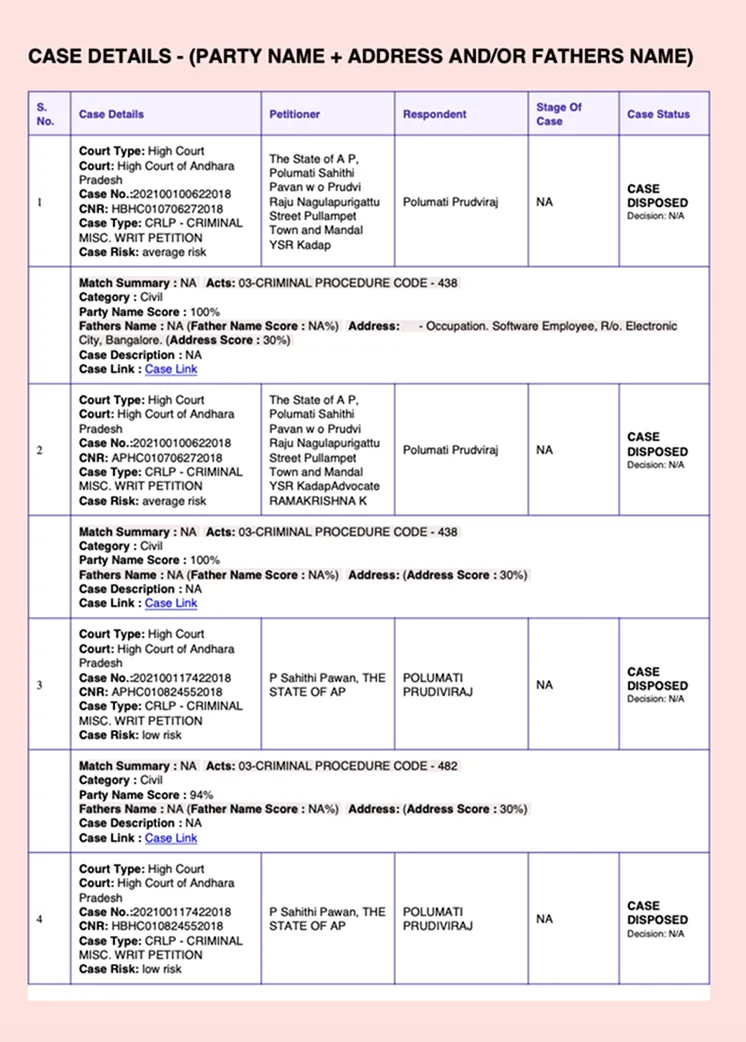
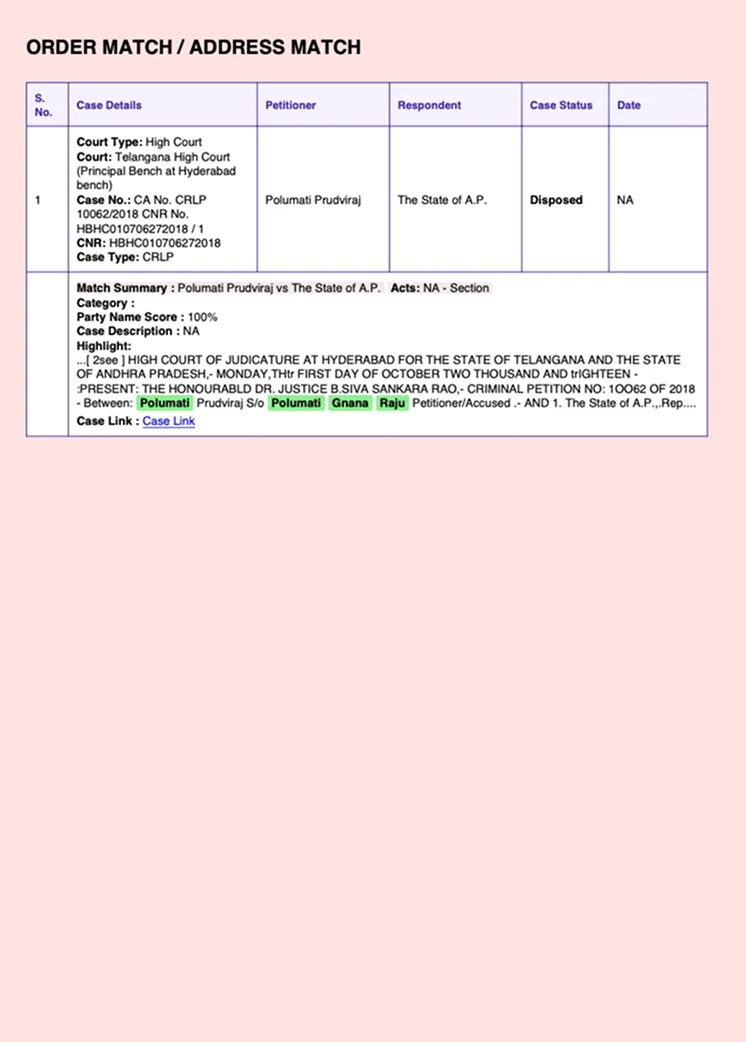
An AI-generated reasoning narrative explains why a subject received a given score, alongside a case-type summary, court metadata, match confidence scores, and FIR text matches where available. Every finding is source-traceable, supporting an online criminal history check that holds up to internal and regulatory scrutiny.
Key Capabilities
LIBIL® Score & Risk Band
Standardizes litigation severity into one score
Reasoning narrative
Explains the basis for the score in plain language
Case-type & status summary
Breaks down civil/criminal, pending/disposed matters
Detailed court metadata
Lists courts, case references, and filing details
Match confidence scores
Scores identity match quality
FIR text matches
Surfaces potential FIR hits where available
Report disclaimer
Frames findings as decision-support
TAT
2 to 4 Hours
Delivered Via
User Portal ad APIs
Where Enterprises Use the Detailed Litigation Check Report
Borrower Review
escalates Instant Report flags into scored, committee-ready assessments.
Vendor Risk Assessment
applies standardized scoring before onboarding higher-risk suppliers.
High-Risk Candidate Screening
adds interpreted litigation context to sensitive hiring decisions.
Press & Recognitions
-
 Forbes india
Legitquest: On a quest to building a legal technology framework in India
-
 financialexpress
LegitQuest: Now, millions of law case records at your fingertips
-
 yourstory
Google picks 16 Indian startups for its 5th accelerator programme
-
 entrackr
Funding in Indian startups this week (05 Apr-10 Apr)
-
.webp) Economic Times
Economic TimesLegitquest raises $660,000 in ongoing round from existing investors InfoEdge, WaterBridge Ventures
-
 Inc42
Inc42Info Edge To Invest INR 4 Cr In Legal Tech Startup LegitQuest
-
 Business Standard
Startup Investments (Holding) to invest Rs 4 cr in Legitquest
-
 Capital Market
Startup Investments (Holding) to invest Rs 4 cr in Legitquest
-
 Vise Stories
Legitquest Raises $660K in Ongoing Round from Existing Investors
Trusted by the top names in the industry
To get a Detailed Report
Move from case counts to confident, defensible decisions.


