

































































What Investigative Due Diligence Really Involves
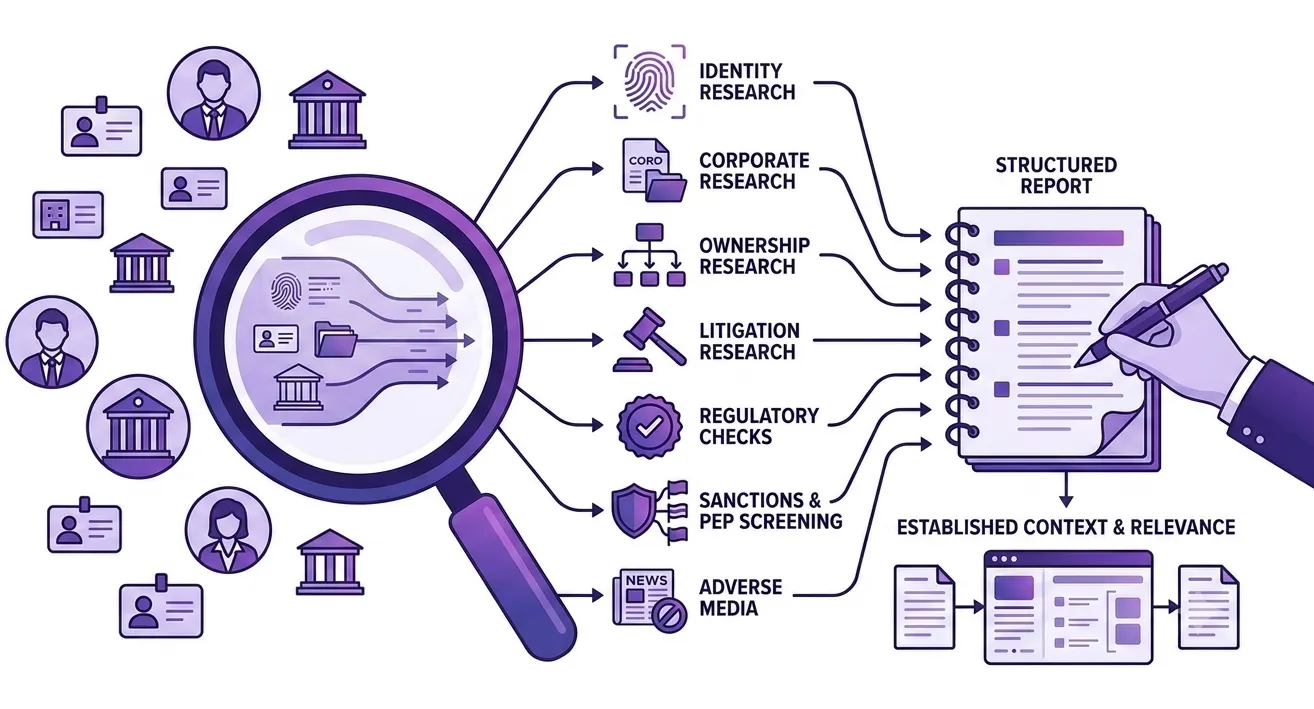
Investigative due diligence looks at the broader risk profile of individuals, companies, promoters, directors, beneficial owners, business partners, customers, vendors, investment targets, and potential counterparties. It typically draws on identity research, corporate research, ownership research, litigation research, regulatory checks, sanctions and PEP screening, adverse media, and open-source intelligence.
The objective isn't simply to find records, it's to establish context and relevance. A structured due diligence report helps investigators consolidate scattered findings into something reviewable, giving a team a consistent starting point rather than a pile of disconnected search results.
Why Standard Screening Is Only the First Layer
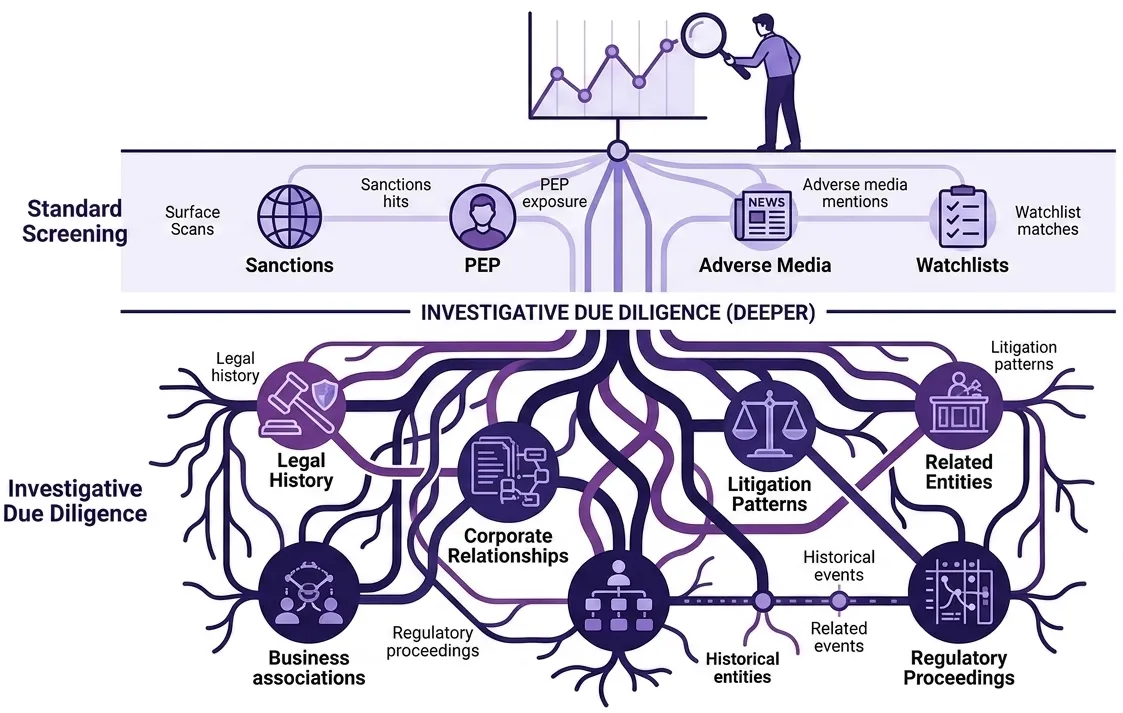
Screening and investigative due diligence answer different questions. Screening identifies sanctions hits, PEP exposure, adverse media mentions, and watchlist matches useful, but narrow. Investigative due diligence goes further, examining legal history, litigation patterns, corporate relationships, regulatory proceedings, business associations, related entities, and historical events.
A clean screening result doesn't necessarily mean there's no risk. Equally, the presence of litigation doesn't automatically mean there's wrongdoing. The investigator's job sits in the space between: signal, context, relevance, materiality.
Where Litigation Intelligence Fits Into Investigative Due Diligence
A typical workflow runs:
Subject Identification
Initial subject profile and available identifiers captured.
Screening
High-level screening pass across available datasets.
Corporate Research
Corporate records, ownership, and entity mapping.
Litigation Search
LIBIL's litigation research stage entry point across courts and record sources.
Identity Resolution
Disambiguate subject across similar names and partial identifiers.
Case Analysis
Deep review of case status, nature, parties, and materiality.
Corroboration
Cross-source validation and confirmation of findings.
Risk Assessment
Consolidated risk assessment based on corroborated findings.
Final Due Diligence Report
Structured final report consolidating the investigative output.
LIBIL sits in the litigation research stage. It helps investigators find relevant cases connected to a subject, distinguish filed-by from filed-against matters, categorise cases, identify pending versus disposed status, review case metadata, surface related entities where supported, and prioritise which cases deserve deeper review. The output becomes one structured input into a broader investigative process not the process itself.
Customer Due Diligence
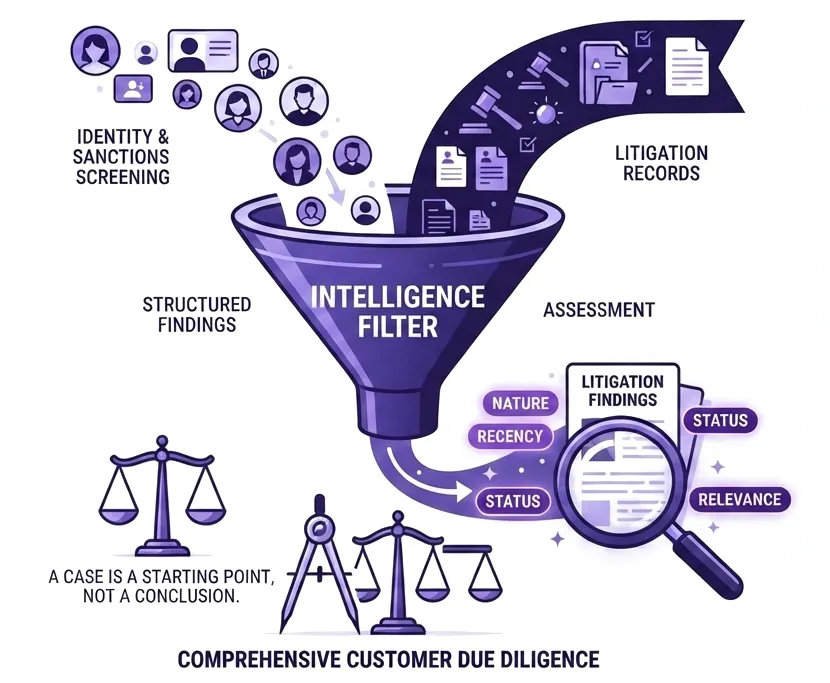
Litigation intelligence can complement customer due diligence by adding a layer investigators don't get from identity and sanctions screening alone. Teams assessing customers, high-risk customers, business owners, promoters, directors, and beneficial owners can use structured litigation findings to identify cases that may warrant further review, based on nature, recency, status, and relevance to the customer relationship.
As with any litigation record, findings surfaced during customer due diligence need to be interpreted in context. A case appearing in a search is a starting point for review, not a conclusion.
Financial Due Diligence and Risk Assessment
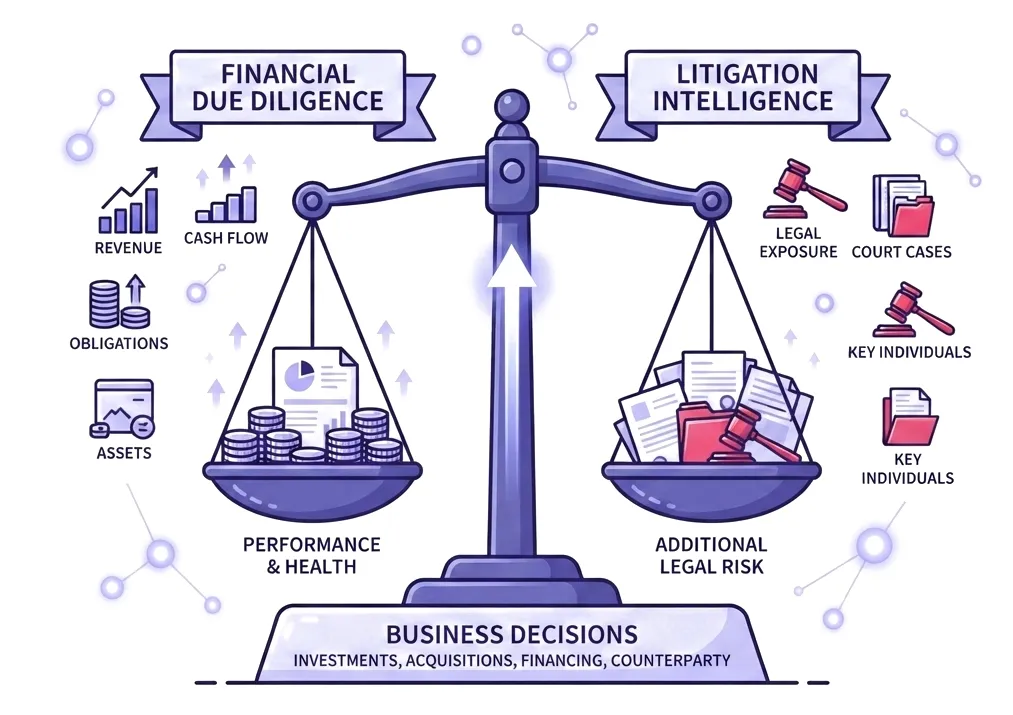
Financial due diligence primarily examines financial performance, financial health, and financial information revenue, margins, cash flow, obligations. Litigation intelligence adds a different dimension: potential legal exposure connected to a company, its promoters, directors, or guarantors that financial statements alone won't show.
This matters for investments, acquisitions, financing decisions, counterparty assessment, and high-value relationships, where litigation involving a company or its key individuals may warrant additional investigation alongside the financial workstream. Litigation intelligence is an addition to financial due diligence, not a substitute for it.
Client Due Diligence and Relationship Risk
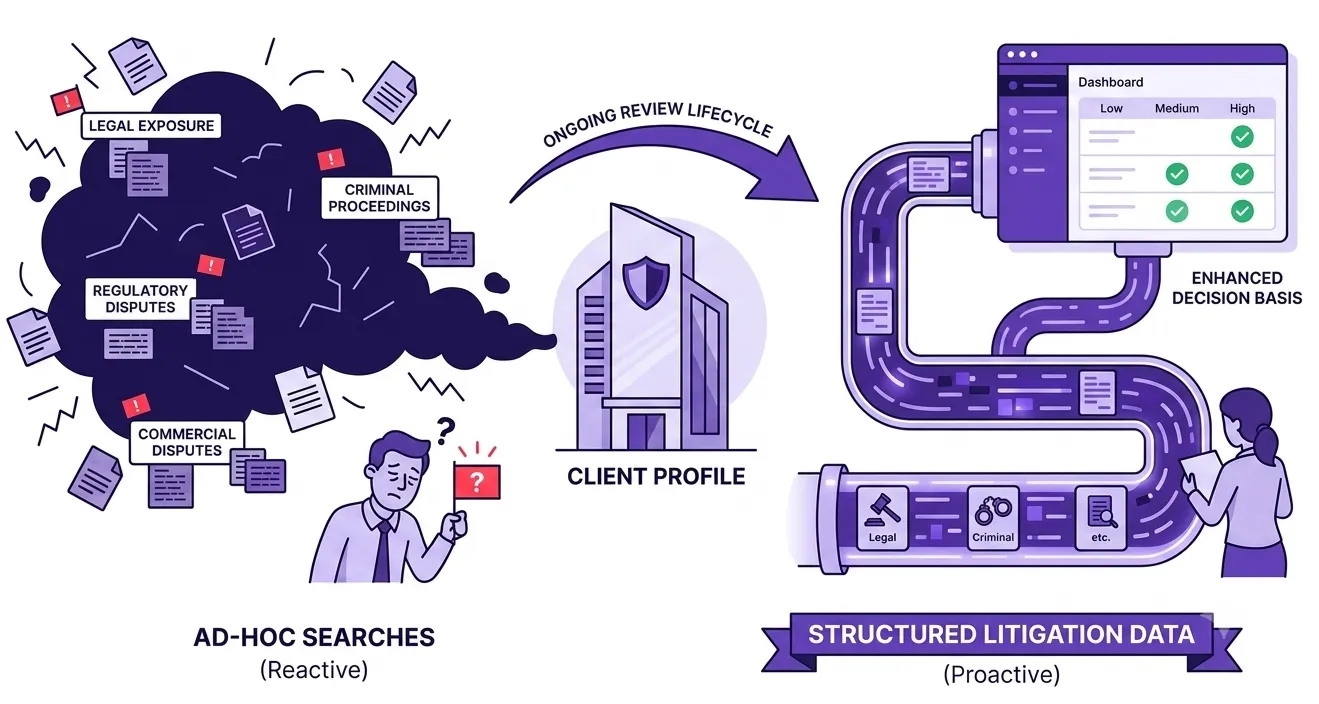
Client due diligence doesn't end at onboarding. Professional services firms, financial institutions, and risk teams often need an ongoing view of client legal exposure, criminal proceedings, regulatory disputes, commercial disputes, and litigation connected to related entities that may emerge over the life of a relationship.
Structured litigation data gives investigators a basis for deciding when a client relationship warrants enhanced review, rather than relying on ad hoc searches triggered only when something else raises a flag.
Financial Crime Investigation
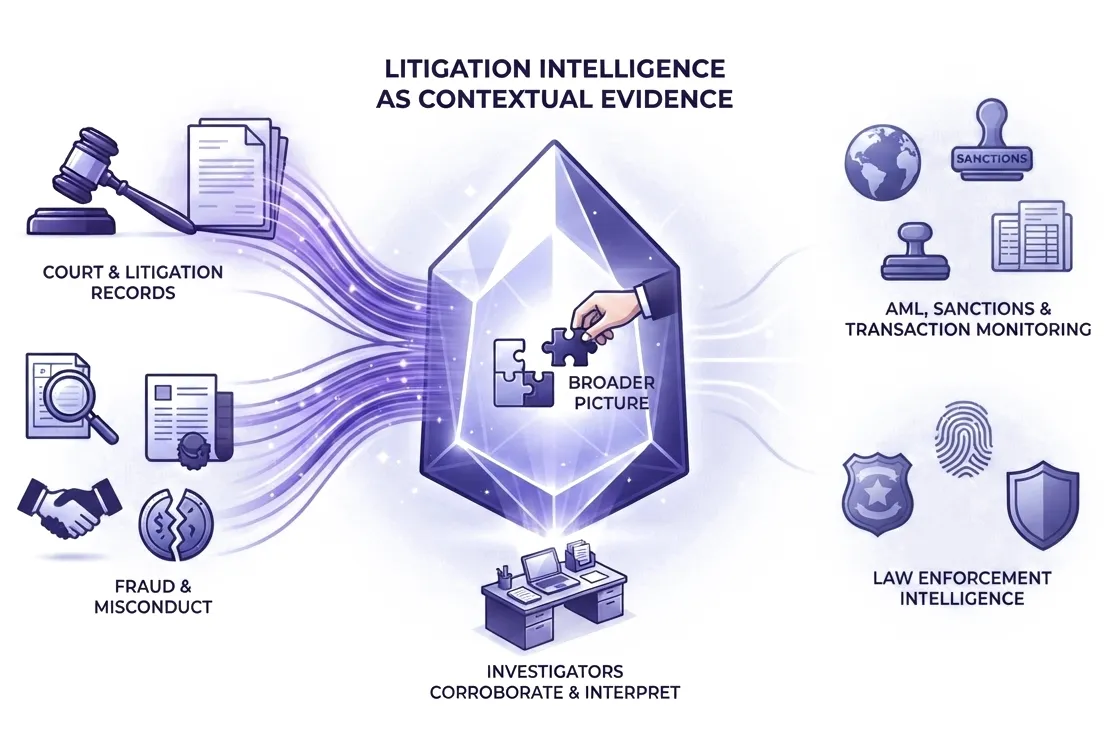
Litigation intelligence can complement a financial crime investigation touching fraud, misconduct, corruption allegations, financial irregularities, money laundering investigations, or corporate wrongdoing by contributing court and litigation records as one strand of contextual evidence.
It's worth being precise about the boundaries here: litigation intelligence is distinct from AML transaction monitoring, sanctions screening, suspicious transaction monitoring, and law enforcement intelligence, and it doesn't substitute for any of them. Litigation records alone don't establish financial crime; they help build a broader picture that investigators still need to corroborate and interpret.
Enhanced Due Diligence
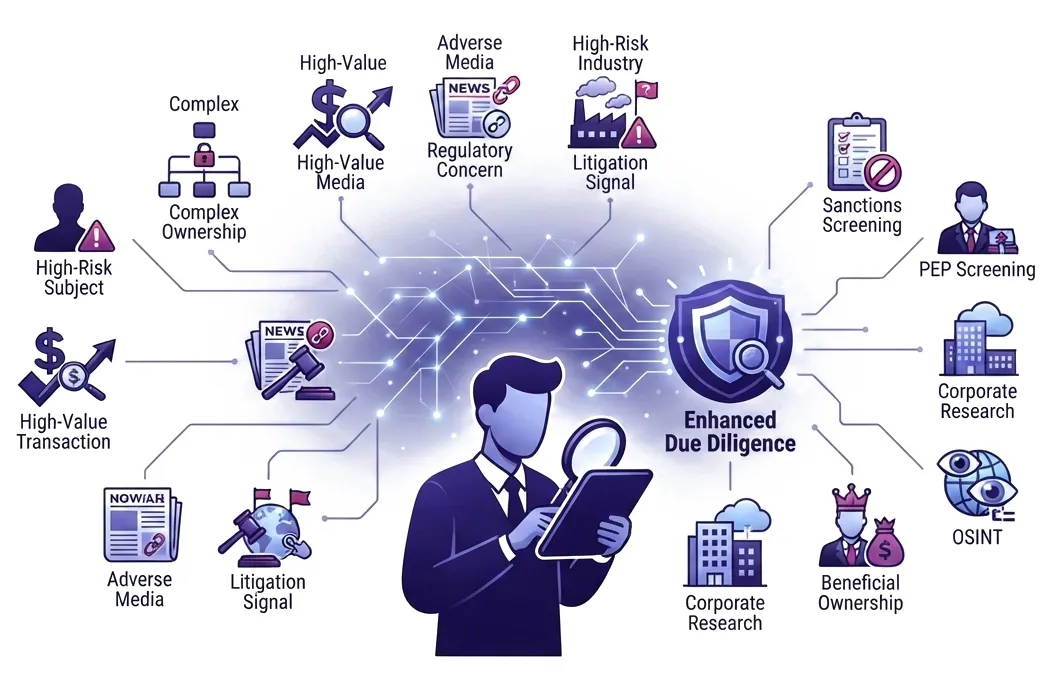
Enhanced due diligence gets triggered by high-risk subjects, complex ownership structures, high-value transactions, adverse media, regulatory concerns, litigation signals, sensitive jurisdictions, or high-risk industries.
Litigation research complements the other components of enhanced due diligence sanctions screening, PEP screening, adverse media, corporate research, beneficial ownership research, and open-source intelligence as one input among several rather than a standalone trigger for escalation.
Press & Recognitions
-
 Forbes india
Legitquest: On a quest to building a legal technology framework in India
-
 financialexpress
LegitQuest: Now, millions of law case records at your fingertips
-
 yourstory
Google picks 16 Indian startups for its 5th accelerator programme
-
 entrackr
Funding in Indian startups this week (05 Apr-10 Apr)
-
.webp) Economic Times
Economic TimesLegitquest raises $660,000 in ongoing round from existing investors InfoEdge, WaterBridge Ventures
-
 Inc42
Inc42Info Edge To Invest INR 4 Cr In Legal Tech Startup LegitQuest
-
 Business Standard
Startup Investments (Holding) to invest Rs 4 cr in Legitquest
-
 Capital Market
Startup Investments (Holding) to invest Rs 4 cr in Legitquest
-
 Vise Stories
Legitquest Raises $660K in Ongoing Round from Existing Investors
Trusted by the top names in the industry
Bring Litigation Intelligence Into Your Investigative Due Diligence Workflow
Investigative due diligence requires moving beyond isolated screening hits to understand the context behind potential risk signals. LIBIL helps risk and investigative teams search legal records, resolve identities, structure litigation findings, prioritise relevant matters, and add legal context to broader investigations.


