
































































Why Litigation Matters in IPO Due Diligence
Unresolved or undisclosed litigation can shape how an IPO is perceived by regulators reviewing the filing, by investors weighing the offer, and by the market assessing promoter and director credibility. It can also affect transaction timelines if material matters surface late in the process. Litigation exposure isn't confined to the issuer alone. IPO due diligence typically needs to look across several layers:
Issuer
Company-level litigation and material disputes.
Promoters
Relevant litigation and legal exposure tied to the individuals behind the company.
Directors
Cases and proceedings connected to board members.
Group Companies
Exposure across subsidiaries and related entities.
Key Management
Litigation history relevant to individuals steering day-to-day operations.
The Challenge With Traditional IPO Litigation Diligence
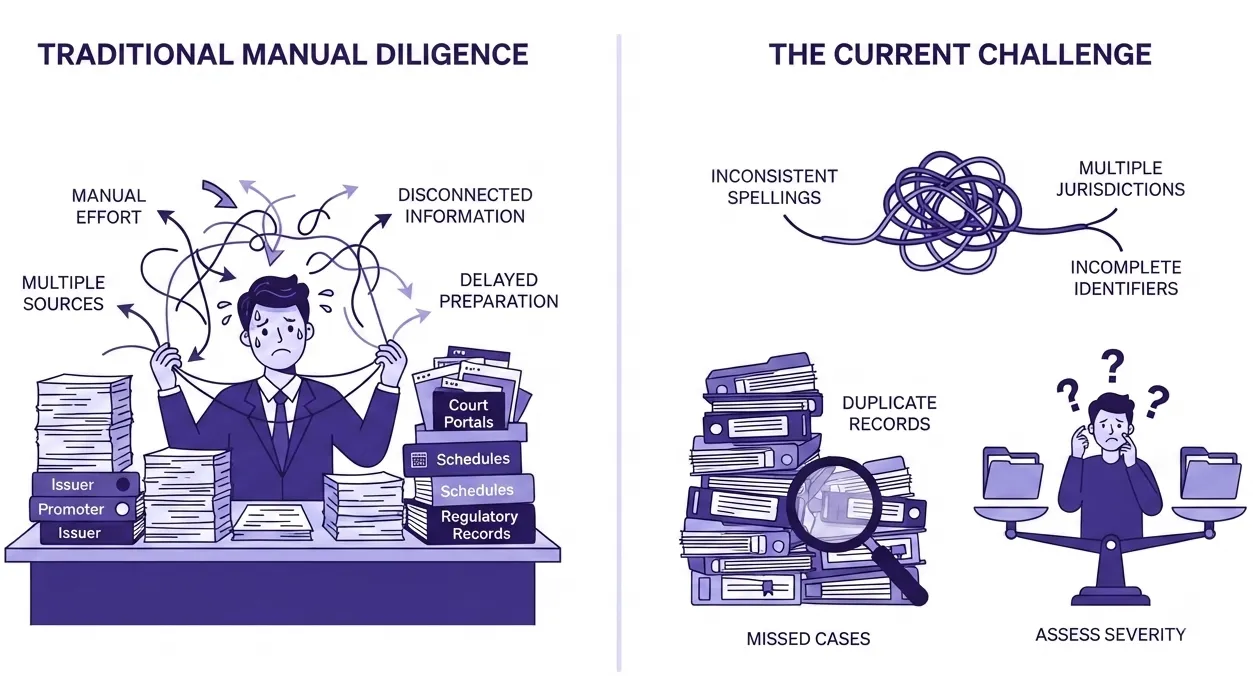
IPO litigation review still runs largely on manual effort: collecting issuer and promoter information, searching individual court portals, reviewing company-provided litigation schedules, checking regulatory records, engaging external lawyers for local searches, and consolidating everything into spreadsheets ahead of disclosure schedule preparation.
That process faces recurring friction, inconsistent name spellings, multiple jurisdictions, incomplete identifiers, high volumes of lower-court litigation, duplicate records, and no standard way to assess relevance or severity across a large promoter or director group. Reconciling findings from multiple sources by hand tends to produce delays, inconsistent coverage, false positives, and occasionally, missed cases.
RHP and Litigation Disclosure
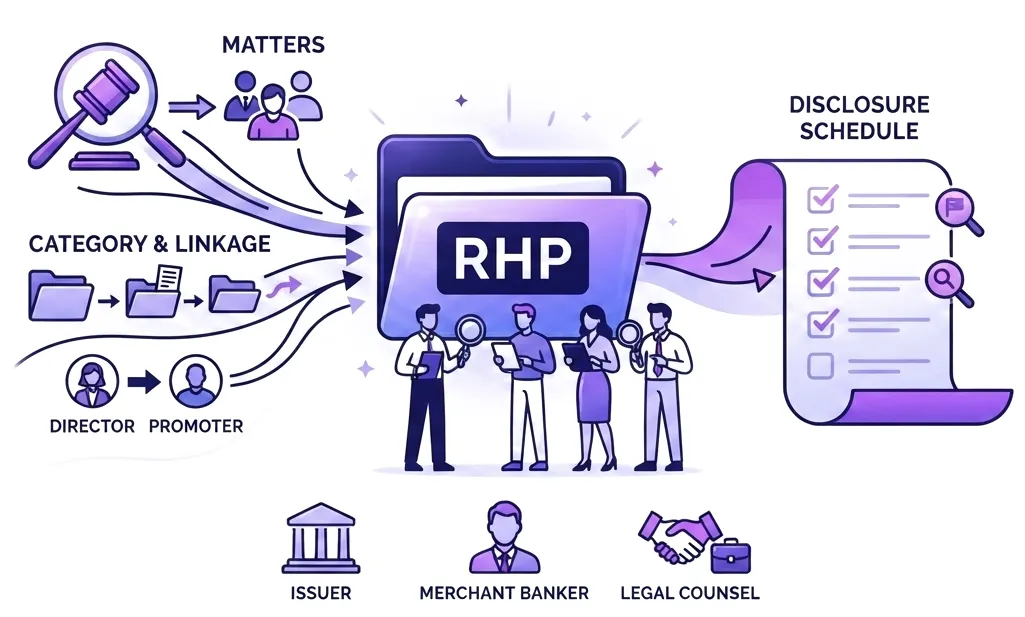
Structured litigation check can support teams preparing and reviewing litigation-related information for the RHP, identifying potential matters, organising cases by category, surfacing promoter- and director-linked litigation, and flagging matters that need further investigation before they reach the disclosure schedule.
To be clear about what this does and doesn't cover: LIBIL does not prepare or approve an RHP, and it does not determine what must be disclosed. Final disclosure decisions remain with the issuer, merchant banker, and legal counsel. The output here is a diligence input, a structured starting point for the people responsible for the RHP, not a substitute for their review.
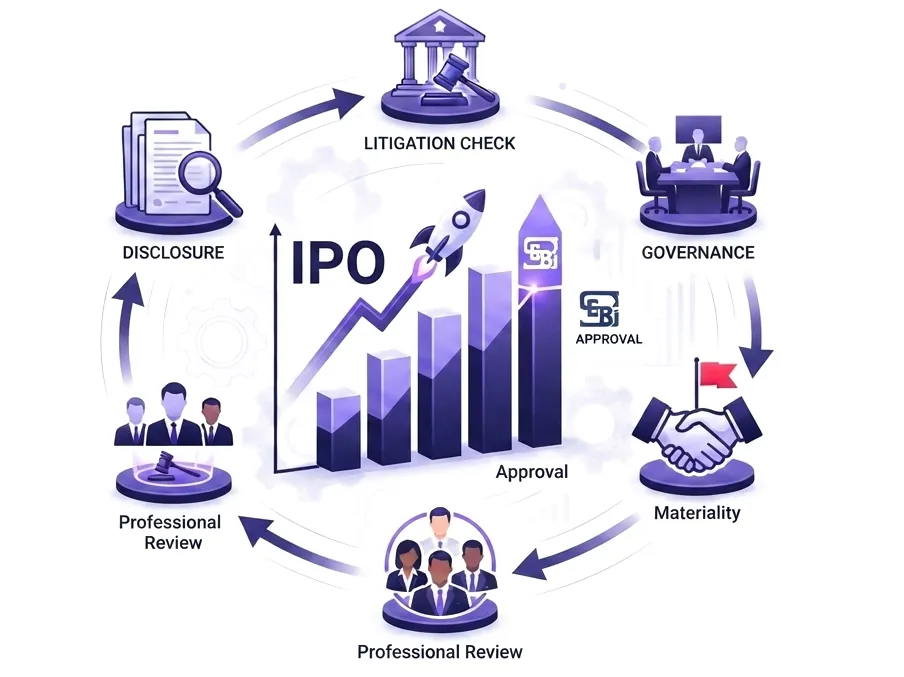
SEBI IPO and Regulatory Considerations
IPO transactions require careful attention to disclosure, governance, materiality, legal proceedings, promoter and director information, and regulatory requirements throughout the IPO process to get approval from SEBI. Litigation check can help teams identify information that needs further legal and compliance review as part of that broader effort.
SEBI IPO compliance and disclosure obligations must be assessed by qualified professionals based on applicable laws, regulations, and the specifics of the outstanding litigation check is one input into that assessment, not a substitute for it.
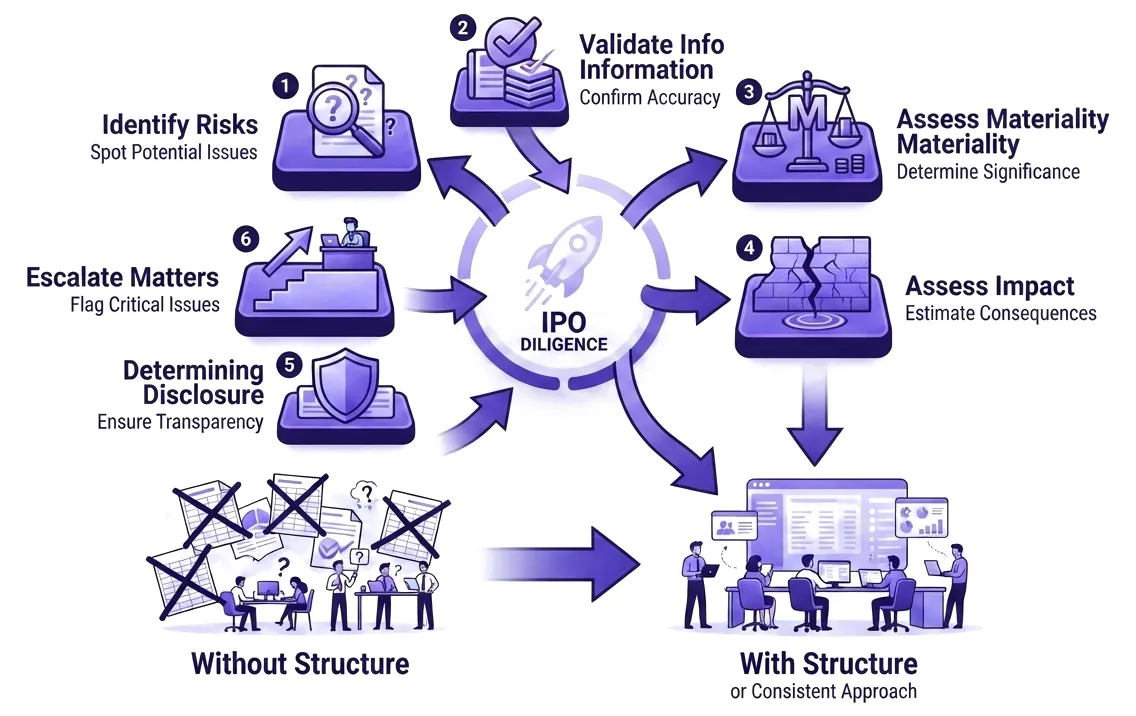
Risk Handling in IPO Due Diligence
Effective IPO diligence isn't just about identifying risks, it's a sequence: identifying potential risks, validating the underlying information, understanding materiality, assessing potential impact, determining appropriate disclosure, escalating significant matters, and documenting the review process.
Structured litigation check supports better risk handling by giving diligence teams a consistent, organised starting point for each stage of that sequence rather than each analyst working from a different spreadsheet.
Risks and Mitigation
Mitigated by structured searches across supported courts and sources, with coverage requirements validated against the transaction's needs.
Mitigated through identity resolution using multiple available identifiers.
Mitigated by reviewing match confidence signals and verifying relevant cases before escalation.
Mitigated through deduplication and structured case organisation.
Mitigated by reviewing each case based on status, nature, materiality, and context rather than treating a record as self-explanatory.
Mitigated by escalating potentially material matters to qualified legal and compliance professionals for review.
Sound risks and mitigation practice in litigation diligence requires both technology and professional judgment working together neither substitutes for the other.
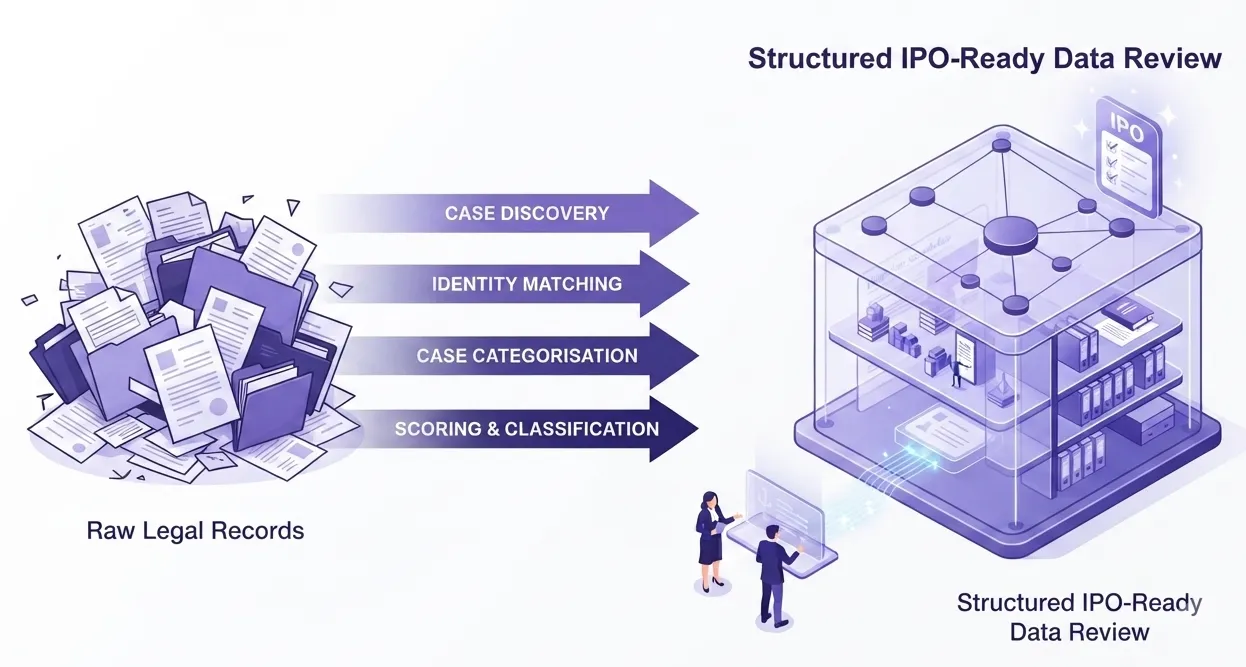
From Raw Legal Records to IPO-Ready Review
LIBIL's IPO Report helps transform fragmented legal records into structured check through case discovery, identity matching, case categorisation, match confidence scoring, pending/disposed classification, filed-by/filed-against context, severity scoring, lawyer verification where applicable, and source traceability.
The goal is to move diligence teams from data collection toward focused legal review. LIBIL supports IPO diligence, supports litigation schedule preparation, and provides structured inputs for legal review.
Press & Recognitions
-
 Forbes india
Legitquest: On a quest to building a legal technology framework in India
-
 financialexpress
LegitQuest: Now, millions of law case records at your fingertips
-
 yourstory
Google picks 16 Indian startups for its 5th accelerator programme
-
 entrackr
Funding in Indian startups this week (05 Apr-10 Apr)
-
.webp) Economic Times
Economic TimesLegitquest raises $660,000 in ongoing round from existing investors InfoEdge, WaterBridge Ventures
-
 Inc42
Inc42Info Edge To Invest INR 4 Cr In Legal Tech Startup LegitQuest
-
 Business Standard
Startup Investments (Holding) to invest Rs 4 cr in Legitquest
-
 Capital Market
Startup Investments (Holding) to invest Rs 4 cr in Legitquest
-
 Vise Stories
Legitquest Raises $660K in Ongoing Round from Existing Investors
Trusted by the top names in the industry
Bring Structured Litigation Check Into Your IPO Due Diligence
IPO diligence requires a clear understanding of the legal landscape surrounding the issuer and its key stakeholders. LIBIL helps merchant bankers, issuers, and law firms identify, structure, and review litigation exposure as a layer that supports professional judgment, not a replacement for it.


