
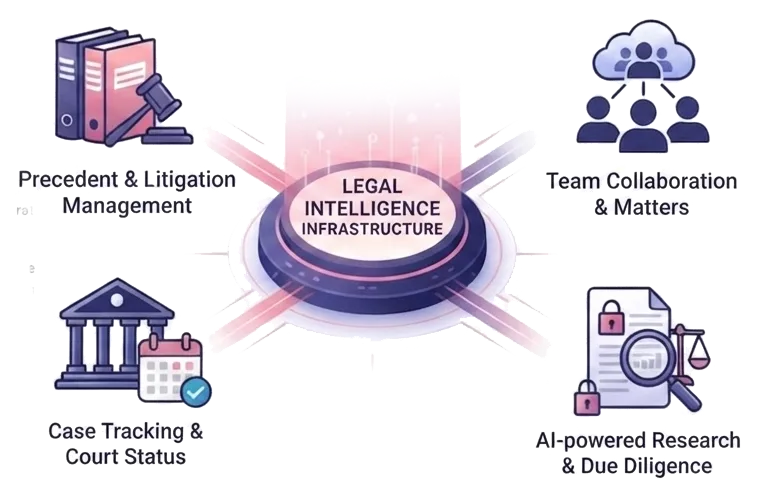

































































Why Leading Law Firms Need Legal Intelligence Infrastructure
As law firms grow, the complexity and volume of legal information they manage grows with them. Partners and associates may need to research thousands of judgments, monitor ongoing litigation for multiple clients, track hearings across courts, and support transactions where litigation and regulatory exposure can materially affect the outcome.
-
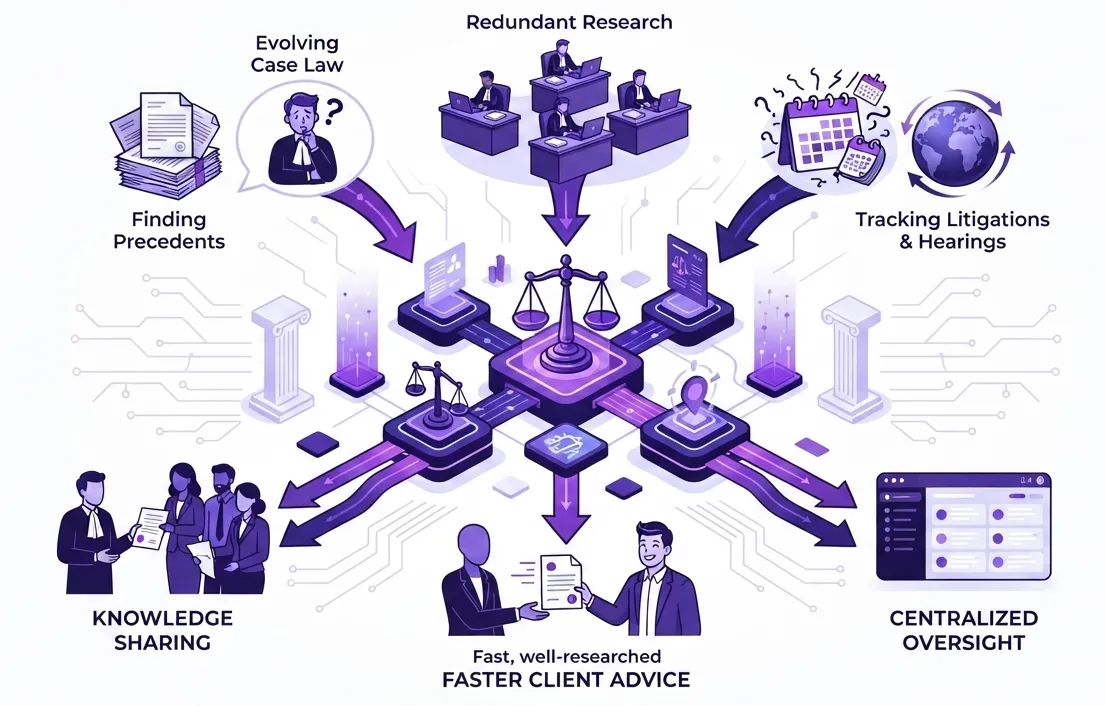
This creates familiar challenges:
- Finding relevant precedents quickly
- Keeping up with evolving case law and judgments
- Multiple lawyers researching similar legal issues independently
- Tracking matters across large litigation portfolios
- Maintaining visibility into hearings, orders, and case developments
- Monitoring litigation across multiple courts
- Sharing legal knowledge across teams and practice areas
- Delivering faster, well-researched advice to clients
That is where a connected legal intelligence platform can become part of the firm's operating infrastructure.
AI for Law Firms: From Legal Research to Firm-Wide Intelligence
The most valuable applications of ai for law firms are those that improve the quality and efficiency of existing legal workflows.
Legitquest's Legal Research platform helps lawyers use AI-assisted technology to navigate Indian case law, identify relevant judgments, discover legal authorities, and accelerate the process of understanding complex legal issues.
-
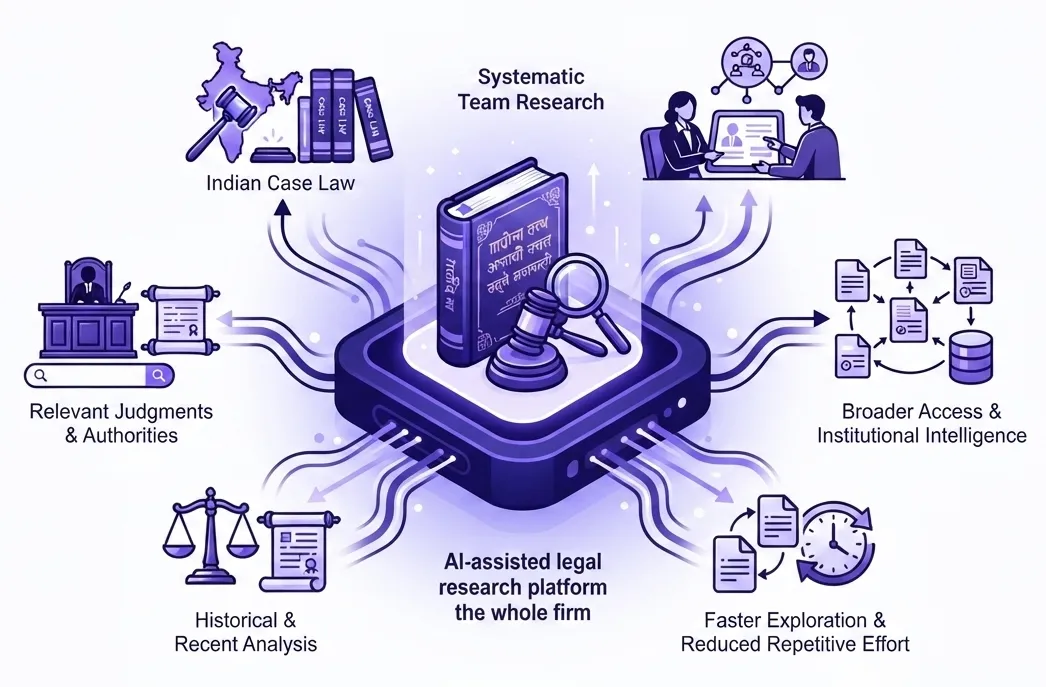
Lawyers can use technology to support:
- Research across Indian case law
- Discovery of relevant judgments and precedents
- Research across Supreme Court and High Court decisions
- Identification of relevant legal authorities
- Faster exploration of complex legal issues
- Analysis of historical and recent legal developments
- Reduction of repetitive research effort
For individual associates, ai for law firms can reduce the time spent navigating large volumes of information. For partners, it can help teams approach research more systematically. For knowledge management teams, it can support broader access to institutional legal intelligence.
Legal Research at the Scale of a Leading Law Firm
A modern law firm may have partners, associates, litigation lawyers, corporate teams, transaction lawyers, and knowledge management professionals working on different aspects of the same client relationship. Each team requires access to reliable legal information.
-
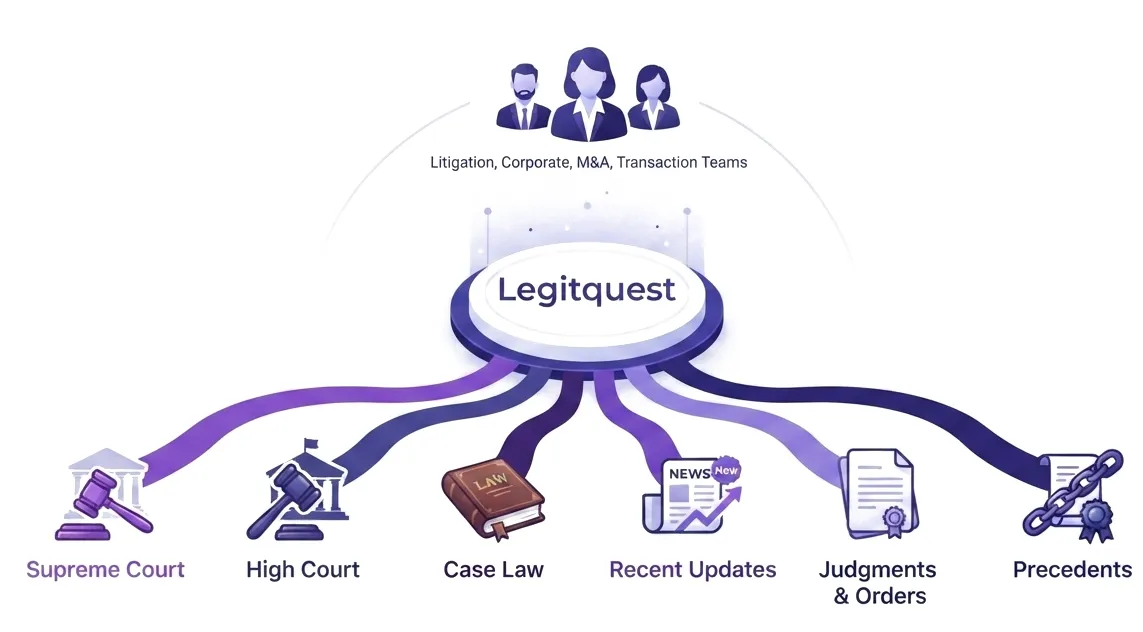
Legitquest supports legal research workflows across:
- Supreme Court judgments
- High Court judgments
- Historical case law
- Recent legal developments
- Judgments and orders
- Relevant precedents and legal authorities
Whether a lawyer is researching a recent judgement of the supreme court, examining historical case law, or investigating the high court status of a matter, the ability to access relevant legal intelligence within the broader workflow can reduce information fragmentation.
The same infrastructure can support different research requirements across litigation, corporate law, M&A, regulatory, and transaction teams. For firms managing large volumes of legal work, the advantage is not simply access to information. It is the ability to make legal intelligence more accessible and useful across the organisation.
Litigation Management System for Law Firms
Managing litigation at scale requires more than maintaining a list of cases. Law firms may manage hundreds or thousands of matters across clients, courts, jurisdictions, and practice areas. Each matter can involve hearings, orders, documents, deadlines, lawyers, clients, and constantly changing case information.
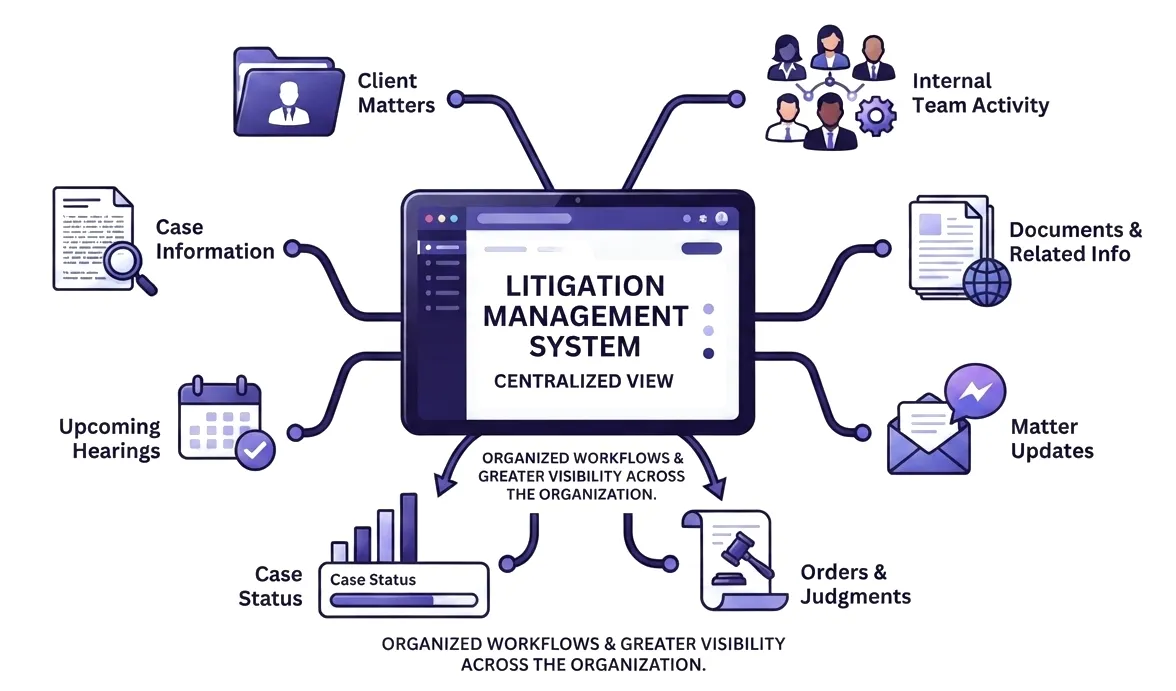
A litigation management system provides a structured way to bring this information together. Instead of relying entirely on fragmented spreadsheets, emails, and manual trackers, a litigation management system can provide a centralised view of
-
Centralised view includes:
- Client matters
- Case information
- Upcoming hearings
- Case status
- Orders and judgments
- Matter updates
- Documents and related information
- Internal team activity
Legitquest's case management tool capabilities help law firms organise their litigation workflows and create greater visibility across matters. For partners, this can mean better visibility into portfolios. For associates and litigation teams, it can mean less administrative tracking. For firm leadership, a litigation management system can provide a more structured view of how matters are progressing across the organisation.
Supporting IPO and Capital Markets Work
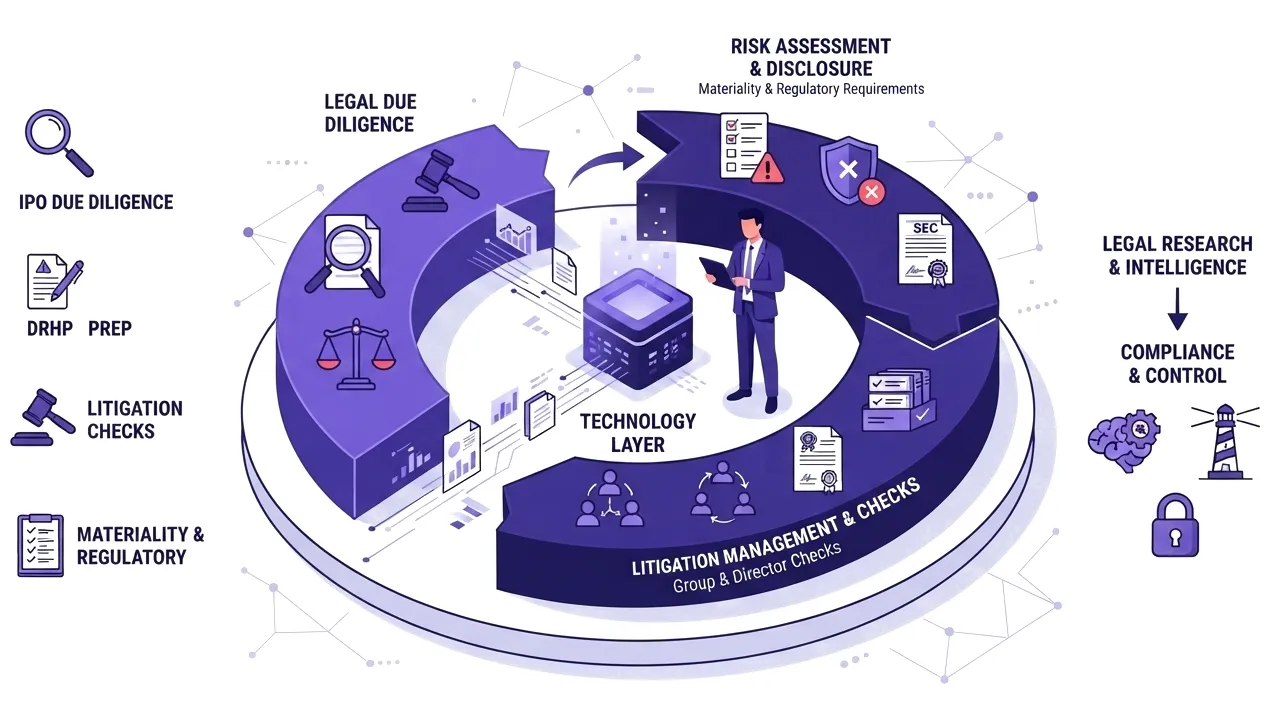
Law firms play a critical role in IPO and capital markets transactions, where litigation and legal risk can become important components of diligence and disclosure.
-
These workflows may involve:
- IPO due diligence
- DRHP preparation
- DRHp & RHP disclosure
- Promoter and director litigation checks
- Group entity diligence
- Outstanding litigation review
- Materiality assessment
- Legal due diligence
- Regulatory and disclosure requirements
Legitquest can complement these workflows by bringing together legal research, litigation intelligence, litigation management, litigation checks, and structured access to court and legal records.
For transaction teams, this technology layer can help lawyers research, organise, monitor, and analyse information as part of complex IPO and capital markets workflows.
It does not replace legal counsel, professional judgment, or the final legal assessment. Instead, it supports the information-intensive work that lawyers perform throughout the transaction lifecycle.
One Legal Intelligence Platform Across the Law Firm
The value of LegalTech increases when it supports the broader organisation rather than operating as an isolated tool.
Research precedents, monitor matters, track developments, and manage litigation portfolios through a more connected workflow.
Conduct legal research and support transaction-related diligence with access to relevant legal and litigation intelligence.
Support IPO and DRHP-related litigation research, deal diligence, and information review.
Gain greater visibility into matters, portfolios, and team workflows while enabling lawyers to focus more on analysis and client strategy.
Spend less time navigating fragmented information and repetitive administrative tracking, and more time on substantive legal work.
Help make legal intelligence more accessible and consistent across practice areas and teams.
The goal is a shared legal intelligence infrastructure where legal research, case management, case monitoring, and knowledge access work together.
Press & Recognitions
-
 Forbes india
Legitquest: On a quest to building a legal technology framework in India
-
 financialexpress
LegitQuest: Now, millions of law case records at your fingertips
-
 yourstory
Google picks 16 Indian startups for its 5th accelerator programme
-
 entrackr
Funding in Indian startups this week (05 Apr-10 Apr)
-
.webp) Economic Times
Economic TimesLegitquest raises $660,000 in ongoing round from existing investors InfoEdge, WaterBridge Ventures
-
 Inc42
Inc42Info Edge To Invest INR 4 Cr In Legal Tech Startup LegitQuest
-
 Business Standard
Startup Investments (Holding) to invest Rs 4 cr in Legitquest
-
 Capital Market
Startup Investments (Holding) to invest Rs 4 cr in Legitquest
-
 Vise Stories
Legitquest Raises $660K in Ongoing Round from Existing Investors
Trusted by the top names in the industry
Add Litigation Intelligence to Your Investigative Due Diligence Workflow
Risk advisory firms can explore how structured court and litigation intelligence complements existing investigative research, supporting analyst productivity and faster red-flag discovery while preserving the investigator's central role in interpretation and judgment.


