
































































Why Litigation Checks Matters in Investigative Due Diligence
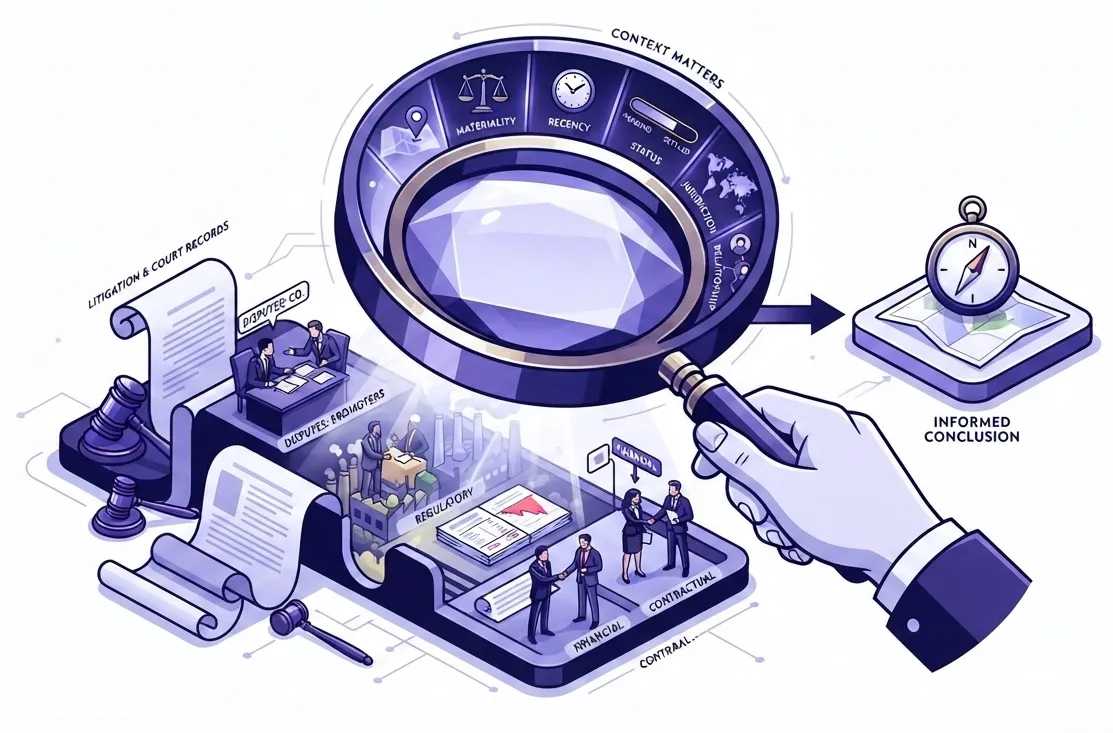
Litigation and court records can reveal disputes involving a company, disputes involving promoters or directors, criminal proceedings, regulatory matters, financial disputes, insolvency-related issues, contractual conflicts, related-party disputes, and historical legal exposure, much of which isn't visible through sanctions databases, political exposure screening, adverse media, or corporate registries alone.
This doesn't mean litigation should be interpreted in isolation. Assessing materiality, recency, status, the nature of the dispute, the parties involved, jurisdiction, and the relationship to the subject all matter before a litigation record informs any conclusion.
Why Traditional Litigation Research Is Difficult
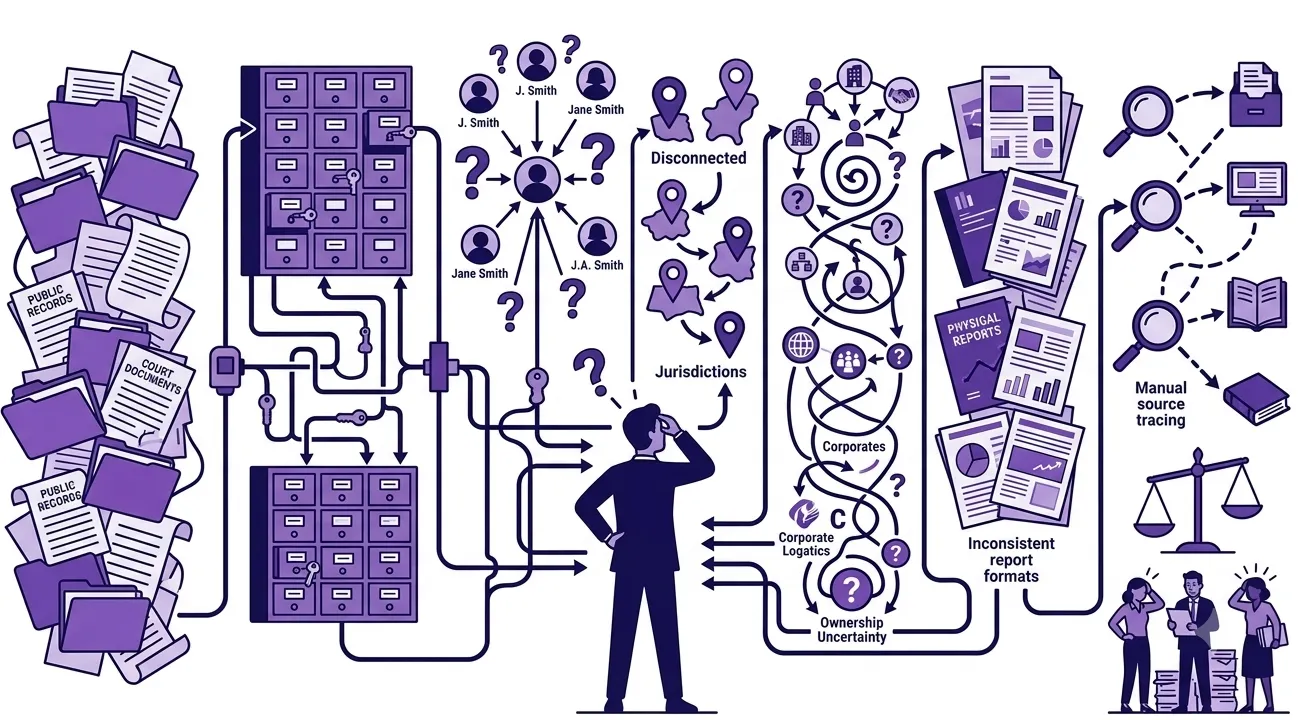
Fragmented public records, manual court searches across disconnected portals, common names, name variations, incomplete identifiers, multiple jurisdictions, complex entity relationships, beneficial ownership uncertainty, inconsistent report formats, and manual source tracing, challenges that show up consistently for risk consulting firms handling investigative work at scale.
Where Investigative Risk Gets Missed
Different names, spellings, aliases, and incomplete identifiers can lead to false positives, false negatives, missed litigation, or incorrect attribution of a case to the wrong individual.
Investigations often involve parent companies, subsidiaries, promoters, directors, group entities, and related parties, mapping these relationships correctly is essential to scoping the search properly in the first place.
Relevant matters can appear across multiple courts, jurisdictions, and record sources, making comprehensive manual coverage difficult to guarantee.
A raw case list rarely explains case status, case type, filed-by versus filed-against context, relevance, or match confidence without additional work.
Investigators need to know where information came from and be able to trace findings back to source records , a requirement manual spreadsheet-based research often struggles to maintain consistently.
How LIBIL® Fits Into the Investigative Due Diligence Workflow
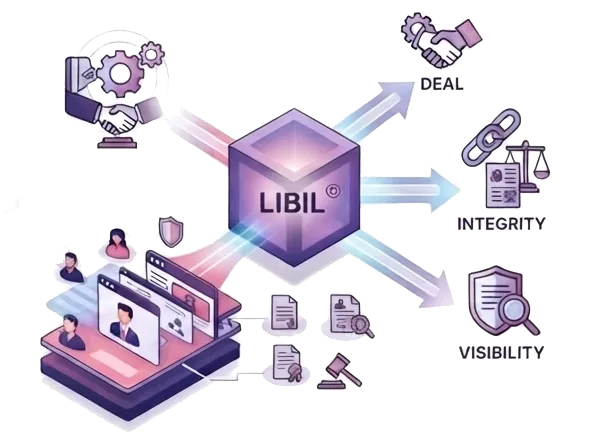
Risk advisory firms typically already run sanctions screening, political exposure screening, adverse media research, corporate registry checks, ownership research, source inquiries, and litigation and regulatory review as part of their standard process. LIBIL® is designed to sit inside this workflow as a structured litigation and court intelligence layer, not to replace any of these existing steps.
Investigative Due Diligence Workflow
LIBIL®'s Role in This Workflow
LIBIL® supports the research and evidence-gathering layer. The risk advisory firm retains responsibility for investigation, context, materiality, interpretation, corroboration, and final conclusions.
LIBIL® as a Court and Litigation Intelligence Layer
Comprehensive Litigation Intelligence Capabilities
Within its supported coverage, LIBIL® is designed to help investigators and risk firms with litigation search, court-record intelligence, entity matching, case details, source links, FIR-linked signals where supported, case categorization, risk or severity indicators where supported, and structured reports.
Driving Structured Investigation Outcomes
The intent is to help risk advisory move from fragmented public records, to structured litigation intelligence, to analyst-led investigation, improving analyst productivity, faster red-flag discovery, and better source traceability, which are the specific outcomes risk consulting teams look for from a litigation intelligence layer.
Deal Diligence : Investigating Litigation Before a Transaction
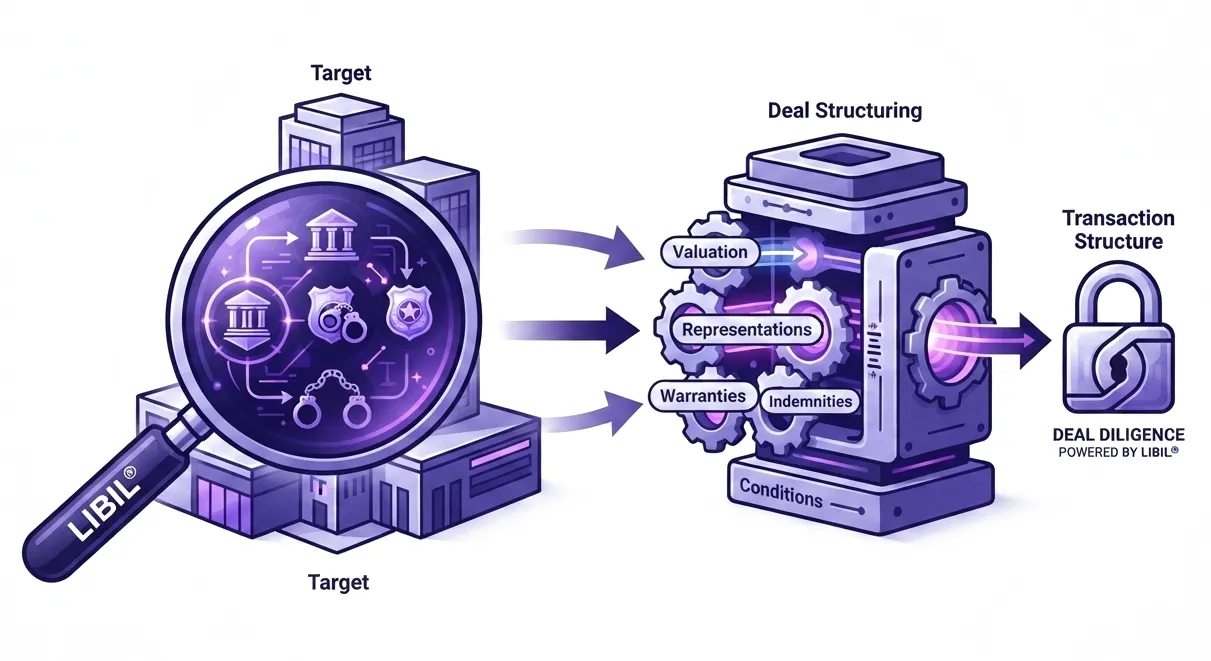
Due diligence for M&A, private equity, strategic investments, joint ventures, acquisitions, and other high-value transactions typically requires investigating the target company, promoters, directors, key management, related entities, group companies, and material counterparties.
Litigation intelligence can help identify existing disputes, criminal proceedings, regulatory matters, historical litigation, and related-party exposure across this universe of subjects, findings that can then inform deeper investigation into valuation, transaction structure, representations and warranties, indemnities, conditions precedent, and integration risks. LIBIL® doesn't provide legal advice and doesn't determine transaction terms; it structures the litigation information that feeds into that deeper, human-led process of deal diligence .
Enhanced Due Diligence E: Going Beyond Standard Screening
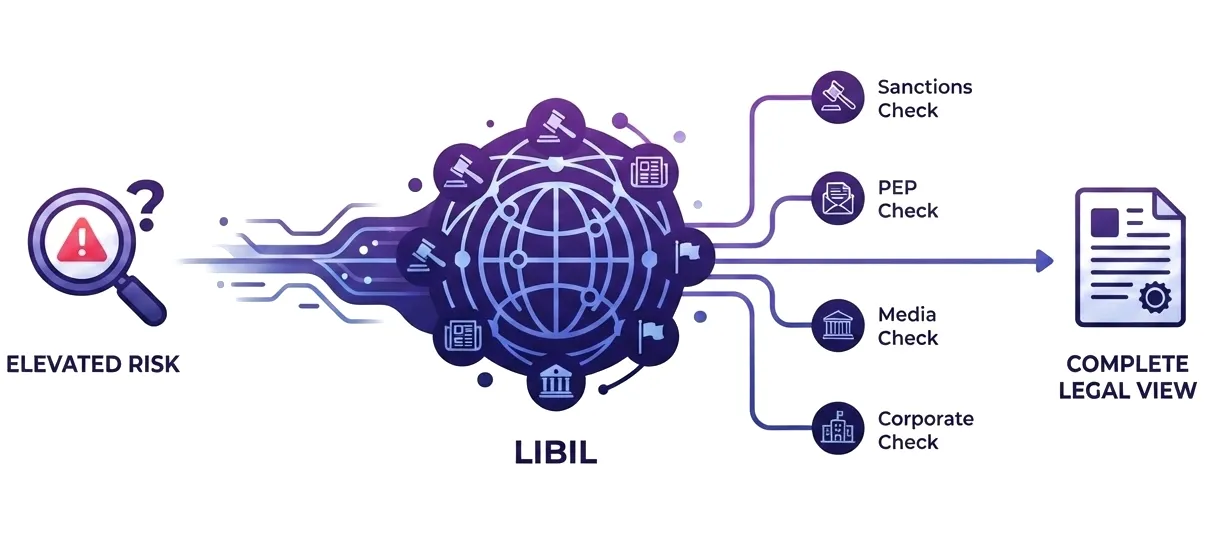
Enhanced due diligence is required when a subject, transaction, or relationship presents elevated risk whether due to high-value transactions, complex ownership, adverse media, regulatory concerns, litigation, or sensitive jurisdictions and sectors.
LIBIL® helps risk and investigation teams go deeper by searching and aggregating litigation and court records, resolving identities, identifying relevant cases, analysing case status and parties involved, and generating structured reports. This litigation intelligence can complement sanctions, PEP, adverse media, corporate, and ownership checks, giving investigators a more complete view of legal and regulatory exposure.
Consumer Due Diligence
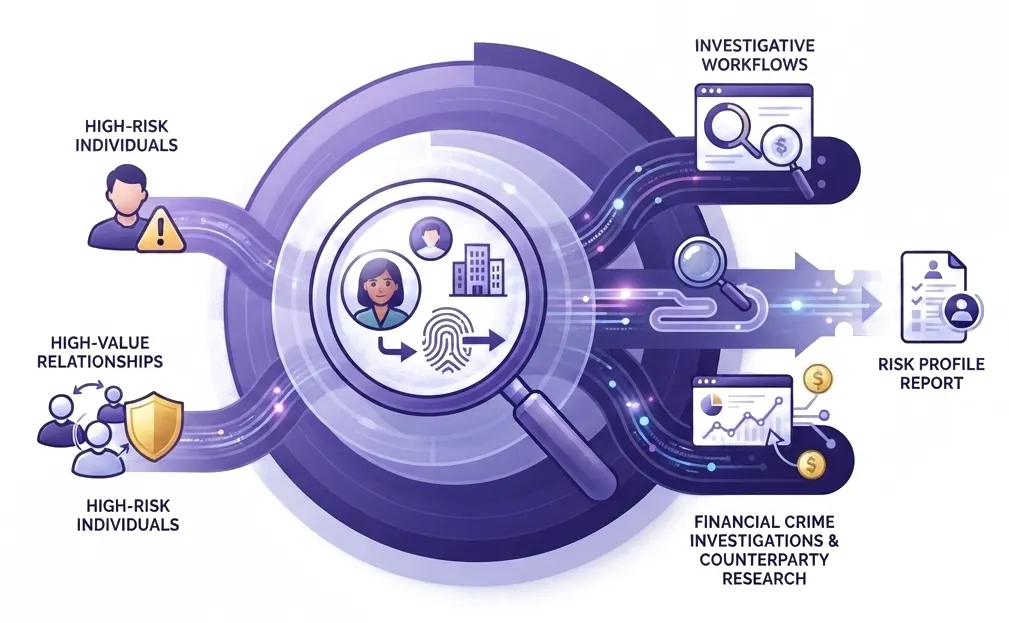
Consumer due diligence involves understanding risk associated with individuals and companies in specific contexts, and the appropriate scope varies significantly depending on the firm's use case and applicable requirements. This is distinct from standard employment screening or conventional KYC processes, it typically applies in contexts such as high-risk individuals, high-value relationships, broader investigative workflows, financial crime investigations, and counterparty research where a risk advisory firm is assessing an individual's risk profile as part of a larger engagement.
Vendor Due Diligence and Third-Party Risk
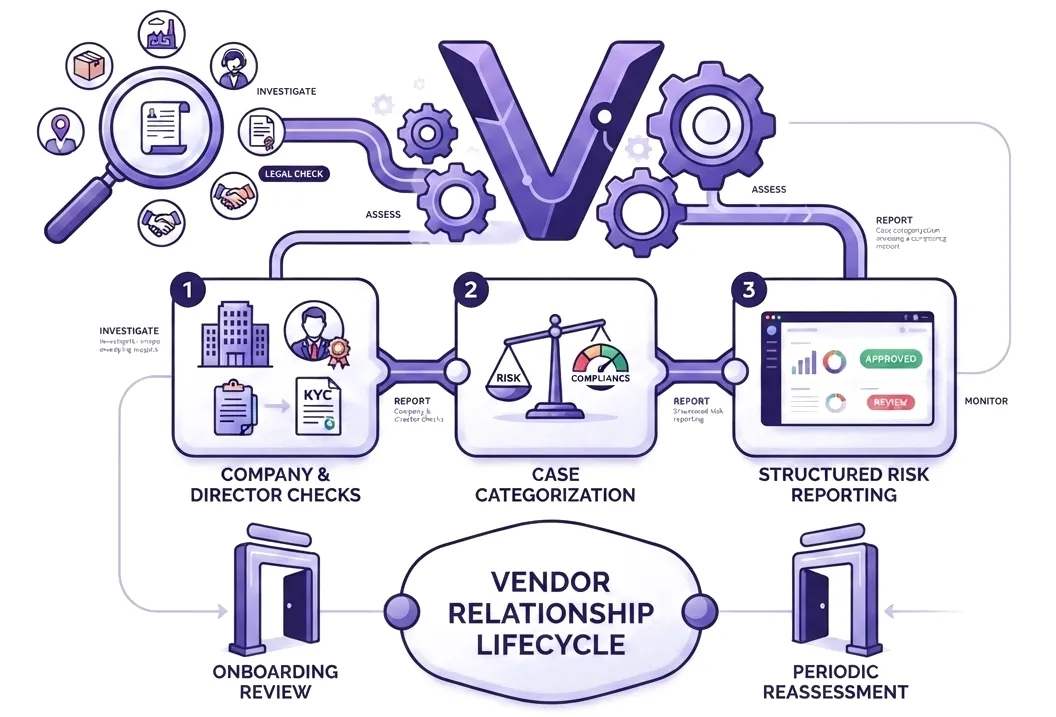
Vendor due diligence covers investigation of vendors, suppliers, distributors, agents, channel partners, consultants, and other counterparties before or during an ongoing relationship. Legal check can help identify undisclosed litigation, regulatory exposure, criminal proceedings, integrity-related signals, and litigation involving key individuals connected to the vendor.
LIBIL®'s workflow for this use case typically includes company and director/promoter checks, case categorization, and structured risk reporting, one module within a broader third-party risk assessment program, supporting either onboarding review or periodic reassessment of existing vendor relationships.
Background Investigation Services and Investigative Due Diligence
Beyond Basic Screening
Background investigation services in an investigative due diligence context differ meaningfully from basic screening. These assignments typically require public-record research, litigation review, regulatory research, corporate research, ownership research, adverse media review, source inquiries, and human-led investigation working together.
LIBIL's Role in the Workflow
LIBIL® supports the litigation and court-record component of this broader investigative workflow. It is not positioned as a replacement for the comprehensive, multi-source investigative research that background investigation services require.
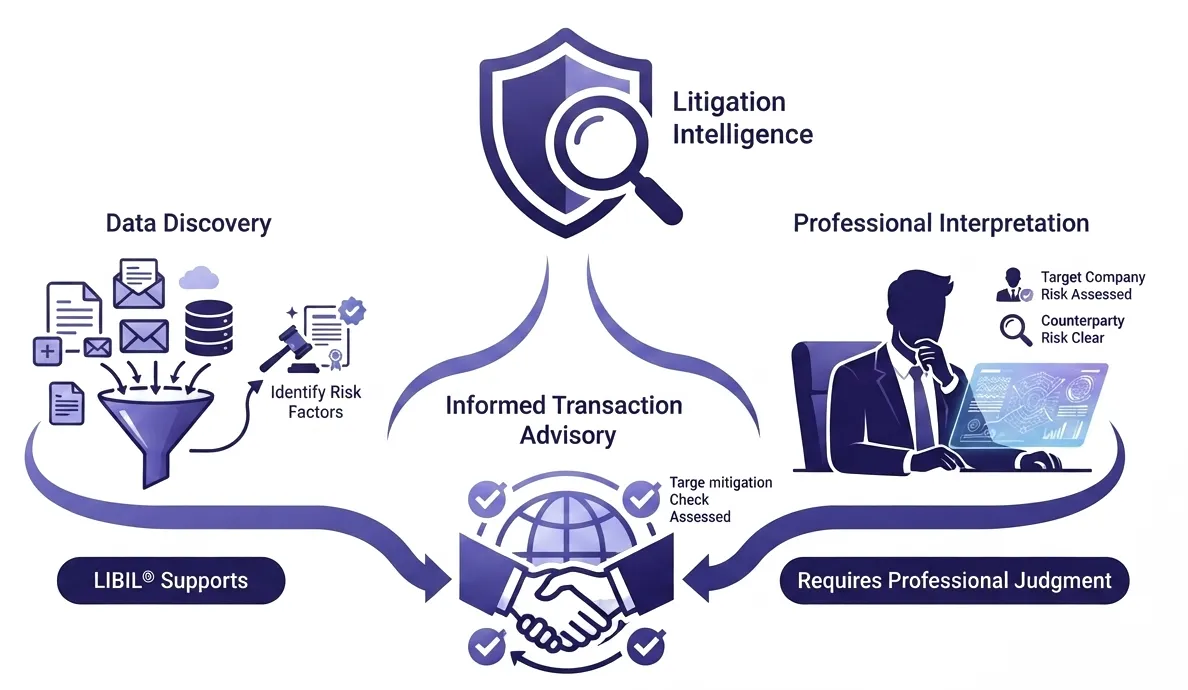
Transaction Advisory Services and Litigation Intelligence
Transaction advisory services often need to understand litigation exposure, legal disputes, regulatory matters, promoter or director exposure, target-company risk, and counterparty risk as part of a broader transaction assessment.
Structured litigation intelligence can help transaction advisory professionals identify areas requiring further investigation, legal review, management questioning, or documentation review. Data discovery and professional interpretation are distinct steps: LIBIL® supports the first and can assist the second through structured outputs, but it does not replace the professional judgment that transaction advisory services ultimately depend on.
Press & Recognitions
-
 Forbes india
Legitquest: On a quest to building a legal technology framework in India
-
 financialexpress
LegitQuest: Now, millions of law case records at your fingertips
-
 yourstory
Google picks 16 Indian startups for its 5th accelerator programme
-
 entrackr
Funding in Indian startups this week (05 Apr-10 Apr)
-
.webp) Economic Times
Economic TimesLegitquest raises $660,000 in ongoing round from existing investors InfoEdge, WaterBridge Ventures
-
 Inc42
Inc42Info Edge To Invest INR 4 Cr In Legal Tech Startup LegitQuest
-
 Business Standard
Startup Investments (Holding) to invest Rs 4 cr in Legitquest
-
 Capital Market
Startup Investments (Holding) to invest Rs 4 cr in Legitquest
-
 Vise Stories
Legitquest Raises $660K in Ongoing Round from Existing Investors
Trusted by the top names in the industry
Add Litigation Intelligence to Your Investigative Due Diligence Workflow
Risk advisory firms can explore how structured court and litigation intelligence complements existing investigative research, supporting analyst productivity and faster red-flag discovery while preserving the investigator's central role in interpretation and judgment.


