

































































What Does a Comprehensive Background Verification Process Include
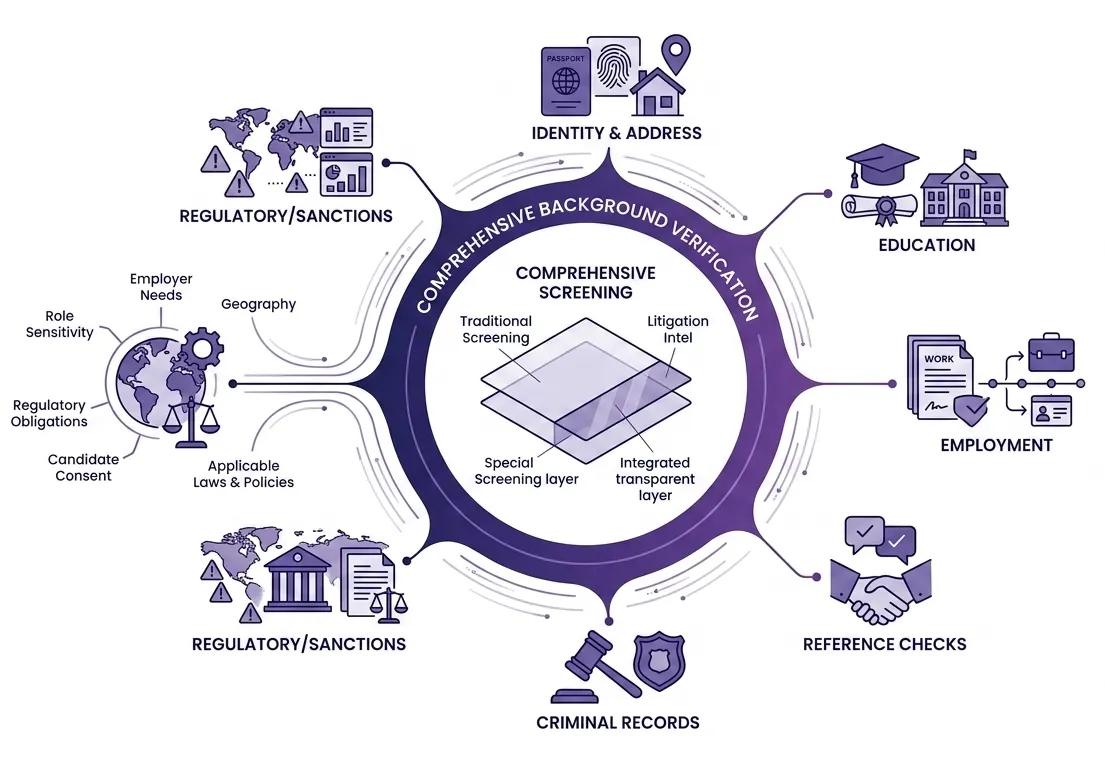
A modern background verification workflow typically spans identity verification, address verification, education verification, employment verification, reference checks, criminal history record , litigation checks, and regulatory or sanctions screening where relevant. The exact screening package for any given engagement depends on employer requirements, role sensitivity, industry, geography, regulatory obligations, candidate consent, and applicable laws and policies, the same variables that shape background screening for employment more broadly.
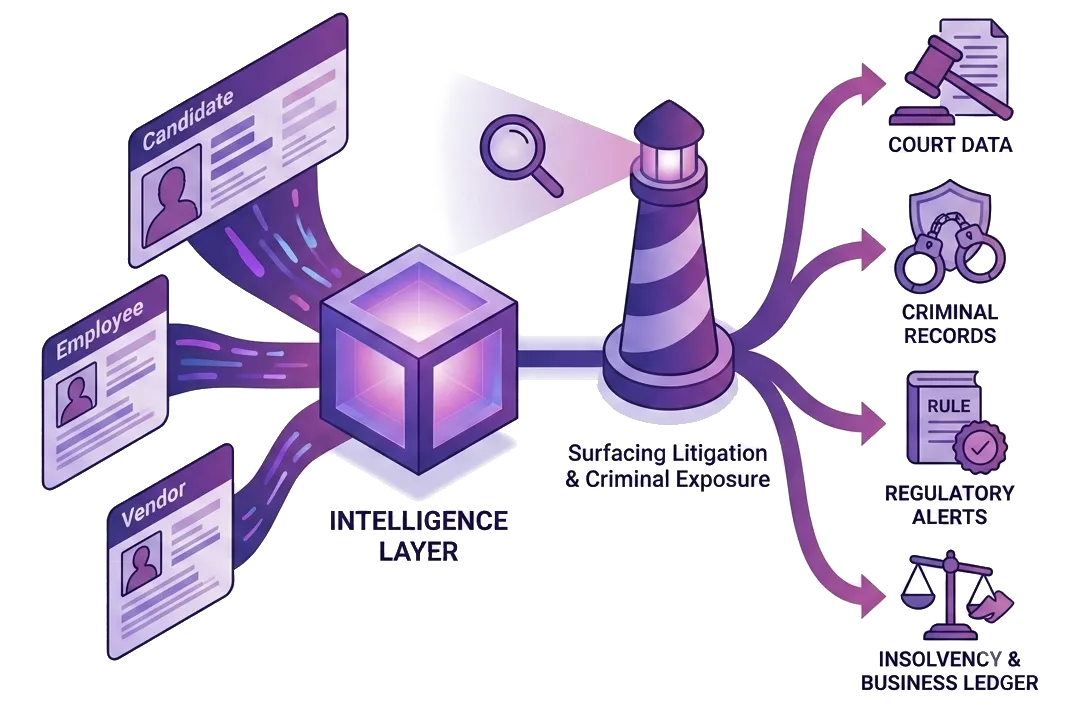
Litigation intelligence is best understood as an additional layer within this broader package, one that complements traditional identity and employment-focused screening rather than standing in for it.
Why Litigation Checks Matter in Background Verification
Additional Context Beyond Standard Checks
Organizations often want additional context for senior executives, directors, promoters, employees in sensitive roles, candidates handling financial assets, employees in regulated industries, contractors, vendors, and business partners. Relevant litigation or criminal proceedings can provide context that identity, employment, or education verification alone doesn't capture.
Contextual, Compliant Decision-Making
The existence of a lawsuit or legal proceeding does not automatically indicate misconduct, dishonesty, or unsuitability for employment. Findings need to be matched accurately, reviewed in context, evaluated for relevance, considered alongside other screening information, and reviewed in accordance with applicable law and employer policy before they inform any decision.
The Challenge With Traditional Litigation Checks
The Manual Screening Process
A manual litigation screening process typically runs through several steps: collecting subject details, searching multiple court portals, searching across jurisdictions, reviewing potential name matches, checking case details, determining whether a case actually belongs to the subject, categorizing cases, reviewing status, preparing a report, and escalating relevant findings.
Strains Under Volume
Run manually and at volume, this process strains under high manual effort, multiple disconnected court systems, common names, name variations, incomplete identifiers, false positives, false negatives, hard-to-standardize workflows, and difficulty scaling to high volumes.
Compound Challenges for BGV Firms
These challenges compound for background verification companies and background check firms handling large numbers of screening requests across many clients.
Where Litigation Risk Gets Missed
Different spellings, aliases, addresses, or incomplete information can result in missed records, incorrect matches, or namesake matches that pollute results.
Relevant cases may sit across different courts, districts, states, and tribunals, making a truly comprehensive manual search difficult to execute consistently.
A raw case list rarely explains pending versus disposed status, filed-by versus filed-against context, case type, relevance, or match confidence on its own.
Analysts often spend significant time searching, copying, consolidating, reviewing, and formatting results into client-ready reports, time that scales linearly with volume rather than getting more efficient.
Together, these gaps affect both turnaround time and consistency across a BGV firm's litigation screening output.
How LIBIL® Fits Into a Background Verification Workflow
Background verification companies typically already have identity verification systems, address verification, employment verification, education verification, workflow management systems, and client reporting platforms in place.
BGV Workflow Journey
LIBIL®'s Role in This Workflow
LIBIL® is not the final decision-maker anywhere in this chain. Its role is to help BGV teams search supported records, identify potential matches, structure litigation information, categorize cases, understand case status, assess match confidence, and prioritize findings for human review.
Background Screening for Employees: Where Court Record Check Fits
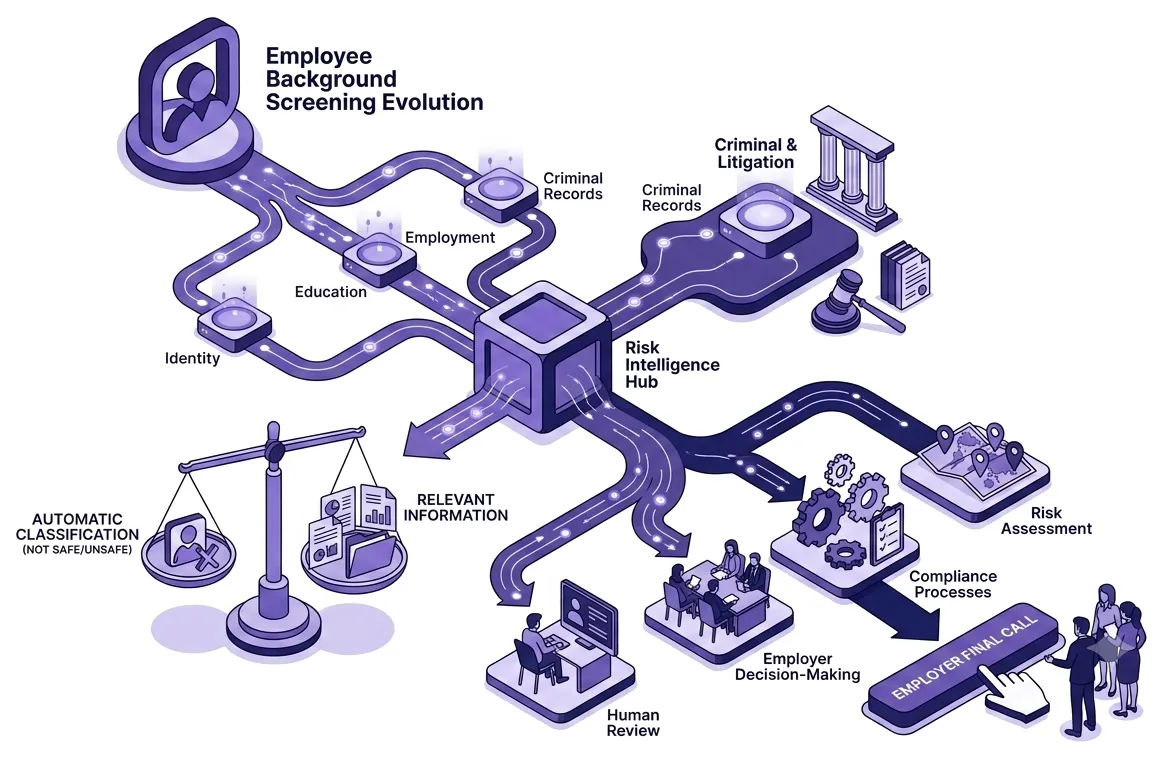
Background screening for employees can evolve from a collection of individual checks into a broader risk intelligence workflow: identity, education, employment, criminal records , and litigation intelligence combining into a more complete screening context.
The objective isn't to automatically classify individuals as "safe" or "unsafe." It's to provide relevant information for human review, employer decision-making, compliance processes, and risk assessment, with the final call always resting with the employer and its relevant professionals.
How Background Check Companies Can Handle Litigation Screening at Scale
Scaling Manual Screening Challenges
Background verification companies handle hundreds or thousands of screening requests across multiple clients, making manual criminal and litigation record searches time-consuming and difficult to manage at scale.
Automated & Streamlined Checks
LIBIL® APIs helps BGV companies automate and streamline these checks by searching and aggregating court records, resolving identity matches, and generating structured litigation and criminal record reports making it easier to deliver consistent background checks faster and at scale.
The Key to Reliable Litigation Screening
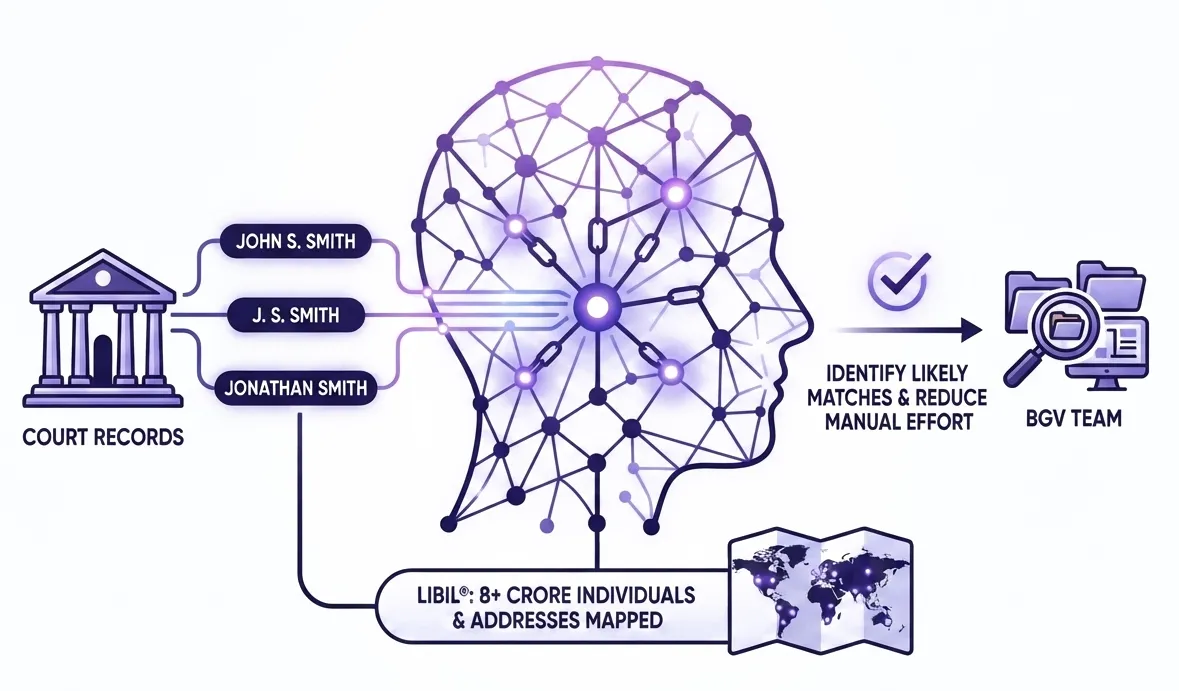
Reliable litigation screening depends on accurately matching court records to the right individual. Common names, aliases, spelling variations, and differences in addresses or other identifiers can lead to false matches and unreliable reports.
LIBIL® combines name and alias matching with mapped identity data across 8+ crore individuals and their associated addresses, continuously expanding as new records are added every day. This helps BGV teams identify likely matches, distinguish namesakes, and reduce the manual effort required to verify litigation and criminal records.
Press & Recognitions
-
 Forbes india
Legitquest: On a quest to building a legal technology framework in India
-
 financialexpress
LegitQuest: Now, millions of law case records at your fingertips
-
 yourstory
Google picks 16 Indian startups for its 5th accelerator programme
-
 entrackr
Funding in Indian startups this week (05 Apr-10 Apr)
-
.webp) Economic Times
Economic TimesLegitquest raises $660,000 in ongoing round from existing investors InfoEdge, WaterBridge Ventures
-
 Inc42
Inc42Info Edge To Invest INR 4 Cr In Legal Tech Startup LegitQuest
-
 Business Standard
Startup Investments (Holding) to invest Rs 4 cr in Legitquest
-
 Capital Market
Startup Investments (Holding) to invest Rs 4 cr in Legitquest
-
 Vise Stories
Legitquest Raises $660K in Ongoing Round from Existing Investors
Trusted by the top names in the industry
Add Litigation Intelligence to Your Background Verification Workflow
Background verification companies looking for structured criminal record and FIR checks to strengthen identity, employment, and education at scale.


